Every neighborhood park has one. A piece of climbing equipment at a playground pulls kids toward it before they notice the slides or the swings. Climbing builds strength, balance, and the kind of confidence that only comes from reaching the top on your own. For schools, municipalities, and family entertainment centers, that single structure often becomes the busiest spot on the site.
A piece of climbing equipment at a playground is any fixed structure children climb using their hands and feet, such as a rock wall, cargo net, rope ladder, or climbing frame. These pieces belong to the broader category of playground equipment and are built to meet published safety standards for height, fall zones, and material strength. The exact name changes by region and by design, but the function stays the same: give kids a safe, repeatable way to climb.
Below we break down the common types, the names buyers and installers actually use, the height you should expect, and what separates a dependable supplier from a risky one.

What counts as a piece of climbing equipment at a playground
A piece of climbing equipment at a playground is any standalone or attached unit made for vertical or diagonal climbing, and it usually includes rock walls, net climbers, step ladders, and overhead climbing frames. The term covers both small add-ons and large centerpiece structures.
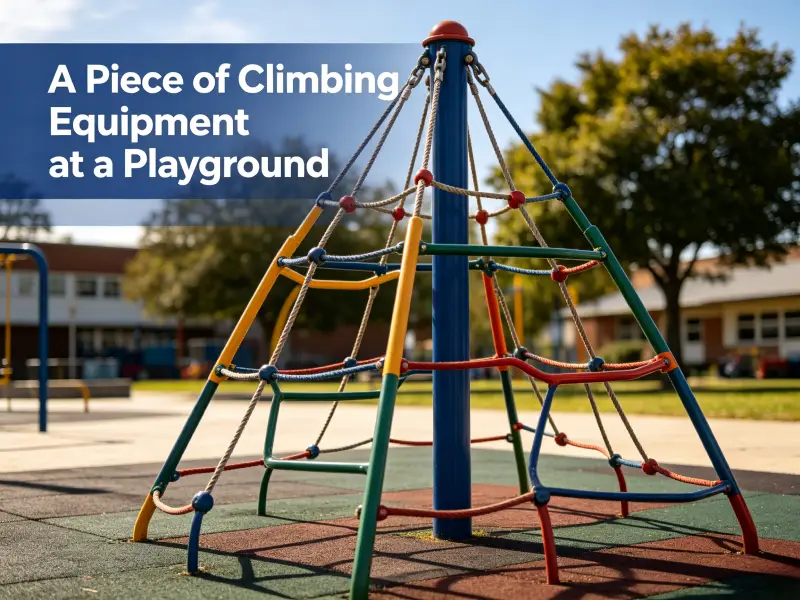
Climbing equipment shows up in two forms. The first is attached: a ladder built into a slide tower, or a rock panel mounted on the side of a play castle. The second is freestanding: a dome climber, a net pyramid, or a stand-alone rope tower. Both forms train the same muscles and carry the same safety duties.
The materials matter as much as the shape. Outdoor units use galvanized steel frames, UV-stable rota-molded plastic, and twisted wire-core ropes that resist fraying. Indoor units often use soft foam cores wrapped in PU leather to lower impact. Each material fits a different setting, and the wrong choice shortens the life of the unit.
A good way to think about it is by play value. A simple step ladder offers one route and one challenge. A net pyramid offers many entry points and encourages group play. When you plan a site, the climbers set the tone, because children gravitate to the thing they can conquer, and they return to it more than any other piece.
Budget planning should start from the climb too. A freestanding tower costs more up front than a small wall, but it anchors the whole site and spreads wear across more children, which often lowers the cost per user over the life of the equipment. Buyers who set the climber budget last usually end up cutting the part kids wanted most.
Common types you will find on a play site
The most common types are rock climbing walls, cargo nets, rope ladders, dome climbers, and overhead monkey bars, and most modern parks mix two or three to serve different age groups. Picking the right mix depends on your space and your users.
Rock climbing walls
A rock wall is the clearest answer to what a piece of climbing equipment looks like. Panels carry molded handholds in bright colors, and the slope stays gentle for young children. Good walls add a second route with larger holds so a hesitant climber is never stuck halfway. JQK builds these panels with reinforced backing so the holds do not loosen after a season of use, which is the failure mode that sends most walls to the repair queue.
Cargo nets and rope structures
Cargo nets hang between two posts or form a pyramid that kids climb through rather than over. They suit groups because many children use one net at once. The rope must use a steel core, and the mesh size must be small enough to stop a child’s head from passing through. This scenario is where outdoor playground equipment standards matter most, because a net exposed to sun and rain fails fast if the specs are wrong.
Rope climbers also include the spiral rope tower, where children climb a rotating column of linked ropes. These are popular in compact sites because they take little ground space while still offering a real climb. The rotating motion adds a balance challenge that flat walls do not.
Ladders, domes, and overhead bars
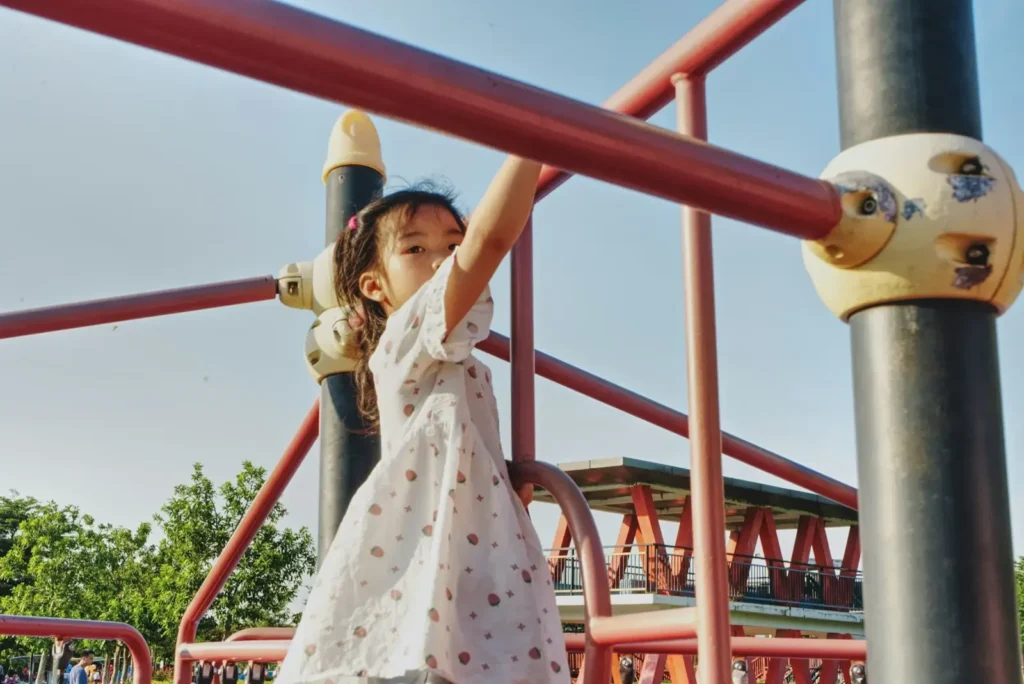
Step ladders, geodesic domes, and monkey bars round out the list. Domes work well for cooperative play, while monkey bars test upper-body strength for older kids. Each piece needs its own fall zone, so layout planning starts with the climbers, not the slides. A site that crams a dome and a ladder into one small pad will fail inspection, no matter how good the equipment looks.

How tall is a piece of climbing equipment at a playground
A piece of climbing equipment at a playground is often around 6 feet high for structures aimed at school-age children, while toddler climbers stay closer to 3 feet and advanced towers reach 8 feet or more. The 6-foot figure shows up often because it marks the point where fall protection and surfacing rules tighten.
| User group | Typical climber height | Recommended surfacing |
| Toddlers (1-3) | 2-3 ft | Soft foam or sand |
| Preschool (3-5) | 3-5 ft | Engineered wood fiber |
| School-age (5-12) | 5-8 ft | Rubber tile or poured-in-place |
| Teen / fitness | 8 ft+ | Poured-in-place with depth rating |
A piece of climbing equipment at a playground is 6 feet high in many standard designs because that height fits the 5-12 age band without requiring the deepest surfacing. Go higher and the cost of the safety surface rises with it. Stay lower and you lose the older kids, who drift toward less safe improvised climbs.
Fall zones deserve the same attention as the climber itself. The cleared area should extend at least six feet past the equipment on every side, and nothing else should sit inside it. The U.S. Consumer Product Safety Commission publishes these rules in its public playground guidelines, and most inspectors check them first (CPSC).
Height also drives the access route. A 6-foot wall needs a protected start where a child can steady themselves before the first hold. A tower above 8 feet needs an intermediate platform so a tired climber has a place to rest and rethink. These details are easy to skip on a drawing and hard to fix after install.
What is climbing equipment called
Climbing equipment is called by several names, including “climber,” “climbing frame,” “play tower,” “net climber,” and “ascending structure,” and the right term depends on the buyer and the setting. Installers, catalog writers, and parents do not always match.
When someone asks what climbing equipment is called, the honest answer is that there is no single word. A school district buys a “climbing structure.” A parent points at the “jungle gym.” A supplier lists it under playground equipment names that map to product codes. Knowing the terms helps you read quotes and compare like for like instead of being sold two different things with the same label.
Regional language adds more variety. In some markets the whole climbing unit is a “play castle” with a climb side and a slide side. In others it is a “naughty castle” for indoor soft play. The function is identical even when the label changes, which is why a clear spec sheet beats a catchy name every time.
Playground equipment that spins and other active pieces
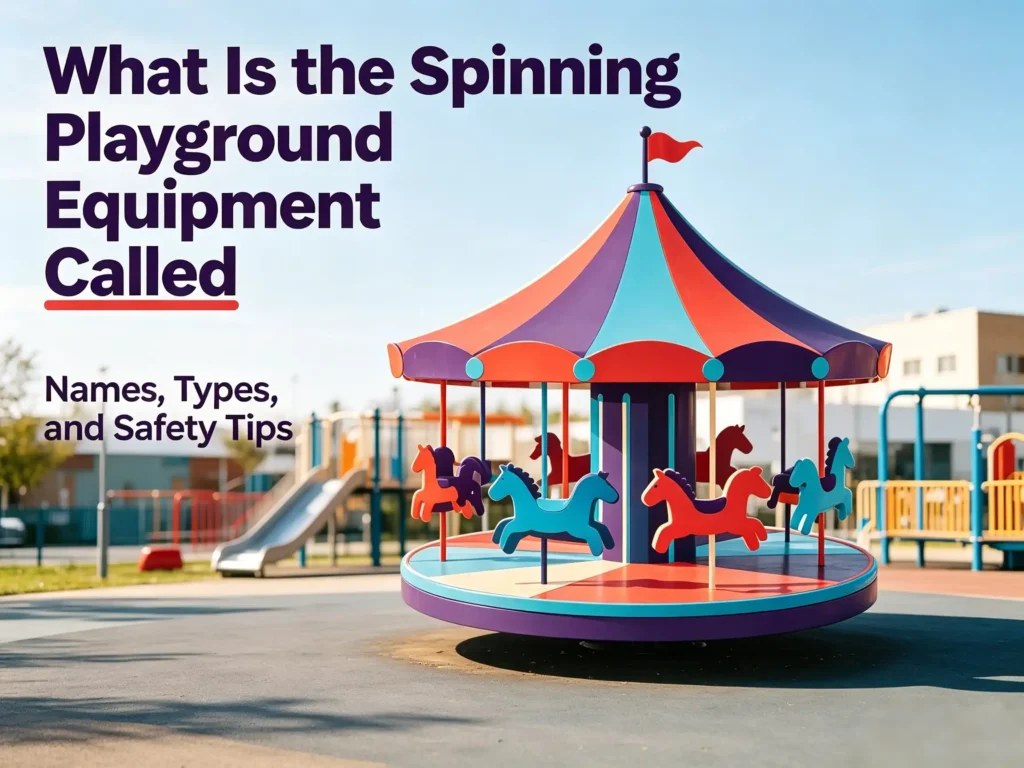
Playground equipment that spins includes merry-go-rounds, rotating bowls, and single-user spinners, and these pieces pair well with climbers because they serve the same active, balance-building play. Spinning equipment is not climbing equipment, but it belongs in the same planning conversation.
Spinners have grown popular because they fit small footprints and attract kids who will not wait in line for a slide. A rotating dish with a textured base lets one or two children control the speed themselves. Placed next to a climber, it creates a loop: climb up, spin, climb again. That loop is what keeps a corner of the park busy for hours.
Buyers should check the bearing system on any spinner. Cheap units seize after a wet season, and a stuck spinner is a safety hazard, not just a broken toy. JQK uses sealed bearings rated for outdoor use so the motion stays smooth through winter and summer, which matters more than the color of the shell.
Other active pieces worth mentioning are spring riders and seesaws, which add low-energy options for younger children who are not ready for a tall climb. A balanced site offers a climb, a spin, a swing, and a quiet option, so every child finds a place.
Playground equipment for kids by age
Playground equipment for kids should match developmental stage, with low, wide steps for toddlers and taller, harder routes for older children, and the climbers should never blend age groups on one unit. Mixed-age use causes most conflicts and most injuries.
For the youngest users, a piece of climbing equipment at a playground should have a gentle slope, wide grips, and a closed back so a child cannot fall through. Preschool units add simple rock panels and short nets. School-age units bring taller towers, overhead bars, and the kind of challenge that keeps older kids engaged instead of bored.
JQK designs its kids’ ranges with this split built in. The soft-play lines use foam and wrapped frames for indoor centers, while the outdoor lines use steel and rota-molded parts rated for weather. The Product Case page shows how different sites matched equipment to their age mix and available space, which is the fastest way to picture what fits your own plan.
Age split also affects supervision. Toddler climbers sit low and close to seating so caregivers stay within arm’s reach. Older climbers spread out and need sightlines from a single staff position. A site that forces a supervisor to run between zones will accumulate lapses, and lapses are where incidents start.
What playground equipment companies should deliver
Playground equipment companies should deliver certified materials, clear installation guidance, and real after-sales support, because a climber is a long-term safety investment, not a one-season purchase. The cheapest quote is rarely the cheapest outcome.
A reliable supplier proves a few things before you sign. First, the steel and ropes meet the stated standards, and the certificates are current. Second, the fall zone and anchor plans arrive with the order, not after a delay. Third, spare parts stay available for years, because a climber outlasts most of its small components.
JQK runs its own manufacturing line, which means the design team, the factory, and the quality checks sit under one roof. That structure shortens lead times and keeps the spec honest from drawing to delivery. For buyers comparing playground equipment companies, the question is not only price but also how the company answers when something wears out in year three.
A manufacturer with its own line can also customize. A standard climber may not fit an awkward corner or a themed brief, and a reseller is limited to the catalog. JQK takes custom shapes, colors, and combined play towers, which lets a buyer turn a generic pad into a destination rather than another same-looking park.
Planning, installation, and upkeep
Planning, installation, and upkeep decide whether a climber stays safe, and the work starts with surfacing and ends with a monthly inspection log. Skipping any step turns a reliable unit into a liability.
Site preparation comes first. The ground must be level, the surfacing must meet the height rating from the table above, and the anchor footings must reach the local frost depth. A freestanding dome that tips in a storm is almost always undershot, and the fix costs more than doing it right the first time.
Upkeep is simpler than people expect. Walk the unit monthly, check bolt torque, look for rope wear, and clear the fall zone of roots and debris. Indoor soft climbers need wipe-down and seam checks. These small habits extend the life of the equipment by years and keep insurance happy.
When a part wears, order the exact replacement rather than a close fit. JQK keeps part records by order, so a buyer can send a photo or a code and receive the matching component. That is the kind of support that separates a manufacturer from a reseller, and it is the difference between a one-week repair and a one-season closure.
Bringing it together
A piece of climbing equipment at a playground does more than fill space. It gives children a daily, repeatable challenge that builds strength and confidence, and it gives operators a reliable draw that keeps families coming back. The key is choosing the right type for your age group, setting the right height and surfacing, and working with a supplier who stands behind the product after delivery.
If you are planning a new site or refreshing an old one, the fastest path is a short conversation about your space, your users, and your budget. Contact Us to review layouts, request a quote, and see which climbers fit your plan.
Frequently asked questions
What is the safest height for a playground climbing structure?
For school-age children, a piece of climbing equipment at a playground is 6 feet high in many standard designs, which balances challenge with manageable surfacing costs. Toddler units should stay near 3 feet. Always pair the height with the correct fall surface and a six-foot clearance zone.
Can climbing equipment and spinning equipment share one area?
Yes, but they need separate fall zones. Playground equipment that spins needs its own cleared radius so children exiting the spinner do not collide with climbers. Please plan the layout with both zones drawn before ordering, rather than after the units arrive.
How do I compare playground equipment companies for a large order?
Ask for current material certificates, anchor and surfacing plans, and a written spare-parts policy. The best playground equipment companies answer all three without hesitation and show past installs similar to yours, including the age groups and site conditions.