Spinning rides have been a familiar sight in playgrounds for more than a hundred years, yet plenty of people still pause and wonder what the spinning playground equipment is called. The same rotating platform turns up in public parks, schoolyards, and indoor family centers, and each setting seems to reach for a different word. That naming gap matters more than it sounds, because buyers, teachers, and parents often talk past each other when they try to describe the very same ride.
The spinning playground equipment is most commonly called a merry-go-round, though it is also widely known as a carousel, a roundabout, or a whirl spinner. The word people use depends on the region, the design, and whether children push to make it spin or a motor does the work. Whatever the label, the core idea is the same: a platform or seating ring turns around a central axis to give riders that distinct sense of motion, the same principle found across the broader range of electric amusement rides used in parks and family centers.
The sections below walk through the names people use, how these rides work, the main types on the market, the safety rules that govern them, where they fit best, and how to choose the right unit for your site.

What the spinning playground equipment is called
There is no single correct word, because different English-speaking regions settled on different terms for the same rotating ride, and the design itself has branched into several forms over the past hundred years.
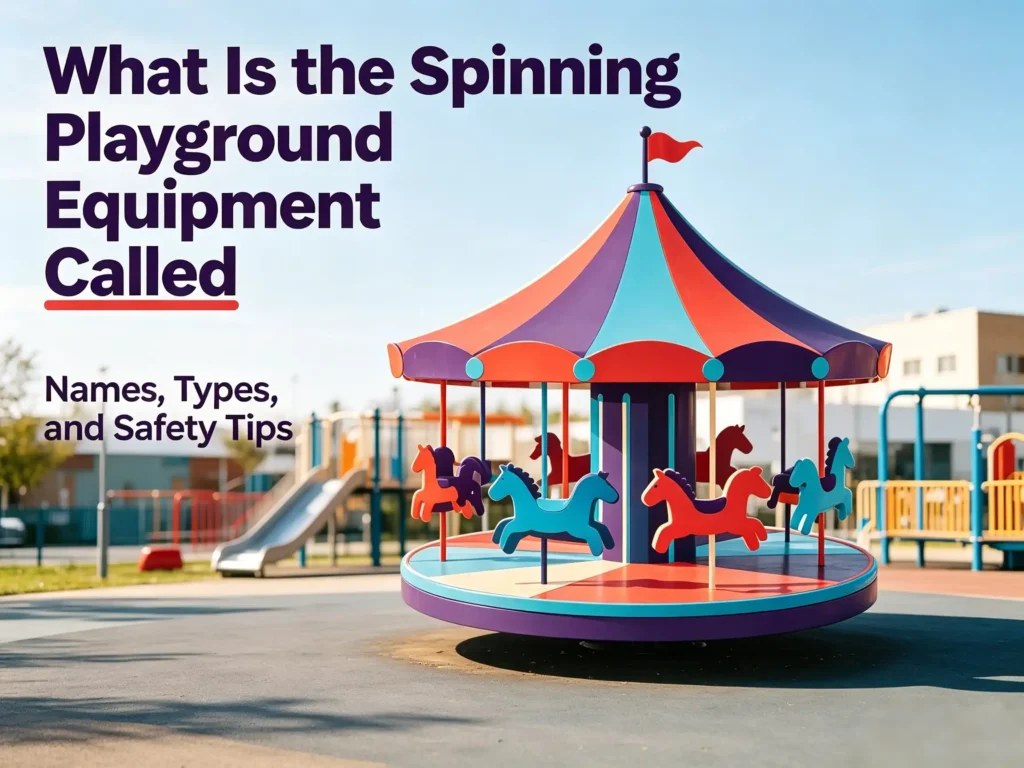
The most familiar term in the United States is “merry-go-round,” while in the United Kingdom the same equipment is usually called a “roundabout.” When the ride is decorative and horse-shaped, people often say “carousel,” a term borrowed from the fairground tradition that itself traces back to ceremonial horse drills in medieval Europe. A small standalone disc that a single child spins with their feet is often called a “whirl spinner” or “spinner bowl.” Sometimes, a seated model with handles that riders push to build speed is labeled a spin seat or rotating swing. The name drift happened because each new design solved a slightly different problem, and local language simply followed the local product.
If you have ever wondered what the name for the spinning thing at the playground is, the honest reply is that it depends on the shape, the power source, and local habit. The same uncertainty shows up when people search for the spinning thing on the playground called a “merry-go-round,” because search engines return a mix of regional names for one product family. A buyer in London, a buyer in Texas, and a buyer in Sydney may each describe the identical unit with a different word, which is why global suppliers publish a glossary inside their catalogs.
Understanding these playground equipment names helps buyers and operators communicate clearly. A procurement manager who asks for a “roundabout” in one country may receive the exact product another manager calls a “merry-go-round.” Standardizing the vocabulary inside a project team reduces ordering mistakes and keeps specifications consistent across sites. It also makes maintenance logs easier to read, because every location records the same term for the same asset, and it helps when training new staff who will supervise the area.
How spinning playground equipment works
Every spinning ride, from a simple bowl spinner to a large motorized carousel, shares the same mechanical principle: a platform rotates around a fixed central axis, and the difference lies in what supplies the energy and how that energy is controlled.
Manual vs motorized rotation
A manual spinning ride relies on the riders themselves. Children push the handles or run alongside the platform to start it, then hop on and let momentum carry them. This type is common in schools and public parks because it needs no power supply and has fewer moving parts to maintain. A motorized ride uses an electric motor to keep a steady, controlled rotation speed. Motorized units are typical in commercial indoor centers where consistent operation and lower physical effort matter more than simplicity and where staff prefer a ride that starts with a switch rather than a push.
Core components
The main parts of a spinning unit are straightforward but must be built to a high standard. The central shaft carries the load and keeps the platform aligned. Sealed bearings allow smooth rotation with minimal friction and protect the mechanism from dirt and water. Handles or guardrails give riders something to grip, and a non-slip platform reduces falls during motion. Each component has to withstand repeated stress, so material choice is not a detail but a safety decision that affects how long the ride stays in service.
Speed and centrifugal force
Rotation creates centrifugal force that pushes riders outward. If a ride spins too fast, younger children can lose their grip or feel dizzy. Good designs limit the maximum speed through gear ratios on manual units and speed controllers on motorized ones. The goal is a gentle, controllable spin that feels exciting without becoming unsafe. This is why playground equipment that spins for young children is built with lower platforms and slower rotation than units meant for older users and why the same manufacturer may offer two versions of one model.
Keeping the mechanism healthy
Keeping the mechanism healthy is mostly about the bearing and the shaft. A sealed bearing that is greased during assembly can run for years with little attention, while an open bearing in a dusty park may need seasonal checks. Operators should inspect the central bolt torque, listen for grinding sounds, and confirm that the platform does not wobble. A small maintenance routine extends the life of the ride and protects the children who use it daily, and it keeps warranty claims straightforward when a part does wear out.

Common types of spinning playground equipment
The market offers several distinct designs, including the classic merry-go-round, the decorative carousel, compact whirl and bowl spinners, and seat-based spinners, and each suits a different space, age group, and budget.
Traditional merry-go-round and carousel
The classic merry-go-round is a flat circular platform with handles, mounted low to the ground and pushed by the riders. The carousel version adds seated animals or vehicles and is often motorized for a gentler, decorative experience. Both remain the most recognized form of spinning playground equipment and work well as a centerpiece in a larger play area. They also invite group play, because several children can push at once and then ride together, which is part of why they survive in so many older parks.
Standalone whirl and bowl spinners
A whirligig is a compact disc, usually one to two meters wide, that a single child or a small group spins while standing or sitting. A bowl spinner curves upward at the edges so riders can lean inward as it turns. These models need little space, which makes them popular for smaller yards and early-learning centers. Because they sit close to the ground, they suit younger children who are still developing balance, and they fit into corners that a full merry-go-round could never occupy.
Spinning seats and rotating swings
Some designs put the rotation into the seat rather than the whole platform. A spin seat lets one child rotate in place while holding a central pole. A rotating swing combines a swinging motion with a turn, mixing two sensations in one unit. These are useful when a site wants variety without a large footprint, and they pair well with climbing structures in a mixed play zone. They also give a quieter child a solo option when the bigger rides feel overwhelming.
The table below compares the main types at a glance.
| Type | Typical power | Best age group | Space needed | Common use |
| Merry-go-round | Manual | 5 to 12 years | Medium | Parks, schools |
| Carousel | Motorized | 3 to 10 years | Medium to large | Indoor centers, malls |
| Whirl spinner | Manual | 4 to 12 years | Small | Yards, preschools |
| Bowl spinner | Manual | 5 to 14 years | Small to medium | Parks, FECs |
| Spinning seat | Manual | 4 to 10 years | Very small | Compact yards |
| Rotating swing | Manual | 5 to 12 years | Medium | Mixed play zones |
Safety standards for spinning playground equipment
Safety is the part of the specification that no buyer should treat as optional, because spinning rides move people at speed and therefore fall under the same strict rules as climbing frames and swings.
ASTM and EN 1176 standards
In the United States, the relevant guidance comes from ASTM International, specifically standards such as ASTM F1487 for public play equipment, which you can review at astm.org. In Europe, EN 1176 sets the requirements for playground equipment and surfacing, published by the European Committee for Standardization. Both frameworks cover fall height, entrapment, protrusions, and rotational speed. A reputable supplier documents compliance and can show the test certificates on request, which matters for public tenders and insurance, and which separates serious manufacturers from traders who only resell uncertified stock.
Design features that reduce risk
Good spinning equipment includes speed limiters that cap how fast the platform can turn, rounded edges with no sharp corners, and secure handholds placed where children naturally reach. Bearings should be sealed, and the platform should sit low enough that a fall is from a small height. These choices are what separate a safe ride from a hazardous one, and they should be verified on the supplier’s drawing rather than assumed from a photo. Entrapment points, such as gaps where a sleeve could catch, must also be checked against the standard’s maximum and minimum opening sizes.
Ground surfacing and supervision
Even a well-built ride needs the right impact-absorbing surface beneath it. Loose fill, such as engineered wood fiber or bonded rubber, reduces injury if a child slips. The U.S. Consumer Product Safety Commission publishes guidance on playground surfacing that buyers can consult at cpsc.gov. Adult supervision remains essential, especially for the youngest users who are still learning balance. A documented inspection schedule, completed monthly, catches wear before it becomes a risk and gives the operating organization a clean record if an incident is ever questioned.

Where spinning playground equipment is used
Spinning rides are versatile enough to appear in almost any play setting, but they appear most often in public parks, schools, commercial indoor centers, and guest-facing venues such as resorts and malls.
Public parks and schools
City parks and schoolyards are the most common home for a manual merry-go-round. The ride encourages cooperative play because several children push together, then ride together. For playground equipment for kids in these settings, manual units are preferred because they need no electricity and tolerate heavy daily use. Schools also value them as a calm, inclusive option that children of different abilities can enjoy side by side, and teachers report that the shared pushing task helps children who find solo sports intimidating.
Commercial indoor playgrounds
Indoor family centers often choose motorized carousels because they run continuously and need little physical effort from visitors. Within a larger indoor layout, these rides act as a visual anchor that draws families toward a zone. Many operators source them from specialists in electric amusement rides to match the motorized, low-maintenance profile they need and to keep a consistent look across a themed floor. The steady motion also suits venues that want a ride small children can use without a staff member having to push it.
Resorts, malls, and family entertainment centers
Hotels, shopping centers, and dedicated family entertainment centers use spinning rides as attractions that keep visitors on site longer. A decorative carousel in a mall atrium, for example, doubles as a seating-area focal point and a paid activity. These sites usually want durable, eye-catching units that survive constant use and match a branded environment, which is why they plan the ride early in the design stage. They also tend to ask for custom colors so the equipment blends with a venue’s identity rather than clashing with it.
How to choose spinning playground equipment for your project
Selecting the right spinning ride comes down to matching the product to your users, your space, and your maintenance capacity, and a clear process prevents costly mistakes while keeping children safe.
Match age group and space
Start with who will use the ride. Toddler areas need low, slow, manually powered units with full guarding. Older children can handle larger merry-go-rounds and bowl spinners. Measure the available footprint and the fall zone around the equipment, because safety rules require clear space on all sides. Suppliers of Outdoor Playground Equipment can help map the ride to your site dimensions before you order, which avoids the expensive surprise of a unit that does not fit. A simple site sketch with measurements is enough for most teams to begin the conversation.
Material and durability
The frame should use galvanized or powder-coated steel to resist rust, while seats are often rotomolded plastic that absorbs impact and stays comfortable in heat and cold. Check the bearing specification, because the bearing is the part that fails first if it is low grade. A 12-seat custom carousel shows the kind of build buyers should expect: a steel core, sealed bearings, and molded seating that holds up under daily commercial use. The coating should be tested for UV fade so the colors stay bright through seasons outdoors, and the bolts should be grade-marked for the loads they carry.
Budget and installation timeline
Price follows size, material, and whether the unit is motorized. Manual rides cost less and can be installed in a day with a prepared concrete base, while a motorized carousel requires power routing and a longer commissioning step. Ask for a written lead time that covers production, shipping, and on-site assembly, because a project that misses the back-to-school or holiday window loses the peak usage it was built for. Spreading the work across a clear timeline also keeps the site safe, since partial installs should never remain accessible to children.
Why work with a custom manufacturer
Off-the-shelf rides do not always fit an unusual site or a specific theme. A custom manufacturer can adjust seat count, colors, size, and power source to match your brief and can supply the compliance paperwork that public tenders require. JQK builds spinning rides to order, supports the project from design through installation, and backs units with after-sales service that keeps them running. For buyers comparing playground equipment companies, the ability to customize and certify in one package is often the deciding factor, because it removes the gap between what a catalog shows and what a site actually needs. If your project needs a spinning ride built to spec, contact us to discuss dimensions, capacity, and delivery.
Frequently asked questions
What age is spinning playground equipment for? Most manual merry-go-rounds and spinners are designed for children aged 4 to 12, while motorized carousels often start at age 3. Always check the manufacturer’s stated age range, because it reflects the ride’s speed, height, and grip design rather than a rough guess, and matching it to your users keeps the play area appropriate.
Is a spinning playground ride safe for toddlers? Toddlers should use only low, slow, fully guarded units made for their age group and only with supervision. Open platforms built for older children spin too fast and sit too high for a toddler to use safely, so separation by age zone matters and should be planned into the layout from the start.
How much space does a merry-go-round need? A typical manual merry-go-round needs a circular fall zone roughly two to three meters beyond the platform edge, so budget a total diameter of about six to eight meters. The exact number depends on the model’s size and the standard applied, so confirm with the supplier’s layout drawing before construction begins.