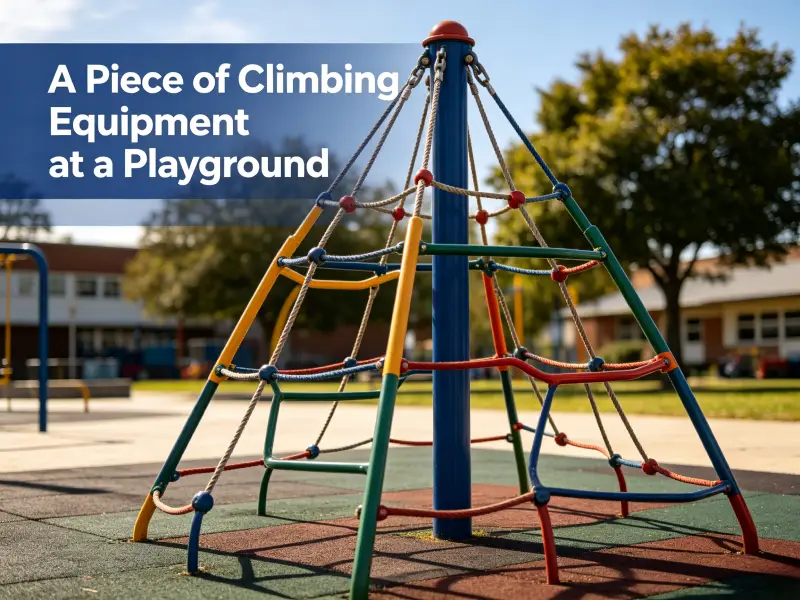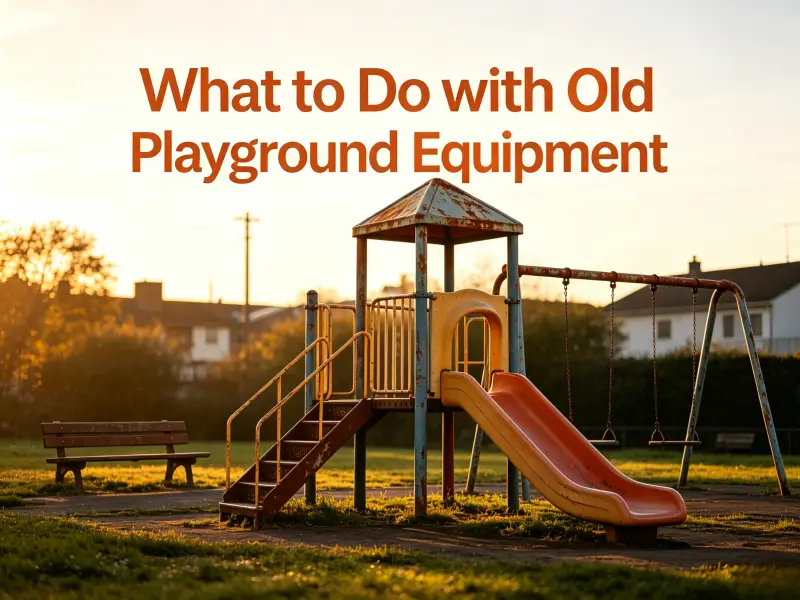
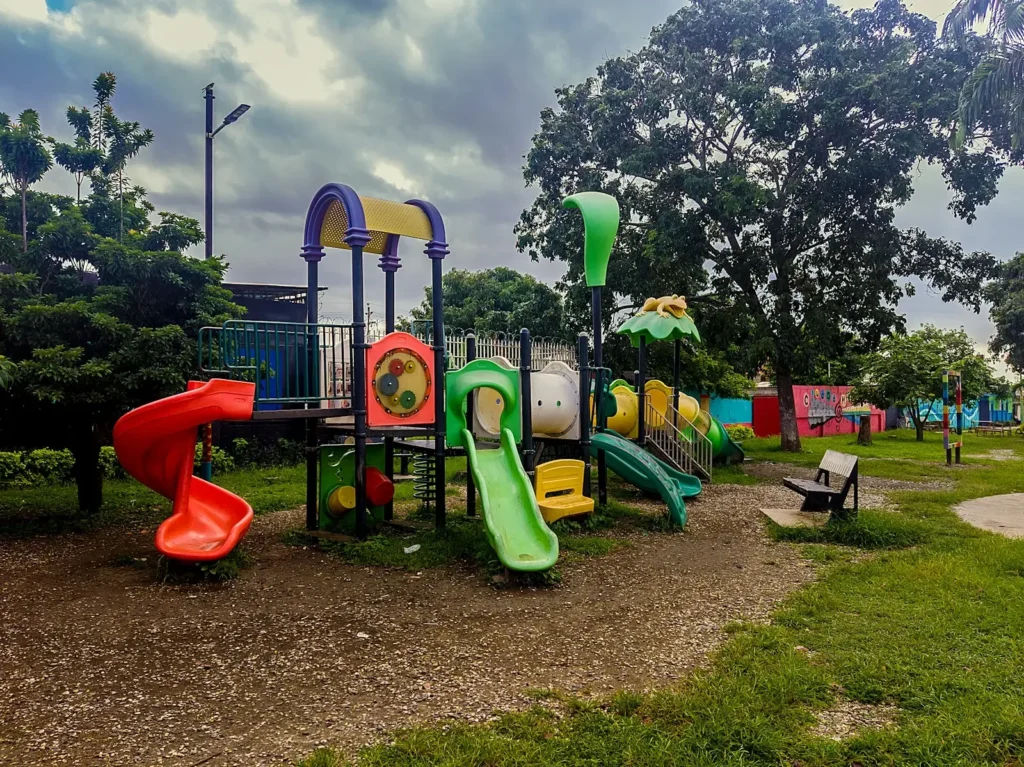
Schools, daycare centers, apartment complexes, and city parks all reach the same point. The play structure that looked new a decade ago now shows rust on the frame, cracks in the plastic, and bolts that no longer sit tight. Figuring out what to do with old playground equipment is a problem every facility manager faces eventually, and the wrong call can burn budget or leave a real safety hazard behind.
The best move is to assess the condition first, then pick the path that fits your site: donate pieces that still work, sell or scrap the metal for its value, recycle the materials, repurpose parts on site, or replace the whole set with new equipment. Safety should drive every decision, because a worn structure puts children at real risk of injury.
The sections below walk through each option so you can choose the one that fits your space, budget, and timeline, and we also cover what to look for when you shop for replacement outdoor playground equipment.
Assess the condition before you decide
Start with a safety inspection so you know whether the structure can be saved, donated, or must come down. You can’t choose the right disposal route until you understand what you’re dealing with.
Walk the site with a checklist. Look at the main support posts for rot or corrosion, check every bolt and weld, test the stability of decks and platforms, and inspect plastic parts for sharp edges. Pay attention to the ground beneath the equipment too. If the impact-absorbing surface has worn thin, that alone may fail a safety audit even when the frame looks fine.
A qualified inspector or a certified playground safety professional can give you a written report. That document matters for three reasons. It tells you whether the set is worth repairing, it protects you if a parent or insurer later asks questions, and it gives buyers or recyclers a clear picture of what the materials are valued at. Please keep the report on file before you touch anything.
If the structure passes the basics but has cosmetic wear, a deep clean and a few replacement parts may extend its life by years. If the frame is compromised, don’t gamble on it. Removal becomes the responsible choice.
Donate or give away usable equipment
If the set is structurally sound, donating keeps it in use and may give you a tax deduction. Many organizations would rather take a free play structure than buy a new one.
Churches, community centers, rural schools, and nonprofit childcare providers often look for secondhand playground equipment for kids because their budgets are tight. A set that no longer fits your site’s look or capacity may be a perfect match for a smaller organization that just needs something safe to play on.
Before you list it, confirm the equipment meets current safety standards or is close enough that a small repair brings it up to code. Take clear photos from several angles and write an honest description of its age and condition. Buyers and recipients trust transparency more than a polished pitch.
You have a few channels for giving equipment away. Local community boards and parent groups are a fast start. Nonprofit equipment exchanges and reuse networks connect donors with groups that need play structures. Some municipalities run surplus-property programs that redistribute used fixtures to schools and parks.
Remember the tax side. In many regions a documented donation to a qualifying nonprofit produces a deduction, but you need a receipt and a fair-market-value estimate. Talk to your accountant before you claim it. Donating also removes the cost of hauling and disposal, which is often the most expensive part of the whole project.
Sell old playground equipment for parts or scrap
Metal frames and working components still hold value, so selling or scrapping can offset your removal costs instead of adding to them. Even a structure that’s unsafe to play on is rarely worthless.
Sell complete sets to secondhand buyers
Some buyers specifically want used play systems for backyard use, campgrounds, or private land. If your set is complete and the seller discloses its condition, a private sale can recover more than scrap value. List it with accurate measurements, the manufacturer (if known), the age, and any missing parts.
Scrap the metal
The steel and aluminum in most frames, brackets, and swing chains have scrap value that moves with the market. A large play structure can weigh hundreds of kilograms, and that adds up at a recycling yard. Remove non-metal parts first, since mixed loads often pay less. If you can’t transport it, some scrap services will dismantle and haul for a share of the metal value.
Sell parts individually
Certain components sell on their own. Swing seats, heavy-duty chains, climber panels, and hardware kits are useful to people repairing similar sets. Spring riders and small spinners sometimes find buyers through hobbyist and maker communities. Selling piece by piece takes more effort than a single scrap run, but it usually returns more per kilogram.
Weigh the labor against the return. If your team’s time is limited, a bulk scrap sale is simpler. If you have storage and patience, parting it out pays better.

Recycle playground equipment the right way
Most play structures are recyclable metal and plastic, and a certified recycler keeps that material out of the landfill while meeting local waste rules. Recycling is the default choice when the equipment is too worn to donate or sell.
Metal recycling
Steel is the easy win. Posts, frames, and hardware go to a metal recycler that separates ferrous and non-ferrous material. Aluminum decks and rails fetch a higher rate. Clean metal without attached plastic or wood sorts faster and pays more, so strip fittings before you drop the load.
Plastic and composite recycling
Modern play plastic, including the colorful panels and slide surfaces, is often high-density polyethylene that some facilities accept. Not every curbside program takes it, so call ahead. Composite lumber from decks may go to a specialist that grinds and reforms it. Wood treated with old preservatives needs a different stream and should never go into standard wood recycling.
The table below shows how common materials tend to be handled.
| Material | Common parts | Typical recycling path |
| Steel | Posts, frames, brackets | Ferrous metal recycler |
| Aluminum | Decks, rails, fittings | Non-ferrous metal recycler |
| HDPE plastic | Slides, panels, roofs | Plastic recycling specialist |
| Composite lumber | Decking, steps | Composite grind and reform |
| Treated wood | Old beams, timbers | Hazardous wood stream, not standard recycling |
Ask the recycler for a weight ticket. It documents responsible disposal, which matters for grants, audits, and your own sustainability reporting.
Repurpose and upcycle old playground parts
Parts like slides, climbers, and beams can become garden features, furniture, or training pieces instead of waste. Repurposing works best when the material is sound but the full structure no longer fits your site.
Turn a slide into a yard feature
A slide that’s too short or too worn for play still makes a great planter chute or a backyard water feature in warm months. Bolt it to a timber frame, line it, and you have a strawberry ramp or a toddler-friendly splash channel. Communities have also mounted old slides as part of public art walls.
Use beams and decks for landscaping
Solid wood and composite decks become raised garden beds, step edges, and retaining borders. Steel posts can frame a shade structure or a bike rack. The material is already weather-rated, so it lasts outdoors without extra treatment.
Keep panels for art or signage
Bright play panels make durable signage for a community garden or a trail map. Cut and seal them, add posts, and you have a weatherproof board that costs nothing new. Local schools often welcome donated panels for craft and design projects.
Repurposing takes creativity and some workshop time, but it keeps material on site, cuts disposal fees, and gives the old set a second life that the community can see.
What to do with an old playground slide
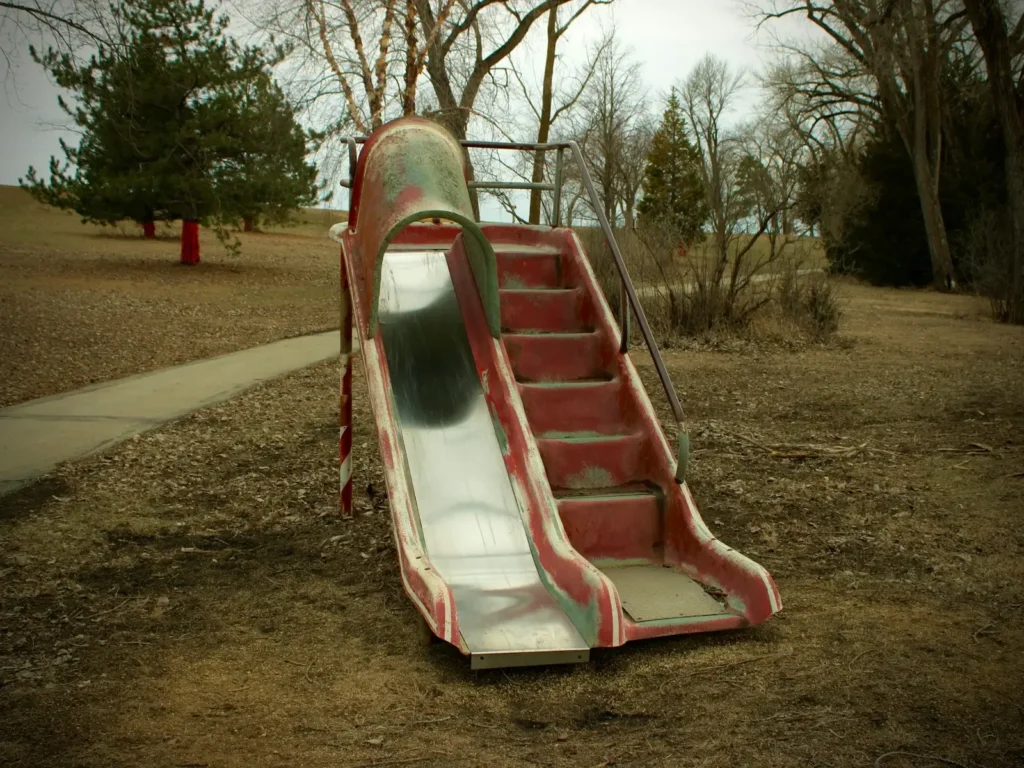
An old playground slide can be resold, repurposed, recycled, or replaced depending on its material and condition. Slides are one of the most common parts people ask about because they wear visibly and often outlast the frame around them. When you’re deciding what to do with old playground slide pieces, the first step is checking the material.
Start by checking the slide’s material. A molded plastic slide with no cracks and a smooth bed can be cleaned, sanitized, and reused on a new frame or sold to a homeowner. A metal slide with rust pitting or a warped bed should be recycled rather than reused, since rough surfaces scrape skin.
If the slide is sound but you’re retiring the whole set, list it separately. Backyard builders and makers pay for a good used slide. If it’s damaged, send the plastic or metal to the right recycler and keep the hardware, which often still has value.
When the slide is part of a larger safety problem, replace it. New slide modules bolt to modern frames and meet current slip and fall-height standards. That’s the cleaner path when the surrounding structure is also past its prime, and it lets you refresh the whole play area at once.
What to do with an old playset
For an old playset, the usual routes are donate, scrap the wood or metal, or swap in a new modular set. A playset usually means the combined frame with swings, a slide, and a climber, so the decision depends on which parts still earn their place. If you’re weighing what to do with old playset parts, start by asking whether the wood is still solid.
If the wood is solid and the hardware is tight, a refresh may be enough. Sand and seal the timber, replace worn swing straps, and add a new impact surface. That can add years at a fraction of replacement cost. If the wood is rotting or the metal core is rusting through, don’t patch it.
A wooden playset headed for removal should be separated carefully. Untreated or lightly treated timber can go to wood recycling or be chipped for mulch. Older treated timber must go to the hazardous waste stream. Metal swings and brackets go to scrap.
Many operators skip the piecemeal work and move straight to a new modular playset. Modular systems arrive in standard sections that bolt together, which makes future repairs cheaper and lets you expand later. When the old set is beyond saving, that swap is usually the most cost-effective finish line.
Know the old playground equipment names before you act
Learning the old playground equipment names helps you sell, donate, or recycle the right parts and talk to buyers and recyclers clearly. A precise name turns a vague “the spinning thing” into a listing that actually sells.
The table below covers the terms you’ll meet most often when handling a retired set. These are also the core playground equipment names buyers search for, so use them in any listing or handoff note.
| Name | What it is | Common disposal route |
| Swing frame | Posts and beams holding swing seats | Scrap metal or reuse |
| Slide | Inclined chute for sliding | Reuse, repurpose, or recycle |
| Climber | Ladder, net, or jungle gym structure | Scrap or part out |
| Merry-go-round | Spinning disc ride | Specialized recycler or replace |
| Seesaw | Balanced board on a pivot | Scrap or donate |
| Spring rider | Animal or shape on a spring base | Sell as novelty or scrap |
| Balance beam | Low beam for stepping | Repurpose as landscaping |
| Monkey bars | Overhead hanging bars | Scrap metal |
| Tire swing | Swing built around a tire | Recycle tire separately |
| Play castle | Enclosed climber and slide unit | Dismantle and sort materials |
Knowing these terms also helps with the next step, because spinning pieces need a different approach from static ones.
Playground equipment that spins: what to do with it
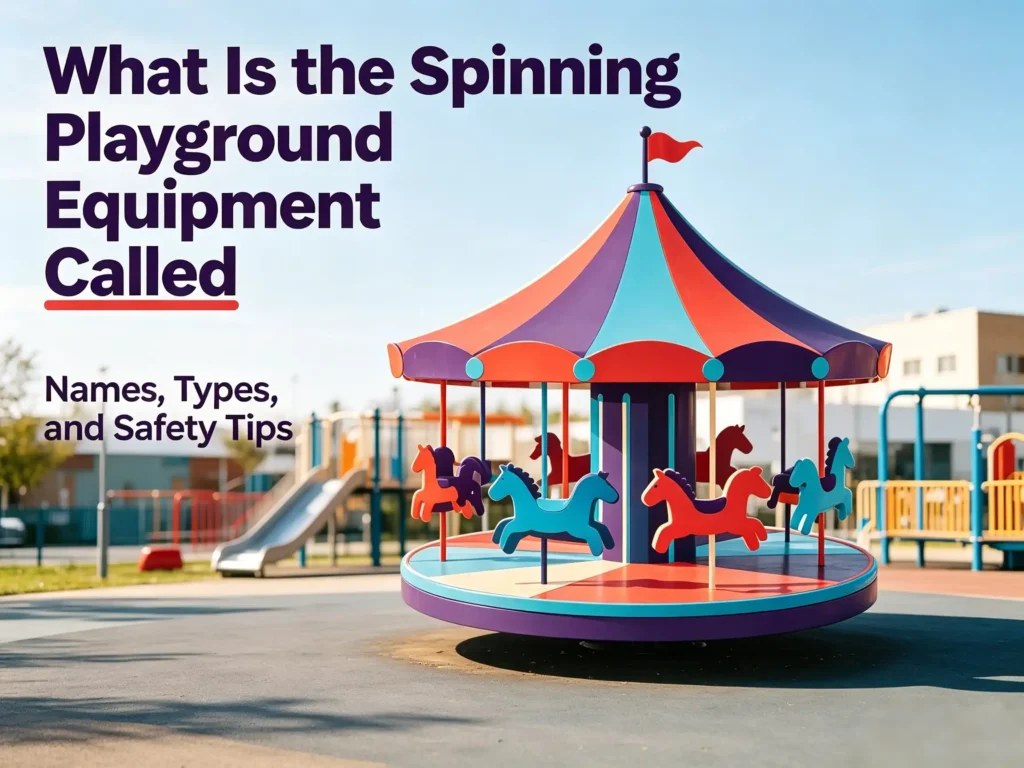
Spinning equipment like carousels and merry-go-rounds needs special care because the moving parts wear differently from static frames. The bearing, axle, and drive system carry load every cycle, so they fail in ways a slide never will.
Inspect the rotation hardware first. A spinner that grinds, wobbles, or binds is a removal candidate even if the platform looks fine. The moving assembly is the hazard, not the painted top.
If the spinner is sound, it’s one of the easiest pieces to keep in service, because kids return to it again and again. Refurbish the bearing and repaint the platform, and it can outlast newer static pieces. If it’s beyond repair, recycle the steel and consider a modern replacement.
When you replace a spinner, look at current designs built for continuous commercial use. A unit such as the 16-seat European-style carousel shows how today’s spinning rides are engineered for capacity and safety in public settings. Matching the new piece to your site’s foot traffic keeps the play value high without overspending.
Replace with new equipment when repair isn’t worth it
When repair costs pass half the price of new, replacing the set usually makes more sense. This is the point where patchwork stops paying off and a fresh install becomes the cheaper long-term path.
Calculate the real numbers. Add parts, labor, inspection, and downtime for the repair, then compare it to a new system that includes warranty and current compliance. If repair hits the halfway mark, you’ll have new wins on the total cost of ownership even before you count the safety upside.
New equipment also brings benefits the old set can’t match. Modern materials resist UV and graffiti better, impact surfaces meet tighter standards, and modular designs let you add pieces as your community grows. For outdoor sites, a current outdoor playground equipment range gives you options sized for the space and the age group you serve.
Plan the swap as a project, not a panic. Measure the site, confirm fall zones, and schedule removal and installation back to back so the area is never open and unsafe. A short closure beats a long one, and a clean handoff keeps kids safe throughout.
Choose a reliable playground equipment company
Picking the right playground equipment companies decides whether your new install lasts and whether support exists after the sale. The cheapest quote rarely tells the whole story.
Ask for proof of safety certification and request references from installs like yours. A solid manufacturer explains compliance in plain language instead of hiding behind jargon. Confirm they provide spare parts and drawings so future repairs stay simple.
Look at the breadth of the catalog too. A supplier with electric amusement rides, indoor play systems, and outdoor structures can grow with your site instead of locking you into one format. That range matters when you expand from a basic play area into a fuller family destination.
JinQiKai, known as JQK, builds custom playground systems for commercial clients worldwide. The team designs to order, supports OEM and ODM projects, and ships a full range from outdoor play structures to spinning rides and themed indoor units. If you’re weighing what to do with old playground equipment and planning a replacement, reach out to JQK to discuss your site, review layout options, and request a quote tailored to your budget and capacity. A short conversation early often prevents an expensive mistake later.
FAQ
Can I leave old playground equipment in place if kids no longer use it?
No. A retired structure still attracts children, and a worn frame is a liability. Either secure it behind a closed area or remove it. An unused set that looks climbable is a hazard even when officially out of service.
Is it worth hiring a professional to remove a play structure?
Often yes. Dismantling involves cutting steel, handling treated wood, and moving heavy loads. A professional crew removes it safely, sorts recyclables, and leaves a clean site, which usually costs less than the injuries or disposal mistakes a DIY job can cause.
How do I estimate the scrap value of an old playground set?
Weigh the metal components and check current local scrap rates for steel and aluminum, then subtract hauling and labor. A recycler can give a rough figure from photos, but the final price depends on the sorted weight at the yard.