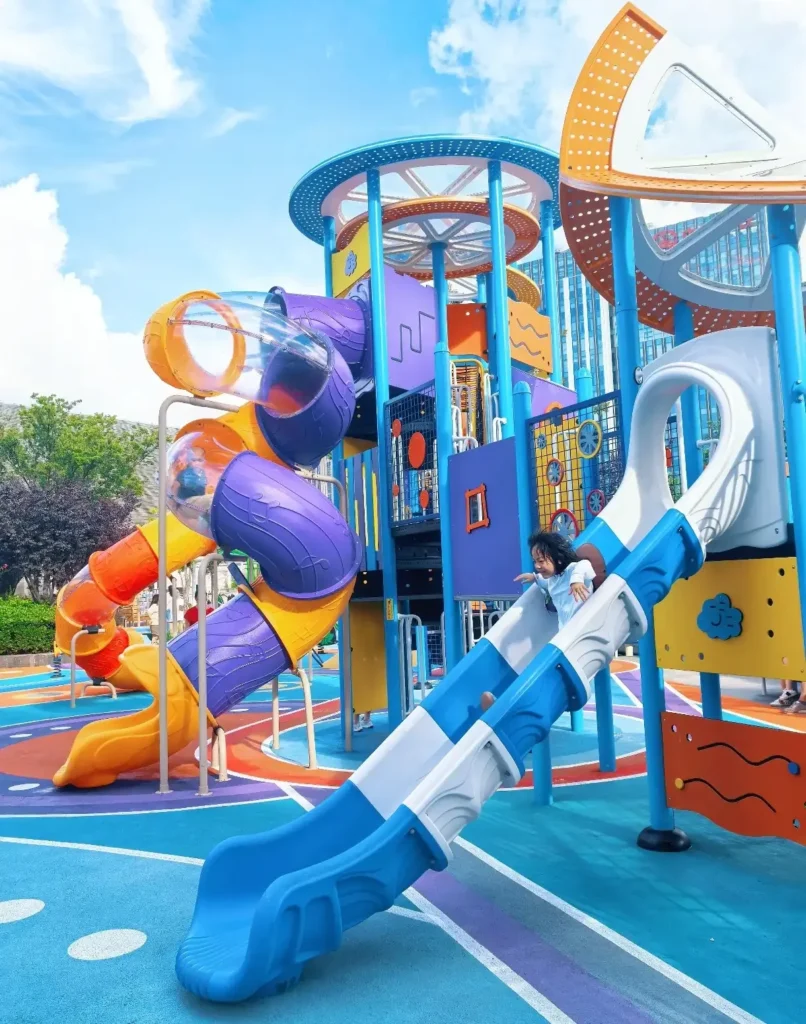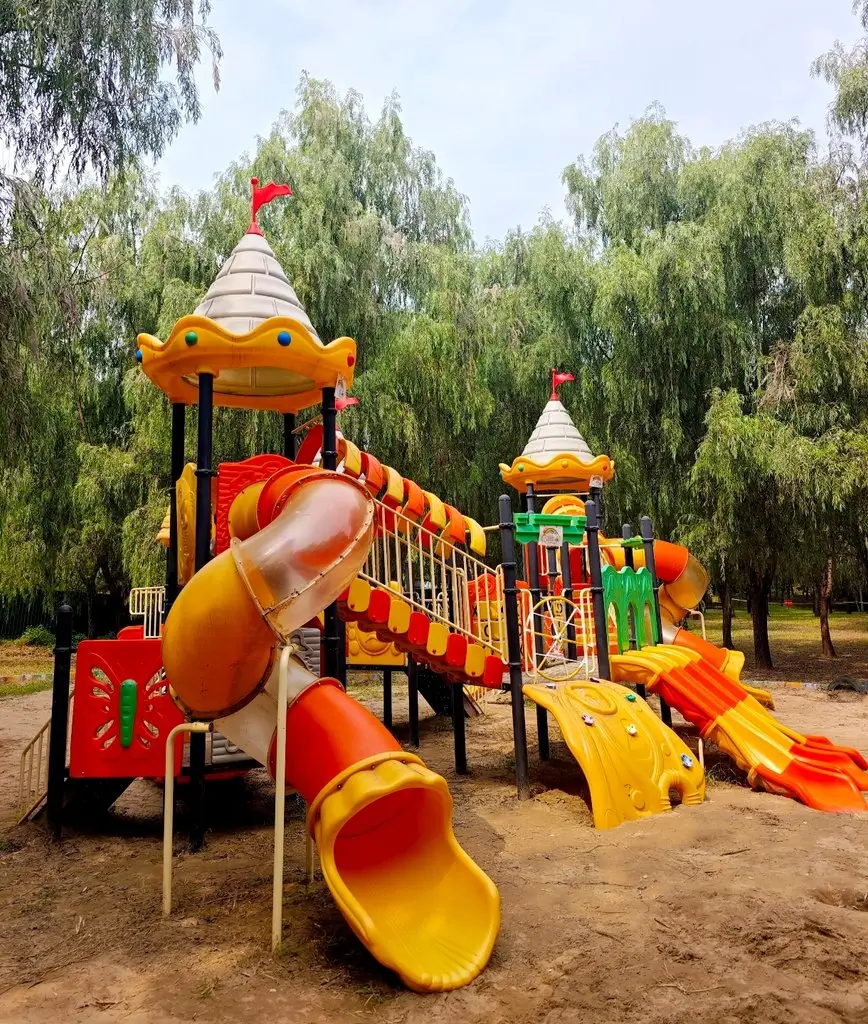
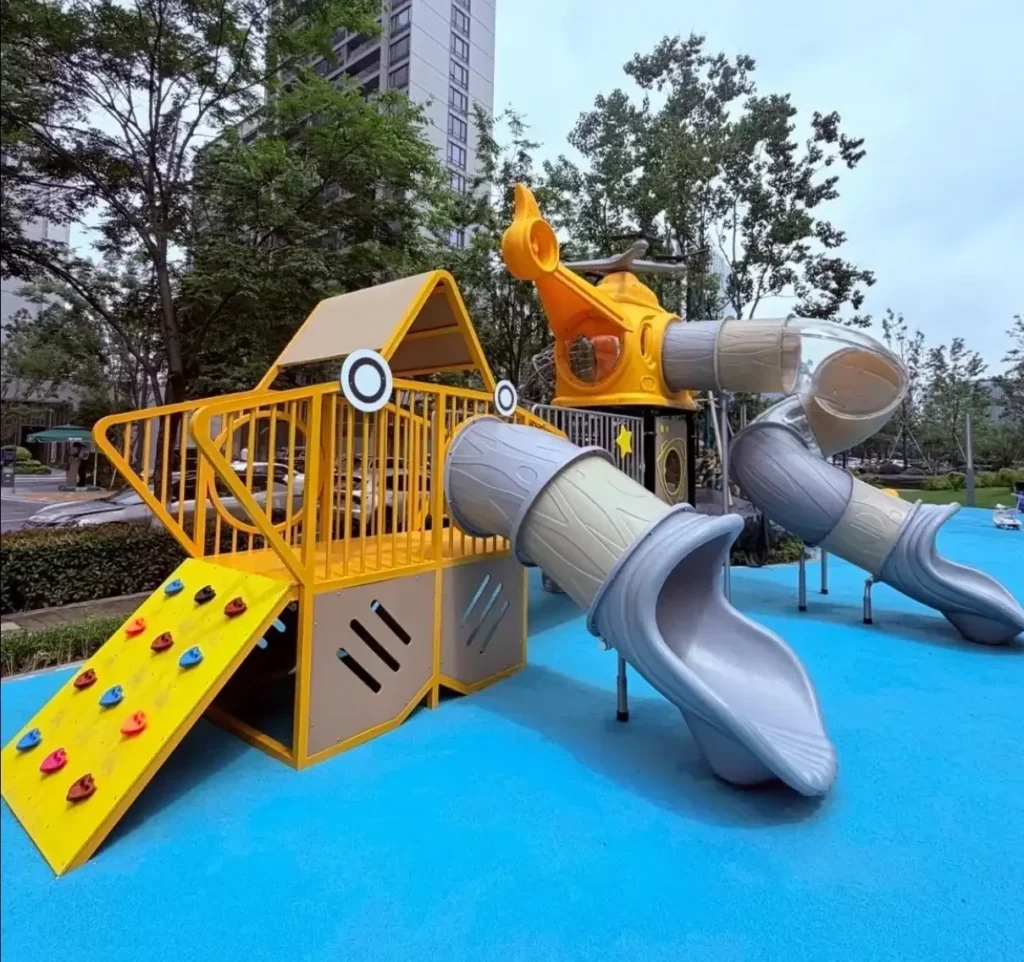
Combined kids slides represent one of the highest‑traffic capital purchases for kindergartens, municipal parks, residential communities and resort family zones. Operators need to make balanced decisions covering theme design, material performance, safety compliance, total‑cost ownership and long‑term maintainability. Many buyers only compare appearance and upfront price, yet overlook component durability, replaceable‑part structure and local certification requirements. Anyone sourcing combined‑slide equipment for public sites will face this core challenge: visual appeal varies widely, but real‑world performance depends on material grade, structural details, installation quality and ongoing maintenance.
A well‑specified commercial combined kids slide can deliver stable, safe play performance over 15‑20 years under heavy daily public usage. The main steel support frame often outlasts other components. Wear‑prone items that require periodic replacement include slide lanes, themed plastic panels, handrail hardware, anti‑slip climbing steps, safety netting and the underlying protective safety surfacing.
This article breaks down key selection criteria component‑by‑component, explains which factors push equipment toward a longer service life, and shares practical guidance for budgeting, inspection and equipment‑renewal planning.
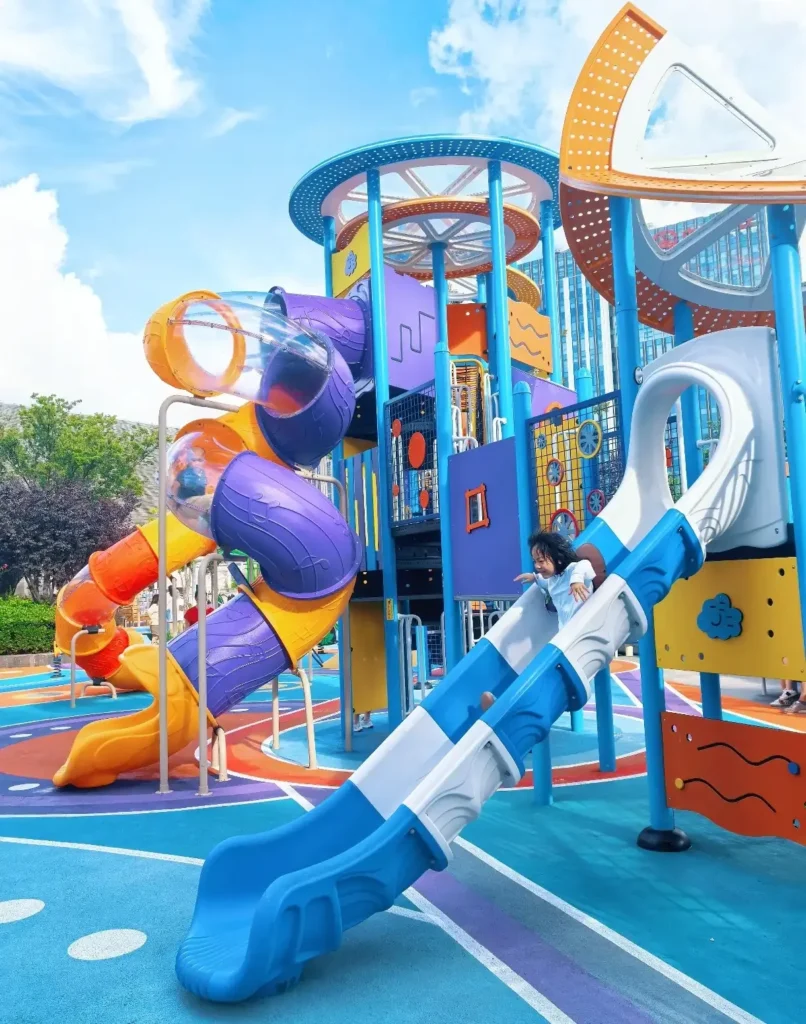
Real‑world performance gaps: Why identical‑looking slides perform differently on‑site
Commercial combined‑slide products are commonly advertised with 15‑20‑year service‑life expectations. However, material specification sets the upper performance limit, while site conditions plus regular maintenance decide real‑world service life. Two visually similar slide units delivered in the same batch can show obvious performance differences after 8‑10 years of outdoor exposure.
Supplier reference data shows performance divergence comes from material failure modes instead of the condition of brand‑new units.
| Material | Typical service life | Usual failure mode |
|---|---|---|
| Hot‑dip galvanized steel posts with outdoor powder coating | 20‑25 years+ | Coating‑scratch‑initiated corrosion, rust on ground‑level welding joints |
| 304 stainless‑steel hardware assembly | 25 years and above | Surface staining, hinge and bushing mechanical wear |
| UV‑stabilized LLDPE / HDPE rotational‑molded plastic panels & slide parts | 10‑18 years | UV brittleness, color fading, impact‑induced surface cracking |
| Engineered treated timber decorative components | 10‑14 years | Ground‑contact rot, surface splitting, insect erosion |
| Polyester safety rope and net assemblies | 8‑12 years | Friction abrasion at anchor connection points |
| Poured‑in‑place rubber safety surfacing | 8‑12 years | Compression deformation, seam splitting, UV hardening |
Please treat these figures as reference ranges rather than absolute performance guarantees. Powder‑coated galvanized steel outperforms timber in most humid and coastal climates. Moving hardware such as climbing‑handrail bearings will wear out multiple times during the service cycle of the main steel frame. Residential backyard play sets belong to separate evaluation criteria; they face low visitor volume, so their lifespan parameters cannot be applied to kindergarten or public‑park scenarios running multiple play sessions each day.
Frames outwear consumable parts: Budget for components separately
A combined‑slide unit is not a single‑unit asset. It consists of long‑life load‑bearing steel frameworks plus multiple short‑life wearing components. Procurement and annual‑maintenance budgets should evaluate these two categories independently.
Many project managers make typical planning mistakes: replacing an entire slide system after 11‑13 years only because plastic panels look faded, while the steel frame still retains another decade of usable service life. On the contrary, some operators keep repairing equipment whose ground‑contact support posts suffer advanced corrosion, pouring funds into structures that are approaching their end‑of‑life status.
| Component group | Service life | Replacement pattern |
|---|---|---|
| Main posts, support arches, welded frame, ground footings | 20‑25 years | One‑time replacement at full asset end‑of‑life |
| Play decks, standing platforms, themed decorative panels | 10‑15 years | Replacement once or twice within the full lifecycle |
| Moving and friction‑exposed hardware: bearings, hinge sleeves, locking fasteners | 5‑10 years | Batch replacement every several operating years |
| Slide lanes, climbing sections, continuous handrail assemblies | 10‑15 years | Usually one full change cycle |
| Protective safety rope & net elements | 8‑12 years | One or two replacement cycles |
| Impact‑absorbing safety surfacing | 8‑12 years for monolithic rubber; loose‑fill requires regular top‑up | Continuous inspection & maintenance |
Two practical conclusions follow. Complete component documentation handed over together with equipment is more valuable than warranty documents. When equipment reaches year 8‑10, operators need to confirm spare‑part availability instead of only checking original warranty coverage. Prioritize modular bolt‑on structural design: high‑wear plastic panels and slide lanes should be detachable without full disassembly of the tower frame. Bolt‑connected construction significantly lowers long‑term renewal costs compared with welded‑in decorative components.
Five core factors determining whether your combined slide reaches its full expected service life
Five critical variables separate slides that fail early at year 10 from units that operate reliably up to 20 years: material‑specification standard, local climate exposure, daily‑visitor‑traffic volume, installation & foundation quality, and systematic‑maintenance program. After equipment hand‑over, only installation quality and maintenance remain fully controllable for site operators.
Material specification defines performance ceiling
Hot‑dip galvanized steel creates a zinc anti‑corrosion base layer; outdoor powder coating adds extra color and a secondary barrier protection. Once surface coating gets scratched or chipped, corrosion will start progressing, and coastal salt‑spray environments accelerate this degradation process. UV‑stabilized plastic formulations resist sunlight damage far better than ordinary‑grade plastics. Without UV additives, panels turn brittle and fade significantly around year 7‑8, whereas premium UV‑resistant materials maintain appearance until year 14‑16. If timber decoration is selected, periodic re‑sealing must be scheduled as mandatory recurring work instead of optional maintenance.
Climate and site environmental exposure
Ultraviolet sunlight, salt‑laden air and accumulated rainwater produce most long‑term equipment damage. UV radiation embrittles plastic slides and fades bright theme colors. Humidity plus salt‑rich coastal atmosphere attack metal sections wherever protective coating gets breached. Freeze‑thaw cycles stress footings and connecting joints, tilting support posts and opening gaps that trap water. Standing pooled water represents a hidden risk factor: it accelerates ground‑level steel rust, degrades safety surfacing and turns into ice hazards in cold winter seasons.
Visitor traffic and target‑age‑group composition
A weekend‑peak municipal park carries different wear patterns versus a kindergarten site operating multiple daily play breaks. Components under frequent children contact degrade first: slide‑exit sections, climbing grips and handrails bear the highest friction load. Age grouping also influences wear intensity; facilities serving 5‑12‑year‑old kids sustain harder impact force compared with preschool‑oriented play equipment, and hardware fasteners work loose more frequently under heavy‑impact usage.
Installation quality, drainage design and hardware matching
Shallow footings, insufficient anchoring and poor site drainage will shorten service life even for high‑grade equipment. Direct contact between dissimilar metal types triggers galvanic electrochemical corrosion at joints. A slide installed perfectly level, anchored according to engineering drawings and with water draining away from footings can remain functional long after an identical but poorly‑installed unit becomes unsafe for operation.
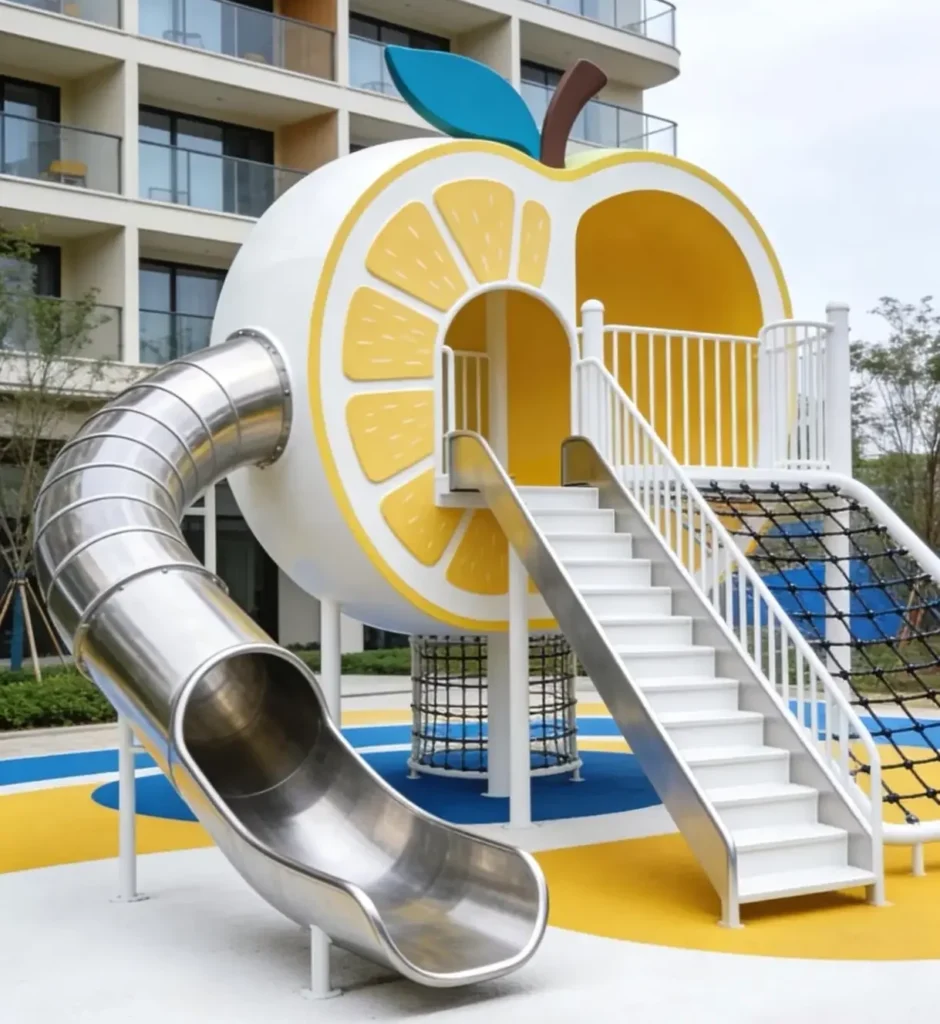
Practical value delivered by standardized maintenance routines
Maintenance is the key variable fully controlled by site operators, and formal documented maintenance can extend usable life by roughly one decade. Neglected commercial slides may show critical defects within 10 years; identical equipment operated with formal inspection logs can reliably reach 20‑year service targets.
Inspection work items are low‑cost compared against full‑equipment‑replacement investment.
| Inspection Interval | Main Check Content |
|---|---|
| Daily / Weekly visual walk‑through | Sharp exposed edges, cracked components, protruding fasteners, debris litter, surfacing depth at slide exit and fall‑out zones |
| Monthly check | Hardware bolt tightness, wear status of moving hinge & bearing parts, coating scratch or chipping, site‑drainage performance |
| Quarterly detailed inspection | Structural connecting joints, footing‑corrosion condition, surfacing‑seam integrity, complete fall‑zone hazard review |
| Annual full audit | Comprehensive structural‑safety inspection, surfacing‑impact‑performance test after major repairs, coating touch‑up & re‑painting planning |
Standards such as ASTM F1487 and EN1176 set baseline safety requirements for public playgrounds and cover installation guidance plus maintenance recommendations. These documents provide defensible operational reference, yet cannot replace written inspection logs. Manufacturers will normally request complete maintenance records when processing warranty‑claim applications.
Recommended workflow for damaged or unsafe slide components
First take affected sections completely out‑of‑service, then carry out assessment and repair planning afterwards. Set physical barricades, photograph defect details and record occurrence dates. Distinguish cosmetic surface wear from dangerous structural failure. Cracked support posts, deformed main frames, footing‑level corrosion and fractured welds demand permanent closure until full component replacement. Missing bolts or split decorative panels belong to repairable faults. Never reopen play zones simply because replacement spare parts are on order; skipping barricade procedures creates serious liability risks.
When continuous repairs become economically unreasonable
Four combined warning signals indicate repeated‑repair spending becomes equivalent to investing toward brand‑new playground equipment: rising repair frequency, progressive structural degradation, equipment no longer complying with updated safety codes, and shifting site functional requirements.
Each individual warning can sometimes be managed separately. Frequent small‑part repairs on sound main frames are often low‑cost fixes. Ground‑level structural corrosion, fractured welds and permanent frame deformation cannot be practically repaired. Some slides may retain intact main structures yet fail inspection because opening gaps, protrusion geometry and fall‑height parameters no longer satisfy current safety standards. The fourth frequently‑ignored factor comes from changing site requirements: equipment built for narrow age ranges or lacking accessible play elements may remain mechanically sound yet fail to meet community‑operation objectives.
Available disposal & upgrade paths for aging combined slides
Operators have four options for end‑of‑cycle equipment: on‑site refurbishment, relocation to secondary venues, donation / resale, or full dismantling plus material recycling. Decision‑making should be based upon main‑frame and footing integrity rather than visual appearance of plastic decorative panels.
| Solution | Suitable condition | Key risk points |
|---|---|---|
| On‑site partial refurbishment | Main steel frame and footings remain intact; damage limited to panels, hardware and safety surfacing | Confirm spare‑part‑supply availability for the exact product model |
| Relocation to second‑site location | Full‑structure mechanical integrity confirmed, target site has adequate fall‑zone space | Re‑construction of footings, full‑hardware renewal, post‑reassembly safety re‑inspection |
| Donation or second‑hand resale | Equipment complete, service age under 10 years old, full‑inspection documentation kept | Liability risks transfer alongside equipment; honest condition disclosure is mandatory |
| Dismantle & recycle | Severe frame corrosion or obsolete non‑compliant design | Steel and HDPE plastic are recyclable; dismantling and waste‑handling generate real costs |
Relocation often appears cheaper in theory yet carries hidden costs: original footings cannot be reused, old hardware must not be reinstalled, and post‑assembly professional inspection is compulsory. Once equipment passes 12 service years, partial refurbishment for the existing site normally delivers better economic value than full relocation.
Understanding real‑world replacement costs and phased‑upgrade budgeting
Total‑slide‑replacement budget contains four independent cost buckets: play‑structure hardware, safety‑impact surfacing, field‑installation labor, and old‑equipment‑removal work. Quotation documents only listing play‑equipment price leave three major expense items unaccounted‑for.
Safety surfacing is most frequently underestimated. Monolithic poured rubber carries higher per‑unit‑area cost compared with loose‑fill materials, and multi‑tower combined slides demand large continuous fall‑zone space. The second major hidden expense covers old‑structure dismantling, waste disposal and footing‑excavation work. On‑site foundation conditions heavily alter total‑installation pricing.
Commercial combined‑slide price reference
No universal average price applies. Final quotation changes with occupied footprint, quantity of independent play activities, theme complexity, raw‑material grade and required fall‑zone surfacing. Simple preschool‑tower units and multi‑level themed whale‑series combined slides belong to completely different cost tiers. Treat quoted figures as budget‑reference bands only, and always price against your exact‑layout drawing. This principle also applies for comparing competing‑vendor proposals: low‑price quotations frequently mean thinner‑gauge steel, fewer play stations, or loose‑fill surfacing substituted for monolithic‑rubber specification.
Phased‑replacement matching budget cycles
Slide components degrade sequentially, so renewal investment can also roll‑out in phases. Prioritize high‑safety‑risk wearing hardware and safety surfacing first. Next replace faded themed panels and slide lanes. The main steel frame gets renewed last and often remains usable for the full project cycle. Schools can schedule heavy‑duty upgrade work during summer‑vacation windows; public parks arrange construction in off‑peak seasons. Implement component‑level renewal while keeping most zones open for visitors throughout most of the calendar year.
How JQK optimizes combined‑slide design for extended service life
The most cost‑effective way to maximize slide service life happens during the initial‑design phase, when material grade, structural layout and detachable‑component logic get locked‑in together.
JQK manufactures custom indoor and outdoor amusement facilities for parks, kindergartens, resorts and family‑entertainment centers. Our product portfolio includes themed combined slides, multi‑level indoor soft‑play structures, trampoline‑park systems and motor‑driven amusement rides. Most projects start from client‑supplied site drawings instead of fixed catalogue items. Two design details directly improve long‑term asset value: we structure combined‑slide towers so themed panels, slide lanes and friction hardware can be individually swapped out. Operators avoid scrapping intact heavy‑duty steel frames merely due to one worn‑out accessory. Layout planning strictly respects real‑site fall‑zone requirements and target‑user age brackets — these two points determine actual wear intensity and regulatory compliance over decades. Completed project cases can be viewed on our product‑case page.
If you plan new‑playground construction or slide‑system renewal, share your site footprint, target‑user age groups and project‑budget range. JQK will return customized‑layout drawings, detailed‑material specification and formal quotation, delivering lifespan‑planning solutions tailored for your actual project instead of generic industry‑wide average parameters.
FAQ
Does longer warranty duration automatically guarantee longer real‑world service life?
No. Warranty documents cover manufacturing defects within defined time periods; this differs completely from real‑world usable service life. A 10‑year structural warranty promises the steel frame should not fail from factory defects inside ten years. It offers zero guarantee for slide lanes, plastic panels or safety surfacing. Most warranty clauses require complete, continuous maintenance logs to remain valid. Before purchase, carefully confirm exactly which components receive coverage, warranty‑time limits and attached prerequisites instead of treating warranty length as proxy for equipment durability.
What performance gaps exist between commercial‑grade combined slides and residential backyard play sets?
Commercial‑spec slides are engineered for continuous heavy public‑venue usage: heavier‑gauge steel tubing, reinforced welding joints, high‑strength anti‑theft hardware and heavy‑duty ground‑anchoring systems. Residential backyard playsets may serve a small handful of children each week; public‑site slides face hundreds of users daily. That explains why residential‑grade products carry 10‑15‑year advertised lifespan while commercial‑grade units quote 15‑20+‑year service expectation. This difference originates from mechanical‑load‑bearing engineering rather than marketing descriptions.
Can the playground site stay partially open while replacing worn slide‑system components?
Partial‑site opening is feasible when maintenance work can be physically isolated. Swapping slide lanes, handrail hardware or partial safety‑net sections can proceed with rest zones accessible, as long as construction zones get securely fenced and defective play sections stay barricaded closed. Structural‑frame repair, footing reconstruction or fall‑zone‑surfacing renewal require full‑site closure. Schedule these jobs in advance and pre‑order spare‑parts inventory. Prolonged barricaded waiting periods for spare‑part delivery generate avoidable operational losses.