Outdoor children’s playgrounds are essential facilities for kindergartens, residential communities, public parks and parent‑child parks worldwide. When planning a new play zone or upgrading an existing playground space, one of the biggest decisions operators face is whether to invest in modular combined slides or fully custom‑built play structures. Both options can deliver fun, safe play experiences for kids aged 4‑12 years old, yet they differ significantly in budget, lead time, installation flexibility, safety compliance, long‑term upgrade potential and day‑to‑day operational management.
Many project managers, property developers and kindergarten procurement teams feel confused when comparing these two mainstream playground solutions. Modular combined slides represented by our AE‑18 whale‑themed unit have gained huge popularity across global markets, spanning Southeast Asia, the Middle East, Europe and the Americas. Meanwhile, custom‑built play structures attract buyers looking for one‑of‑a‑kind visual effects and exclusive brand storytelling. To help venue owners, procurement teams and landscape designers make well‑informed investment decisions, this article breaks down core advantages, limitations, maintenance considerations and ideal application scenarios for each playground solution. It also highlights real‑world pain points many buyers overlook before signing purchase contracts.
What Are Modular Combined Slides?
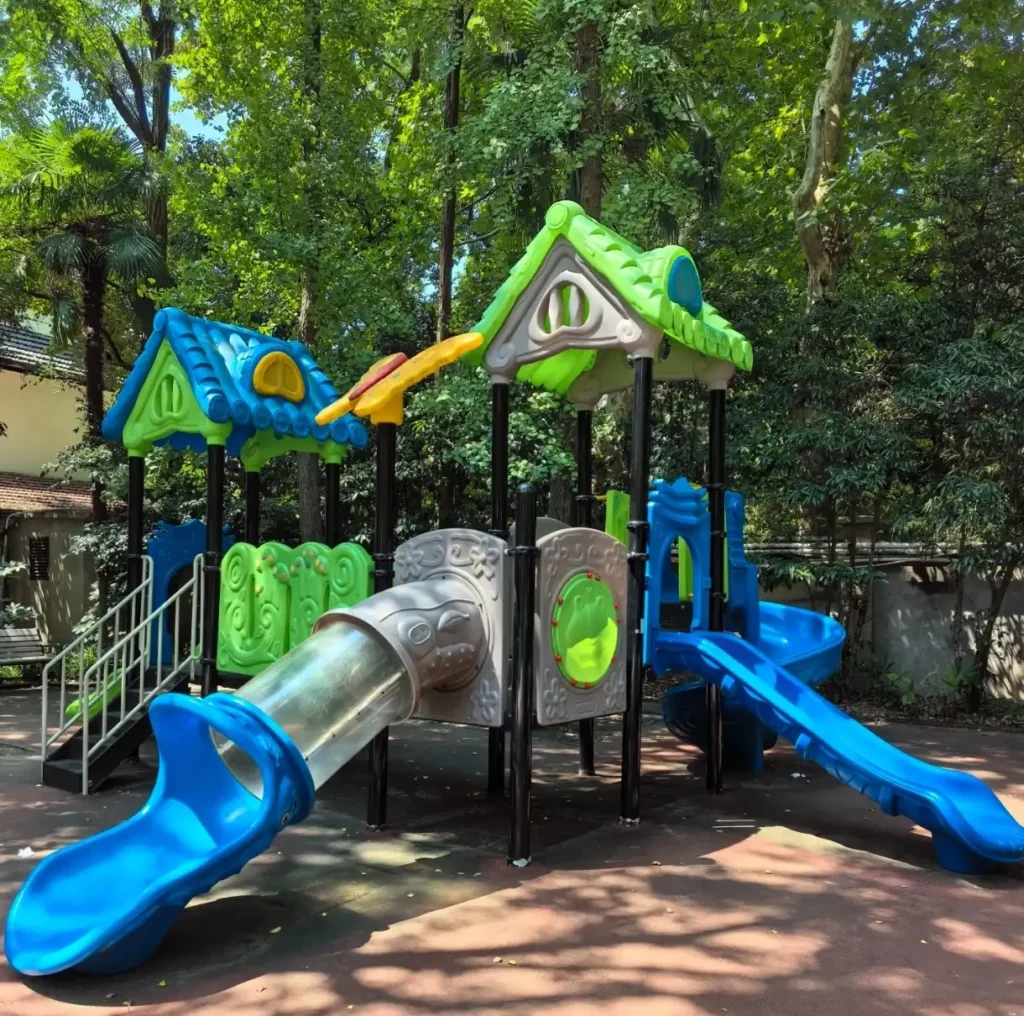
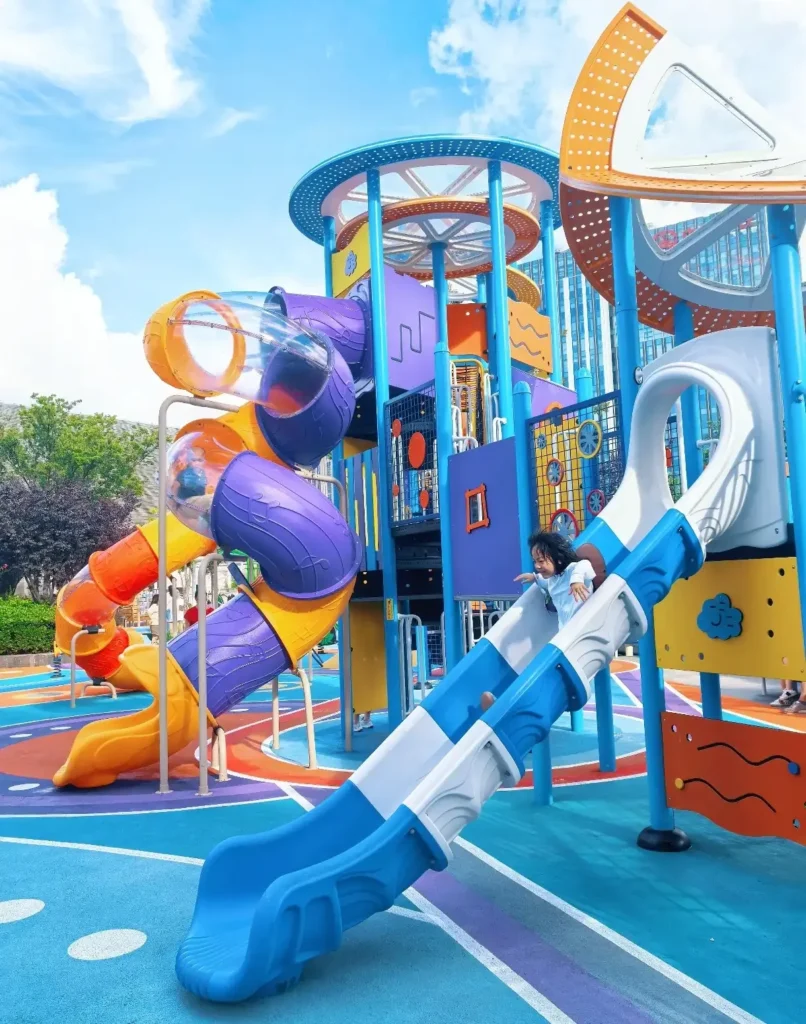
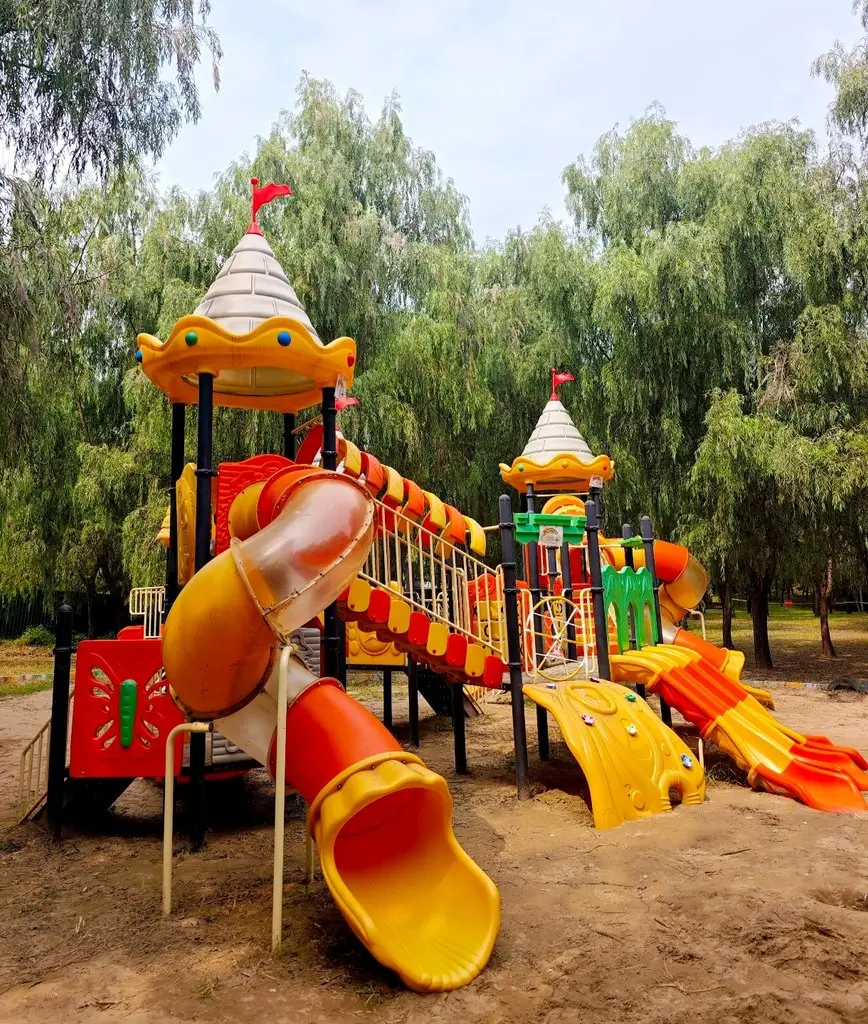
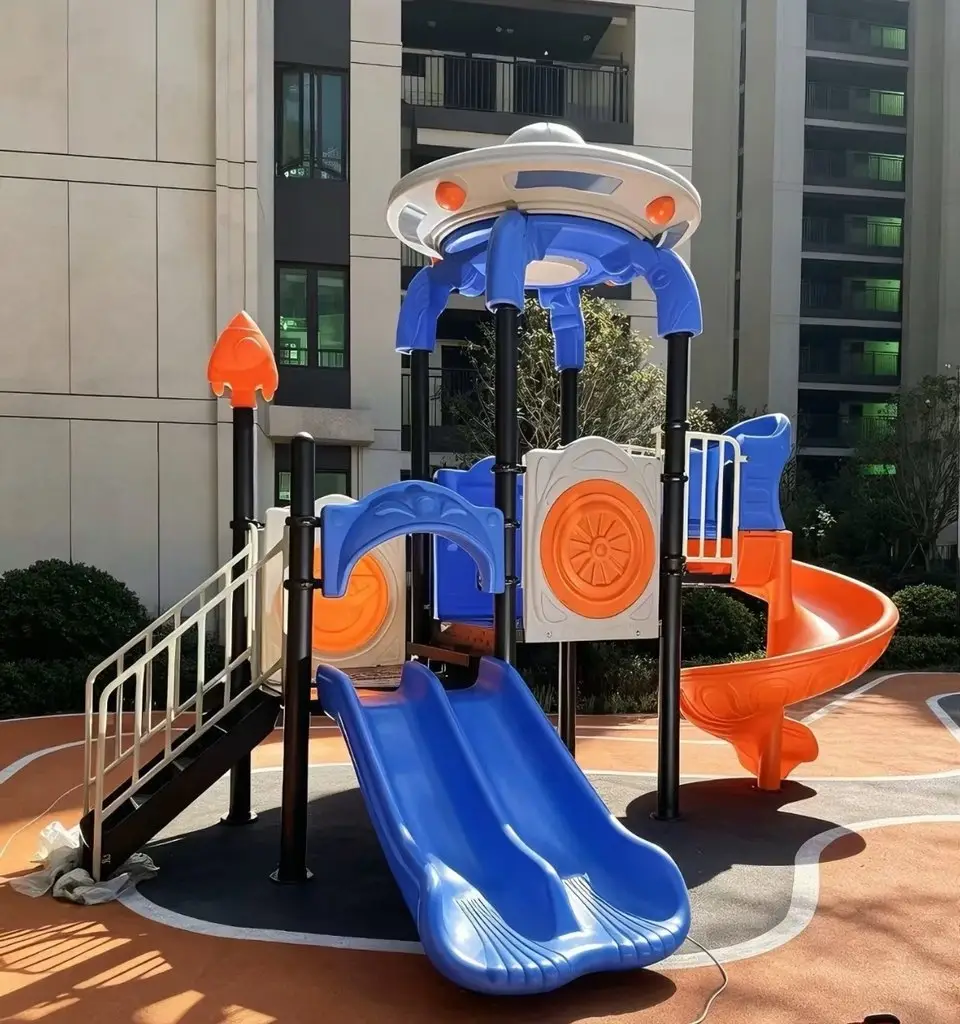
Modular combined slides are pre‑engineered playground systems assembled from standardized factory‑produced components. Each complete unit includes pre‑molded plastic slide sections, heavy‑duty galvanized steel support posts, safety handrails, anti‑slip climbing ladders, themed decorative panels and a full set of connection hardware. All parts are pre‑produced in factory workshops and designed for quick on‑site bolt‑together assembly, eliminating large‑scale on‑site welding, concrete pouring or costly new‑mould fabrication work.
Qualified amusement‑equipment manufacturers develop complete series of themed modules covering ocean, space, jungle, animal and cartoon styles. Clients select suitable modules, sizes and colour schemes according to their actual site dimensions, target user groups and local aesthetic preferences. The AE‑18 ocean‑whale combined slide is a typical modular product: it features fixed dimensions of 250×200×300 cm, dual sliding lanes for multi‑child simultaneous play, 76 mm hot‑dip galvanized round‑steel posts, and reserved expansion interfaces for later additions such as swings, climbing nets or crawl tunnels.
Most modular playground sets follow international safety standards at the product‑development stage. Every corner is rounded; handrail height and step width are calculated to meet EN1176 and ASTM playground requirements. Provided installers follow official guidelines, core safety performance will not be compromised by on‑site assembly.
Pros of modular combined slides
- Shorter production and delivery cycle Since all components are mass‑produced based on existing moulds, production lead times are much shorter. Normally factories can complete production within 15‑25 working days. On‑site installation only requires basic bolt‑together assembly work; a medium‑size combined slide can be fully set up by 2‑3 workers within one to two days. For projects with tight opening schedules — such as a new kindergarten semester launch, residential‑community handover or seasonal park activity plans — modular slides become the preferred option.
- Clear and controllable project budget Each complete set has a fixed quotation based on finished‑product specifications. Buyers can obtain precise pricing before order confirmation, avoiding unexpected extra costs that frequently occur during custom development. Transportation costs are also predictable, as components are packed in standard export cartons and wooden crates. There are no hidden fees for basic design or prototype testing. Even for bulk procurement of multiple playground units, clients can easily prepare accurate financial forecasts.
- Mature safety certifications & stable quality performance Standard modular play equipment has undergone repeated safety testing. Most qualified suppliers hold CE, TUV, EN 1176, SGS, ISO 9001 and ASTM certifications for their serial‑range products. Material formulations, corner‑rounding treatments and structural‑load calculations are fully verified during product development. Spare parts such as slide panels, handrail covers and locking screws are consistently kept in stock for future maintenance. When local authorities conduct playground‑safety inspections, serial modular products can efficiently supply complete, ready‑made certification documentation.
- Flexible expandability and easy component replacement Reserved connection interfaces allow operators to add extra play components years after initial installation. When playground foot traffic grows or site planning is updated, swings, climbing nets or small crawl tunnels can be attached to the existing main frame without full replacement of the entire playground. If individual parts become damaged after long‑term outdoor exposure, venue operators only need to order matching replacement components instead of overhauling the whole facility. This greatly reduces repair expenses and operational downtime.
- Proven real‑world field performance Thousands of identical or similar modular units have been deployed in playgrounds across the globe. Manufacturers have accumulated abundant feedback from diverse climate zones: high‑humidity coastal areas, high‑sunlight tropical regions and cold low‑temperature zones alike. Material anti‑ageing, UV‑resistance and anti‑rust performance are continuously optimised based on real‑project feedback. Buyers can reference existing project cases to anticipate real‑world service outcomes.
Cons of modular combined slides
Modular play sets rely on existing mould resources, so creative uniqueness is limited. You may adjust colour combinations and select different accessory modules, but fully exclusive shapes or large‑scale local‑cultural thematic elements cannot be realised. If your venue aims to build a highly iconic landmark playground for brand‑marketing purposes, standard modular products may fail to satisfy creative expectations. Furthermore, overall dimensions cannot be arbitrarily modified. If your available ground space has highly specialised size constraints, off‑the‑shelf models may not fit perfectly unless site adjustments are made.
What Are Custom‑Built Outdoor Play Structures?
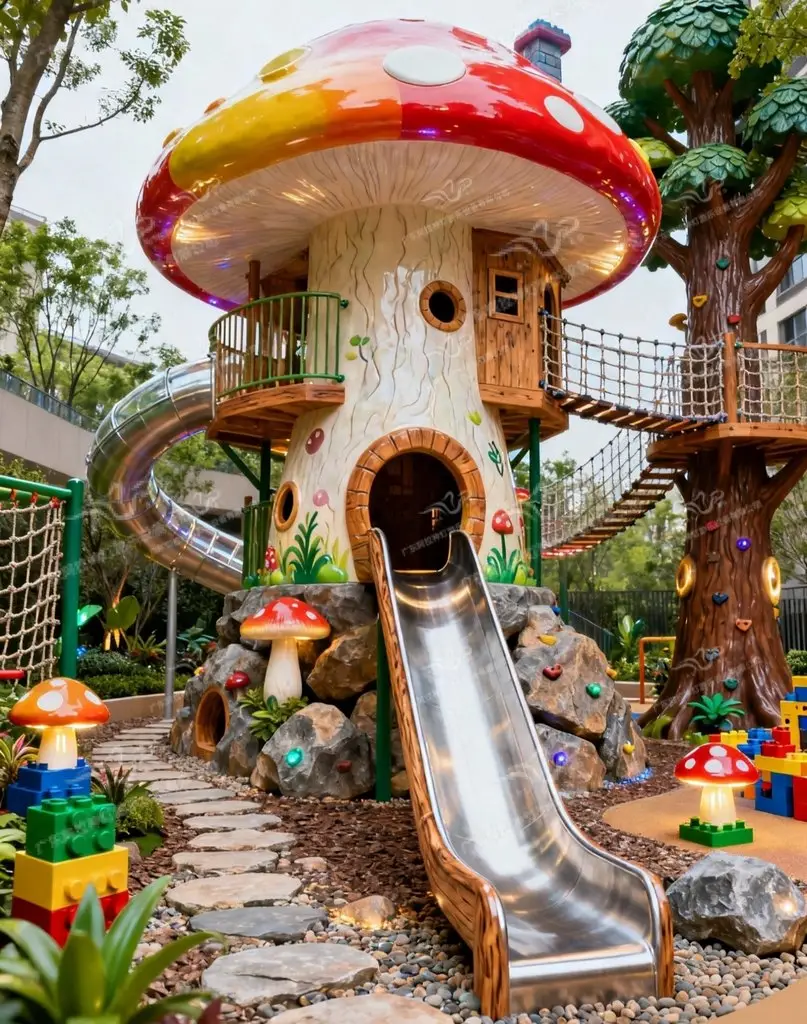
Custom‑built play structures refer to playground equipment fully developed according to clients’ exclusive requirements. Manufacturers start with concept sketching and 3D modelling, moving on to new‑mould development or on‑site metal fabrication. Size, thematic shape, platform height, slide quantity, play functions and colour schemes can all be fully tailor‑made for a single project.
Custom playground projects are commonly seen for city landmark parks, high‑end real‑estate show zones, large‑scale theme resorts and cultural‑tourism scenic spots. Professional design teams integrate local folk stories, licensed IP imagery and overall landscape‑design language into every component of the play equipment. Some custom projects even combine playground facilities with landscape sculptures, water features or lighting systems to create multi‑functional scenic attractions.
Pros of custom‑built play structures
- Unlimited creative and thematic possibilities Designers can realise nearly any special appearance you request. Whether you require local‑cultural mascots, movie‑licensed cartoon characters or special landscape‑integrated forms, custom solutions can transform creative concepts into physical playground facilities. Custom playgrounds easily become social‑media‑friendly photo landmarks and greatly boost venue brand influence, helping tourist venues gain greater online exposure and visitor volumes.
- Perfect site adaptation for irregular land space Many public‑playground sites feature irregular outlines, special height‑limit requirements or unique terrain conditions such as slopes, depressions or nearby building obstructions. Custom engineers can adjust every dimension, platform layout and slide angle to maximise utilisation of every square metre of usable ground, optimising play functions even on non‑standard plots. Designs can also avoid underground pipelines, tree roots and other on‑site obstacles.
- Differentiated competitive edge Because custom‑built structures cannot be duplicated for other clients, your playground delivers a completely exclusive play experience. This helps venues stand out from surrounding competitors and improves repeat‑visitor rates. For commercial scenic spots, unique custom‑play equipment can become one of your core selling points for marketing promotions.
- Flexible function combination Clients may freely mix different play modules. For instance, climbing walls, spiral slides, interactive sound devices and sand‑play zones can be merged into one integrated structure based on the age range of target visitors, rather than being restricted to fixed function groupings found in standard products.
Cons of custom‑built play structures
Custom projects entail far‑longer lead times. Concept validation, multiple rounds of 3D revisions, new‑mould manufacturing and special‑component production normally take 45‑90 working days, not including on‑site installation and commissioning periods. Upfront investment costs are noticeably higher compared with modular slides. Every new mould, specialised craft and one‑off engineering task raises total expenditure; design fees and third‑party inspection costs further add to the budget.
Safety certification also grows more complex. Each newly‑customised structure requires independent third‑party safety testing, rather than re‑using existing serial‑product certificates. The full testing process consumes extra time and funds. Spare‑part supply can become problematic years after delivery, as certain specialised components are manufactured exclusively for your single project. When parts fail, new moulds must often be reopened for reproduction, bringing high costs and long lead times. Long‑term maintenance expenses will therefore rise significantly during later‑stage operations.
Additionally, custom‑built projects carry higher risks of design deviation. Communication gaps between buyers and designers may cause finished deliverables to diverge from original expectations. Revisions made mid‑production will generate extra losses.
Key Comparison Factors for Your Project
When you struggle to choose between modular combined slides and custom‑built play structures, evaluate your project against these practical dimensions:
Project timeline
Choose modular combined slides if your playground needs to open within 1‑2 months. Custom‑built structures are viable if you reserve more than 3 months for design, manufacturing iterations and third‑party testing.
Available budget range
Modular slides offer predictable mid‑level investment with low risk. Spare‑part replacement costs remain low across the full product lifecycle. Custom playgrounds demand a substantially higher overall budget covering design fees, mould costs, special‑testing expenses and reserved funds for potential long‑term maintenance.
Site conditions
Regular flat rectangular playground sites are ideal for modular products. Minor ground adjustments can accommodate the footprint of standard equipment. Sites with irregular boundaries, slopes, underground obstacles, strict landscape‑coordination rules or special height restrictions require custom‑built solutions.
Target visitors & operation positioning
For daily‑service public venues including kindergartens and residential communities, stability, safety and low‑cost maintenance are top priorities. For tourist‑oriented scenic spots and high‑end commercial parks chasing viral online appeal, exclusive visual features weigh more heavily in assessments.
Long‑term operation & maintenance plan
Modular equipment brings major advantages for kindergartens and community‑public playgrounds that prioritise easily‑sourced spare parts and low‑maintenance workloads. Operators can complete most routine repairs without specialist engineers. Custom‑built play structures are worth considering for landmark tourism‑focused venues that prioritise unique visual appeal over maintenance convenience. That said, operators must set aside sufficient after‑sales budgets.
Safety compliance requirement & export needs
Both approaches can meet international safety standards. However, serial‑range modular products come with mature, ready‑to‑use certification documents. This simplifies project inspections and customs clearance for overseas orders. Custom‑built products must complete a full suite of independent testing for every individual project prior to shipment.
Final Conclusion: Which One Should You Pick?
There is no universally “better” solution for all playground projects. The correct choice fully depends on your timeline, budget, site conditions, operational positioning and long‑term maintenance capacity.
Modular combined slides such as the AE‑18 ocean‑star series deliver outstanding value for most kindergarten, residential‑community and general public‑park projects. They strike a good balance between safety performance, cost control, delivery speed and later‑stage expandability. For most commercial and public‑playground buyers chasing stable return on investment, modular play systems represent the most practical and reliable option. Even for overseas‑export orders, complete certification documents streamline customs procedures and reduce project‑related risks.
Custom‑built play structures excel for landmark tourist parks, high‑end real‑estate signature zones and cultural‑themed scenic spots. Only select custom‑built solutions if you have an adequate budget, sufficient construction time, and your core objective is to create exclusive visual landmarks. You should also verify that your supplier possesses extensive custom‑playground experience, clear revision protocols and dependable long‑term spare‑part support policies.
For many medium‑scale projects, a hybrid approach offers a sensible middle ground between fully‑modular and fully‑custom options. Adopt cost‑effective modular main play equipment, then add a small number of custom‑decorative panels, special decals or themed‑sculpture ornaments to introduce personalised thematic features. This strategy balances budget constraints, delivery timelines and visual uniqueness, while avoiding the heavy costs and extended lead times of full custom development.
Before placing any order, always verify whether your supplier can supply complete safety certificates, detailed installation drawings, material‑test reports and reliable long‑term spare‑part support — regardless of whether you opt for modular or custom‑built playground equipment. Request real‑world completed‑project references and clarify after‑sales liability clauses upfront, to avoid unnecessary complications during installation and subsequent day‑to‑day operations.