
Lots of international buyers assume that obtaining official product certificates is enough to deliver a fully compliant playground project. In reality, even well‑certified play structures may fail local site audits due to poor site planning, incorrect ground surfacing selection, missing project records or improper post‑installation upkeep. Product certification only verifies factory‑made hardware performance; full‑project compliance covers design layout, on‑site assembly, regular inspection and document archiving. Different countries and local jurisdictions add extra mandatory rules beyond global test standards, creating hidden risks for playground operators and contractors.
Commercial playground compliance is built upon three interconnected layers: international product testing standards, site‑implementation technical guidance, and local administrative laws. A supplier’s test report only addresses the first layer and cannot replace requirements from the other two regulatory levels.
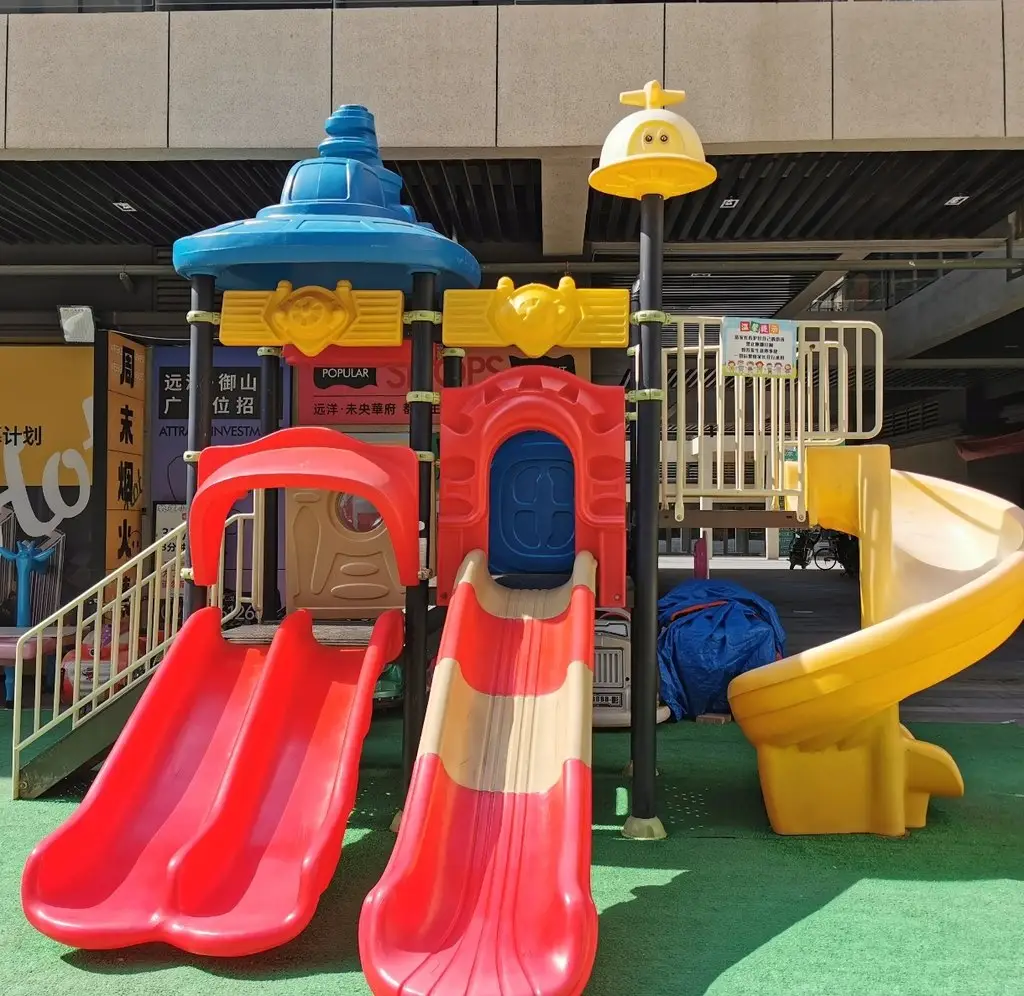
What Compliance Rules for Commercial Playgrounds Actually Cover
Complete playground regulatory systems consist of three key parts: statutory administrative provisions, technical implementation guides, and recognized product safety standards. Equipment suppliers mostly focus on product standards, while site‑related requirements are frequently overlooked by purchasers.
| Document Category | Main Responsibilities | Responsible Party |
|---|---|---|
| Product Safety Standard | Material toxicity, structural loading capacity, pinch & entrapment prevention, hardware and component specifications | Playground manufacturer |
| On‑site Technical Guide | Fall‑height matching for safety surfacing, clearance of hazard zones, age‑based zoning, accessible passage requirements | Designers & installation teams |
| Local Administrative Regulation | Project filing requirements, penalty clauses, mandatory inspection rules, long‑term document retention obligations | Playground owner & local government agency |
For projects targeting the North American market, ASTM F1487 governs manufactured playground components, while CPSC guidance documents lay out real‑world site building rules. European projects follow the full EN 1176 series covering production, assembly, periodic check and maintenance. Many cities and counties will reference these global standards while adding extra local clauses.
Regulatory constraints do not apply only to slides, climbing frames and swing sets. Safety surfacing, boundary fencing, walkways, surrounding greenery and informational signage are all included under compliance scope. Even replacing playground surfacing or perimeter fences will trigger compliance reviews, without any modification to main play structures.
Who Takes Legal Responsibility for Playground Compliance
There is rarely a nationwide pre‑approval permit system for finished playground sites across most overseas markets. Compliance obligations are distributed among manufacturers, installers and venue owners. Non‑compliance findings can trigger civil fines, insurance claim disputes and accident‑related compensation risks.
Manufacturers are required to deliver qualified amusement equipment, along with complete test reports, dimension datasheets, step‑by‑step assembly instructions and clear component warranty descriptions.
Installation contractors must strictly follow official drawings to complete ground foundations, equipment assembly, hazard zone planning and surfacing laying. High‑quality factory‑produced playground units can become safety hazards if assembled incorrectly on‑site.
Venue owners and operators are accountable for ongoing routine inspections, daily maintenance and safe‑keeping of all project‑related paperwork. Key files include manufacturer compliance documents, surfacing impact‑resistance test results, finished‑site layout drawings, installation acceptance forms and dated inspection photographs.
Important reminder: Valid product certificates cannot offset risks caused by poor installation or neglected maintenance. Penalties may apply purely for incomplete documentation, even when no injury to children has occurred.
Compliance Differences Between Various Playground Venues
Private backyard playgrounds for individual households are generally exempt from strict public‑playground regulatory controls. By contrast, public and commercial locations including kindergartens, community recreation grounds, shopping‑centre outdoor play zones and parent‑child amusement parks must satisfy full regulatory requirements.
| Scenario | Compliance Requirement | Practical Explanation |
|---|---|---|
| Brand‑new public or commercial playground | Full compliance for products, layout, surfacing and paperwork | Meet global standards plus additional local municipal requirements |
| Replacement or major modification of core play components | Classified as new construction work | Newly‑installed parts and adjacent affected site areas need to meet current safety specifications |
| Daily maintenance: bolt tightening, partial surfacing refilling, replacing spare parts of identical specifications | Does not trigger full re‑compliance assessment | Only maintain the existing safety condition of facilities |
| Playground built for single‑family private household | Usually exempt from public playground rules | Special local municipal bylaws may still impose partial restrictions |
It is critical to distinguish routine repair work versus large‑scale reconstruction. Swapping one damaged swing seat counts as ordinary maintenance; constructing a whole new swing section with changed size and location counts as construction and demands a full compliance check.
Key Compliance Checkpoints for Design and Installation Stages
Five core factors determine whether a playground site achieves real‑world compliance: impact‑absorbing surfacing matched to fall height, hazard‑free safety buffer zones, elimination of head‑and‑body trapping risks, separated play zones for different age brackets, and unobstructed accessible pathways. Improper surfacing and insufficient buffer space represent the most frequent non‑compliance issues in real‑world projects.
Safety surfacing performance must be selected according to the maximum fall height of play equipment, rather than merely choosing popular material types. Under ASTM F1292 standards, installed surfacing material needs to keep the Head Injury Criterion no higher than 1000 and G‑max value no higher than 200 corresponding to the actual fall height. Loose‑fill surfacing gradually loses shock‑absorbing performance as thickness reduces through usage and weather erosion, so regular material top‑ups are mandatory.
Regarding safety buffer zones: standalone playground structures need a minimum 6‑foot clear surrounding space. When adjacent play platforms rise higher than 30 inches, the gap between separate play pieces should be increased to at least 9 feet. Swing installations must reserve extra space for swinging movement, and this entire moving area must be covered by protective surfacing.
Anti‑entrapment checks need to examine all enclosed gaps between panels, support posts and connecting accessories, avoiding openings that could trap children’s heads or torsos. Raised platforms for young toddlers require protective barriers; guard opening dimensions must comply with standard limits, except for designated entrances and exits.
| Inspection Item | Core Requirements | Common Non‑compliance Cases |
|---|---|---|
| Shock‑Absorbent Safety Surfacing | ASTM F1292 / EN 1177 performance matching maximum fall height | Insufficient loose‑fill thickness at slide exits and swing activity zones |
| Safety Buffer Zones | Minimum 6‑foot basic clearance; 9‑foot spacing for tall adjacent play components | Swing motion range not fully covered by protective surfacing |
| Anti‑Entrapment Protection | No closed gaps risking head or torso entrapment | Dangerous gaps generated during field assembly of components |
| Age‑Group Partition | Independent activity spaces for 2‑5‑year‑old and 5‑12‑year‑old children | Mixed‑age playground without partitions or age‑warning signage |
| Accessible Play Path | Firm, stable and non‑slip walkways leading to main play components | Access routes look good on drawings but fail after surfacing material sinks |
Two widespread misconceptions need clarification: most regions do not enforce universal mandatory fencing for playgrounds. Height limits for play equipment are indirectly controlled by surfacing fall‑height standards instead of fixed absolute‑height rules. Fence installation requirements fully depend on local municipal codes and site risk evaluation.
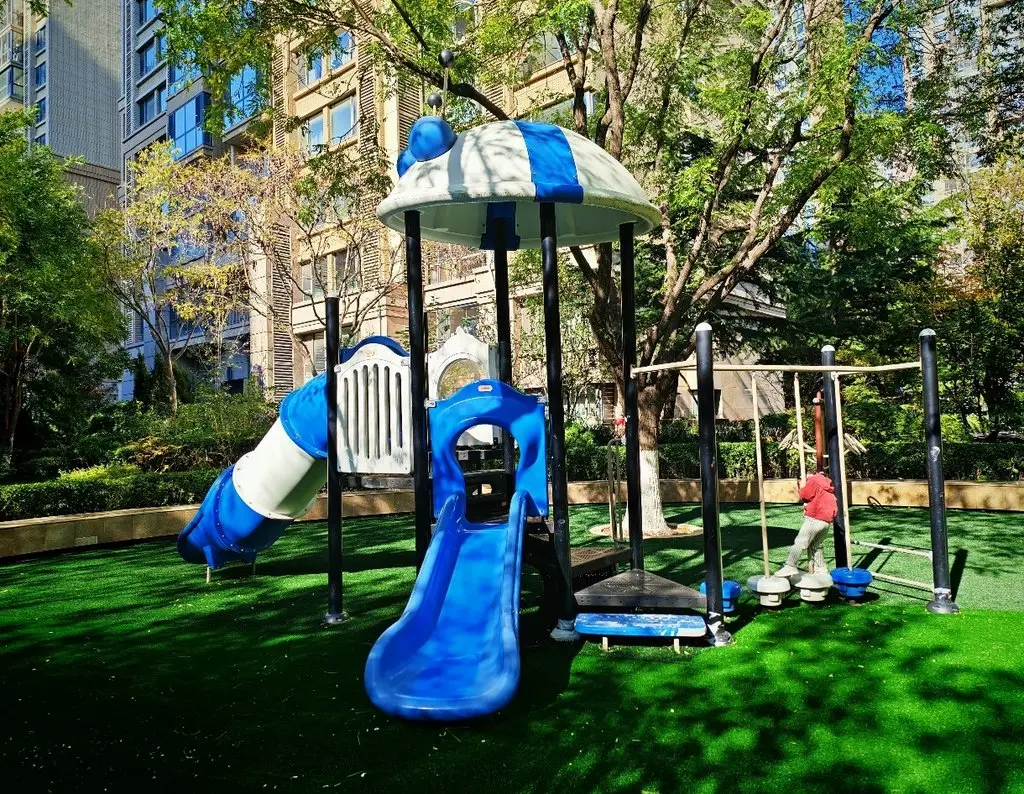
Which Work Triggers Fresh Compliance Evaluation
Building a completely new playground, replacing major equipment assemblies, or altering platform height, footprint and entry‑exit layouts of existing facilities will trigger new compliance reviews. Tasks such as repainting surfaces, tightening bolts, lubricating moving parts, topping‑up surfacing and updating signage belong to routine maintenance and do not activate full‑scope compliance obligations.
This rule creates “mixed‑standard” playgrounds during renovation projects: old equipment can follow legacy specifications, but newly‑added components must follow up‑to‑date safety rules. Under this circumstance, operators also need to adjust surrounding surfacing, safety gaps and accessible routes for all affected site areas.
Complete document archiving is essential for risk defence. Project archives should contain manufacturer compliance certificates, surfacing impact‑test reports, finished‑site buffer‑zone drawings, installer acceptance records and time‑stamped site photographs.
Building a Practical Inspection & Maintenance System
Most international safety standards do not set rigid, fixed inspection dates for playground facilities. Inspection frequency should be adjusted based on visitor volume, local climate conditions and vandalism risks. The maintenance framework is divided into frequent spot‑checks, detailed periodic examinations and yearly comprehensive risk audits.
| Inspection Tier | Suggested Cycle | Inspection Focus Points |
|---|---|---|
| High‑frequency spot‑check | Daily or weekly during operating seasons | Surfacing thickness, sharp debris, accumulated ponding water, broken seats and loose small accessories |
| Low‑frequency detailed inspection | Quarterly to semi‑annually | Welding‑point corrosion, bolt tightness, shifting entrapment gaps, guardrail stability, surfacing hardness |
| Year‑end comprehensive audit | Once per calendar year | Full risk inventory against applicable safety standards; compile prioritized repair task list |
For outdoor playgrounds located in coastal, high‑humidity or extreme‑temperature zones, special attention must be paid to anti‑rust performance of metal parts. Swing seats are recommended to adopt rubber or high‑density plastic materials. Bare exposed soil on playground grounds needs covering to reduce potential health hazards. Chipped paint fragments and broken plastic pieces must be cleared in a timely manner.
Upcoming Shifts in Global Playground Industry Rules
Current mainstream safety standards remain effective, yet three major development directions are reshaping industry requirements globally: revised safety guidance documents, stricter chemical‑content restrictions for playground materials, and growing mandatory requirements for inclusive and barrier‑free play design.
Updated versions of CPSC and EN 1176 guidance manuals have been published recently. Procurement teams should clearly specify which edition of standards will be used for project acceptance within tender documents, preventing discrepancies between standards referenced by suppliers and local regulatory reviewers.
Multiple regional legislative bodies are advancing bills for material chemical control. New regulations will restrict lead, PFAS and polycyclic aromatic hydrocarbon content in playground‑related materials. Buyers should ask suppliers to provide chemical‑composition statements in advance for upcoming procurement plans.
Inclusive‑design requirements keep expanding. More public playground projects will demand barrier‑free transfer platforms, ramp access and consultations with disability‑focused organizations during design phases. Existing accessibility regulations already establish basic legal duties for public‑facing venues.
FAQ
Must a certified playground safety inspector sign off for project acceptance?
Third‑party certified playground safety inspector reports represent professional assessment, but are not statutory compulsory paperwork in most jurisdictions. While not legally required, insurance providers and risk‑management departments often request these inspection documents as key risk‑control evidence.
Can playground hardware passing ASTM F1487 or EN 1176 still result in site non‑compliance?
Definitely yes. Product standards test equipment produced in‑factory. Real‑site compliance additionally covers site layout, safety buffer zones, impact‑absorbent surfacing, age zoning and ongoing maintenance. Even qualified equipment can violate regulatory rules if deployed in an improperly‑planned playground site.
Who bears liability once a finished playground is found non‑compliant?
On‑site assembly and installation contractors hold direct statutory compliance responsibilities. Playground owners will face premises‑liability risks and insurance‑claim consequences. For this reason, complete finished‑site files and continuous maintenance logs deliver greater practical value than simple purchase contracts.


