
Walk around any community, kindergarten or shopping‑mall playground, and most combined play structures appear intact at first glance: bright‑coloured slides, sturdy metal frames and complete railings. But hidden wear, loose fasteners and material ageing do not always show on the surface. These unseen issues are the leading cause of playground injuries. Many operators face the same trouble year after year: they invest in certified high‑quality play facilities, yet skip regular inspection and maintenance work. Even premium playground gear will develop safety hazards without proper upkeep.
Well‑maintained commercial playground equipment requires regular tightening of hardware, inspection for surface damage, anti‑rust treatment for metal frames, timely replacement of worn parts and routine cleaning of plastic play components. All inspection and repair work should follow international playground safety standards.
This guide turns general maintenance advice into actionable check‑items you can follow for daily site management.
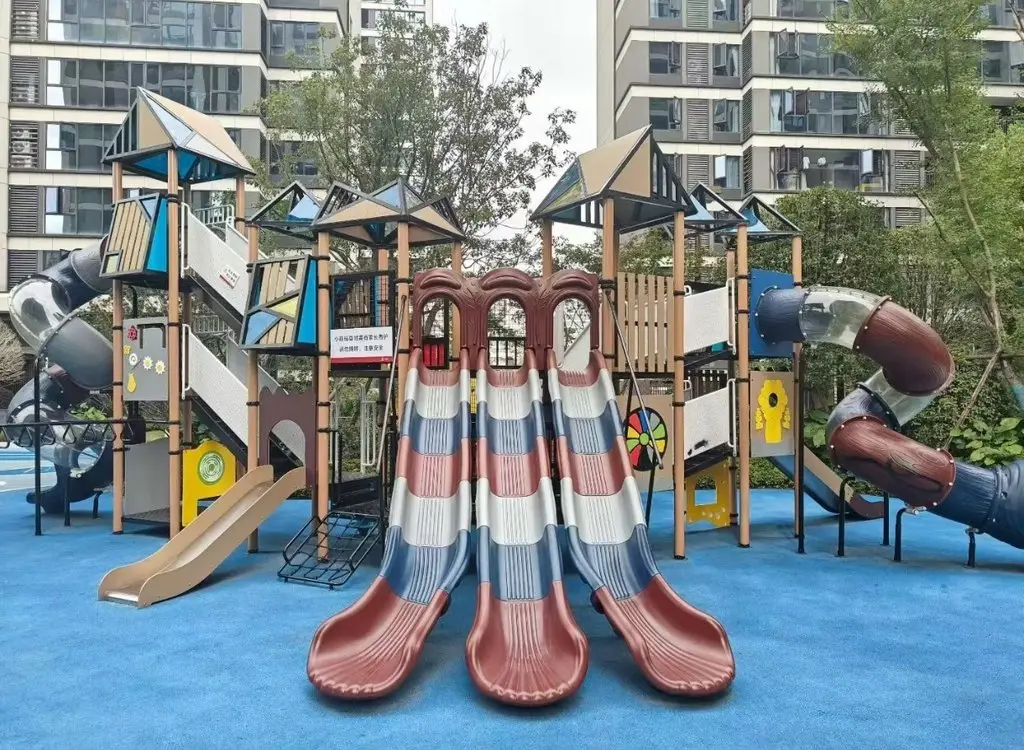
What Risks Arise Without Regular Playground Maintenance?
Safety performance depends on four practical factors — not solely original product quality: fastening status of hardware, surface integrity of play parts, anti‑corrosion condition of steel frames, and the performance of safety ground surfacing.
Children in public venues run, jump, slide and climb every day. Constant impact and vibration gradually loosen screws; sun, rain and humidity accelerate metal rusting and plastic ageing. According to EN 1176 public playground guidelines, wear‑related hazards account for a large share of playground accidents. Therefore, the priority for operators is catching small defects before they escalate into dangerous failures. A brand‑new certified set cannot stay safe permanently without ongoing care.
Four Core Maintenance Check‑Points
Hardware fasteners come first. Vibration from constant play will gradually loosen bolts and anti‑theft screws. Check whether any bolt protrudes or goes missing. Second: plastic components. Inspect slides, decorative panels and platform surfaces for cracks, chipping and sharp broken edges. Third: steel support framework. Look for peeling paint, rust spots on galvanized pipes and unstable welded joints. Fourth: safety surfacing. Loose‑fill materials compact or wash away; rubber tiles may shift, crack or curl at the edges.
| Inspection Item | Acceptable Standard | Why It Needs Attention |
|---|---|---|
| Hardware & Screws | No loose, missing or protruding fasteners | Loose bolts cause structural wobble and scratch injuries |
| Plastic Play Parts | No cracks, splits or sharp broken edges | Cracked plastic can break under children’s weight |
| Steel Support Frame | No obvious rust, intact anti‑rust coating | Rust weakens pipe walls and reduces overall stability |
| Safety Surfacing | Maintain required protective depth, no damaged tiles | Inadequate surfacing loses fall‑shock‑absorbing function |
Why Original Certification Does Not Equal Lifelong Safety
Residential backyard playground standards and commercial public‑site standards have different maintenance requirements. Product certification only verifies product condition at the time it leaves the factory. Once installed and subjected to heavy daily use, ageing and wear will degrade its actual safety status. Even CE, TUV or SGS‑certified playground facilities may no longer meet standard requirements after years of operation. Operators cannot rely merely on the original test report; periodic re‑inspection is mandatory for public‑access play zones.
Which Daily‑to‑Year‑Round Maintenance Routine Fits Commercial Playgrounds?
For commercial playground operation, a complete maintenance plan includes three cycles: daily quick visual checks, monthly detailed on‑site inspection, and annual comprehensive professional assessment. Complex high‑rise play towers or multi‑component combined slides require stricter checking frequencies than low‑ground play equipment.
Three maintenance cycles cover most public‑site management needs, addressing different risk levels rather than only fixing broken parts.
‑ Daily walk‑around visual check. A short surface scan before opening hours. Staff look for obvious hazards: broken plastic fragments, exposed sharp metal edges, fallen screws, large gaps in safety surfacing, and foreign rubbish left inside play structures. Remove risks immediately; close off the play area if dangerous defects are found.
‑ Monthly thorough component inspection. Check the tightness of all hardware, look for paint peeling and rust on steel posts, examine slide surfaces for scratches and cracks, test swing connection chains and hooks, re‑plenish loose‑fill ground materials back to the standard depth. Record all inspection items in maintenance logs.
‑ Annual full professional evaluation. Invite experienced playground technicians to conduct an all‑round structural assessment. They will test frame stability, check hidden weld points, evaluate the ageing degree of plastic accessories, verify safety gap sizes and confirm surfacing protective performance. Replace heavily worn components that cannot be repaired.
Modular playground design brings convenience for maintenance. Individual damaged panels or slide sections can be replaced separately, without taking the entire large play set out of service. This is the typical operation mode for long‑lived commercial playground projects.
Plastic, Steel and Surfacing: How to Treat Different Playground Materials
Virgin engineering‑plastic parts make up most kid‑contact surfaces on modern playgrounds. They are easy to clean, yet vulnerable to UV radiation and brute impact. Galvanized steel forms the supporting backbone; safety surfacing acts as the last‑line protection for falling children. Different materials require targeted care solutions.
| Material Part | Common Degradation Issue | Maintenance Work | Expected Service Life With Proper Care |
|---|---|---|---|
| Engineering‑plastic slides & panels | Fading, surface scratches, impact cracks | Clean with mild detergent; replace cracked pieces | 6‑10 years |
| Galvanized‑steel support frame | Scratched coating, local rust spots | Remove rust, apply touch‑up anti‑rust paint | 12‑18 years |
| Swing chains & metal connectors | Corrosion, link wear | Lubricate moving parts; replace worn chains | 3‑6 years |
| Loose‑fill safety surfacing | Compaction, loss due to rain wash | Refill material to designed protective depth | Requires annual topping‑up |
No matter which material your playground uses, avoid harsh corrosive cleaning chemicals. Strong solvent cleaners will accelerate plastic ageing and damage surface anti‑rust paint on metal tubes. All replacement hardware must use matching anti‑rust 304 stainless‑steel accessories. Improper replacement parts will create new hidden safety risks. Material‑specific maintenance directly cuts accident rates and extends total equipment service life.
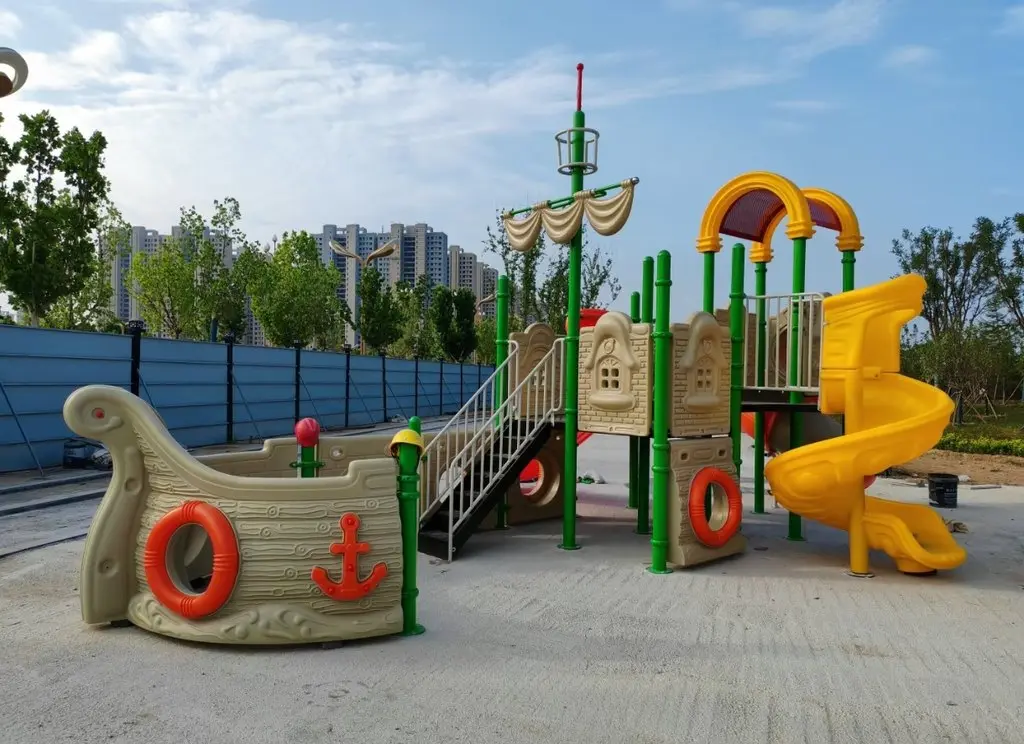
What Surfacing Maintenance Rules Should You Follow?
Keep loose‑fill safety surfacing at 9‑inch compact depth beneath and around playground equipment. Surfacing material should extend no less than 6 feet beyond all outer boundaries of play structures. Grass, compacted soil and ordinary thin mats cannot serve as qualified fall‑protection ground for public playgrounds.
Industry playground safety documents set these reference values. Nine‑inch compacted engineered wood fiber or shredded rubber provides fall‑impact protection for equipment up to 8 feet platform height. Sand and pea gravel at the same depth only protect falls from heights up to 5 feet. Loose‑fill materials will compact after months of trampling. It is suggested to mark depth reference lines on support posts for fast visual checking. When rubber safety tiles are applied, check for curling edges, cracks and hollow gaps underneath tiles. Damaged tiles need timely replacement.
| Surfacing Type | Compact Working Depth | Maximum Protected Fall Height |
|---|---|---|
| Engineered wood fiber | 9 inches | Up to 8 feet |
| Shredded recycled rubber | 9 inches | Up to 8 feet |
| Sand / Pea gravel | 9 inches | Up to 5 feet |
| Poured‑in‑place rubber / Rubber tiles | Follow official test report | 5‑10 feet |
Install proper edging borders to stop loose‑fill materials from washing or spreading away during rainy weather. Remember to clear fallen leaves, litter and dirt buried inside surfacing layers during routine work.
How Much Working Space & Time Does Playground Maintenance Require?
Do not only calculate the footprint of play equipment itself; reserve enough operating space for inspection and repair. A medium‑size combined slide set needs roughly 10 by 12 feet of surrounding clear zone, so technicians can access bolts on every side of steel posts. Large multi‑tower playgrounds need even more room for maintenance access.
Time investment also needs planning. Daily visual checks take 10‑20 minutes. Monthly detailed inspection for one medium playground takes around 1‑2 working hours. The annual professional full assessment for a complete site may take half‑day to one full day. Arrange maintenance work during off‑peak hours or non‑opening days, to avoid disturbing visitors. Keep complete written maintenance records including inspection dates, found defects, repair actions and replaced spare‑part information for compliance review.
What Key Warning Signs Must Trigger Immediate Action?
Five kinds of abnormal conditions mean you should close the playground zone right away: visible structural wobble of support posts, large cracks on main slide bodies, bent or broken metal components, substantial loss of safety surfacing, and exposed sharp bolts or broken plastic fragments.
| Inspection Warning Sign | Response Measure | Risk Reason |
|---|---|---|
| Shaky or wobbly main steel posts | Close area, check and repair structure | Risk of partial or total structure collapse |
| Deep cracks running across slide surface | Stop usage, replace slide section | May fracture under children’s weight |
| Bent, fractured metal supports | Block access, arrange professional repair | Serious structural failure hazard |
| Large‑area loss of safety surfacing | Restrict play, refill surfacing material | No impact‑absorbing protection for falls |
| Sharp exposed edges / protruding bolts | Isolate hazard, fix hardware immediately | Cause cuts, scratches and impact injuries |
Keep in mind: maintenance logs are important compliance documents for public playground sites. Do not ignore minor abnormal signs just because no accident has happened. Scheduling maintenance is far more cost‑effective than dealing with safety‑incident consequences.
Will Proper Maintenance Let Playground Equipment Serve Far Beyond Its Expected Lifespan?
Good maintenance can prolong usable service time, yet every playground part still has its reasonable service limit. Steel frames can last longer with anti‑rust care; plastic components will gradually age under long‑term UV exposure, regardless of maintenance quality. When plastic slides become heavily brittle, or steel pipe walls suffer severe rust‑induced thinning, simple repair cannot guarantee safety. At this stage, partial replacement or whole‑set upgrade is necessary.
Form your operation rhythm accordingly: daily quick scan, monthly hardware tightening and surfacing refilling, annual professional structural evaluation. Swing seats, safety net and connecting chains are wearing‑consumable parts that require more frequent checking and replacement.
FAQ
Can I keep using playground equipment that passed factory certification but shows obvious ageing?
No. Original certification represents safety status at the time of factory delivery. Heavy ageing, cracking and metal corrosion degrade actual safety performance. You must carry out a full inspection; replace failed parts or block off the facility if hidden risks cannot be eliminated.
Do public commercial playground sites need professional technicians for maintenance?
Daily visual checks can be completed by on‑site management staff. But annual comprehensive structural inspection, welding repair and major‑part replacement should be completed by qualified playground technicians. Some local regulatory requirements also demand third‑party inspection reports for public play facilities. Check local rules in advance.
How to prevent foreign‑object‑ and vandal‑caused damage to playground facilities?
Increase regular patrol frequency. Install monitoring cameras if site conditions permit. Remove sharp stones and rubbish inside play zones every day. Select anti‑theft lock‑type hardware during procurement. In addition, post safety‑use notices to guide visitors toward correct playground behaviour. Combined education and regular inspection effectively reduce man‑made damage.


