
Selecting classroom furniture for preschools, daycares and early‑learning centres goes far beyond picking attractive colours and competitive unit prices. Many procurement teams make the mistake of prioritizing low upfront costs over long‑term durability, ergonomic performance and full compliance with children’s‑product standards. Cheap classroom tables, chairs and storage units may look acceptable in product photos, yet they quickly develop loose joints, chipped edges and chemical‑exposure risks under heavy daily commercial use.
Quality classroom furniture must match children’s physical development, pass strict safety testing, withstand frequent cleaning and heavy usage, and fit well within the real‑world layout of learning spaces. Ergonomic sizing comes first, followed by verified safety compliance, durable material selection, practical hardware quality, and a reasonable calculation of total cost of ownership. Appearance and unit price should be evaluated only after these core requirements have been fully confirmed.
The sections below follow the actual purchasing workflow, covering key points from early‑stage requirement confirmation and material comparison, through to space planning and drafting clear specifications for purchase orders.
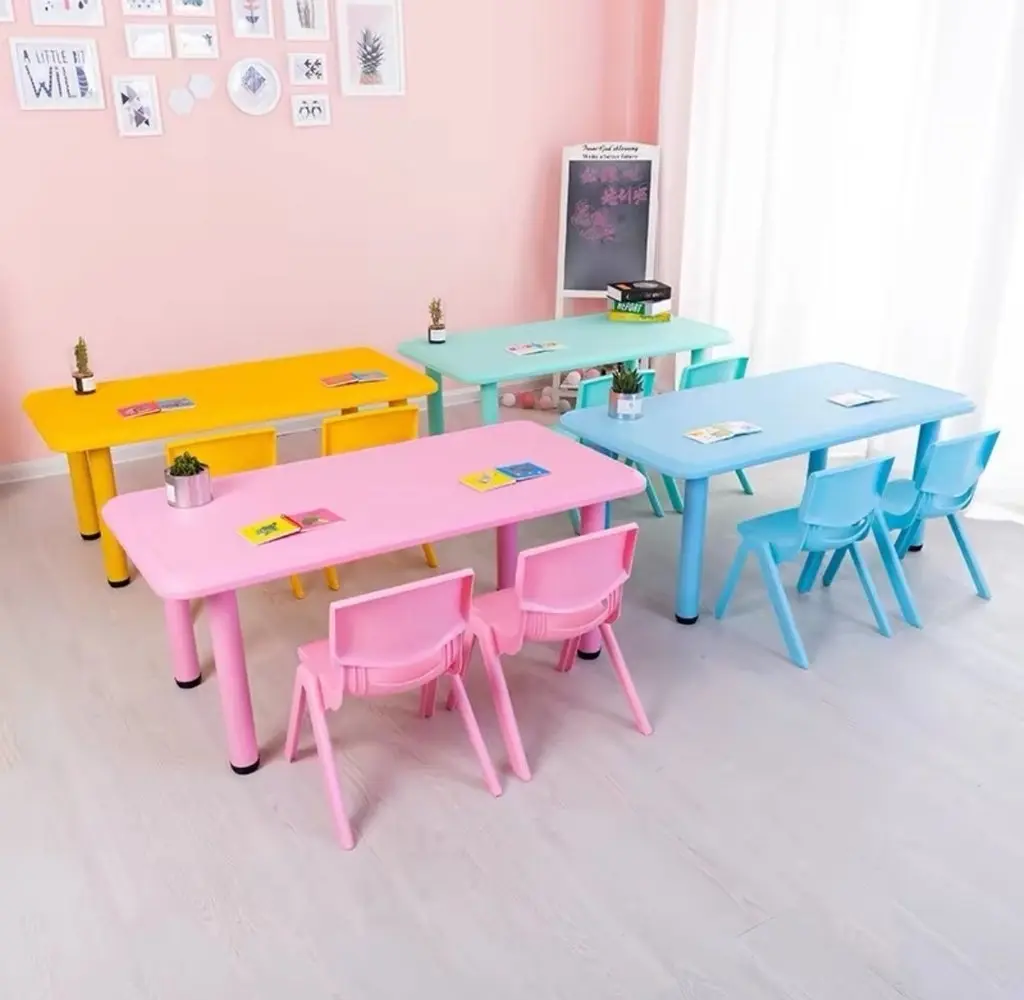
Why Classroom Furniture Quality Shapes Children’s Daily Learning Experience
Poor‑quality or ill‑sized classroom furniture creates hidden risks that affect children’s posture, concentration and physical safety throughout long school days. A chair with mismatched seat height forces children to dangle their feet or hunch their shoulders. Fragile storage cabinets without anti‑tip brackets create tipping hazards. Furniture finished with low‑grade paint or adhesive may release harmful substances inside enclosed classroom environments.
Two typical procurement pitfalls appear frequently in early‑education projects. Buying overly inexpensive furniture to meet tight budget targets results in frequent breakdowns and premature replacements. Purchasing furniture purely based on age labels without measuring real‑body dimensions creates widespread postural discomfort for children of mixed heights within one classroom. Reliable classroom‑furniture suppliers will publish full dimension data including seat height, table height and shelf depth for every SKU, so buyers can complete fitness assessments before products are delivered.
The Four‑Point Practical Fitness Assessment
Carry out these four checks for every furniture sample. Do not compensate for size mismatches with cushions or simple adjustments.
- When sitting on the chair, children’s feet can rest flat on the ground without dangling or tiptoe‑standing.
- Knees maintain a near‑90‑degree bending angle, and thighs stay roughly parallel to the floor.
- The table surface sits equal to or slightly below children’s elbow height in a seated position.
- Sufficient leg clearance exists between thighs and the underside of the table; chairs and tables must use matched‑size grades.
Always test samples using both the tallest and shortest children from target groups. Practical physical testing delivers more reliable conclusions than printed age‑range recommendations.
Match Table, Chair and Storage Dimensions to Real‑World User Groups
Anthropometric physical measurements, rather than simple age labels, shall serve as the primary reference for dimension selection. Seat height should align with children’s popliteal height to support a stable sitting posture. The vertical gap between the seat surface and tabletop is recommended at 18‑20 cm to support relaxed elbow posture during drawing, reading and group activities. If one classroom serves mixed‑age groups, prepare two sets of size grades rather than choosing one compromise size that suits no group perfectly.
The dimension pairs below fit most preschool and daycare settings, referencing core dimension rules from the EN 1729‑1 educational‑furniture standard.
| Age band | Seat height | Table height | Typical application |
|---|---|---|---|
| 1.5‑3 years old | 21‑25 cm | 40‑46 cm | Toddler snack time, simple sensory activities |
| 3‑4 years old | 26‑28 cm | 46‑50 cm | Junior‑preschool daily‑activity tables |
| 4‑5 years old | 28‑30 cm | 50‑53 cm | Pre‑K learning and craft tables |
| 5‑6 years old | 30‑34 cm | 53‑58 cm | Kindergarten writing and group‑project desks |
Treat age bands only as general guidance. Children within the same birth‑year group can differ in height by more than 10 cm. Purchase quantities should cover median‑height children, plus a portion of adjacent‑size furniture for children at the height extremes.
When Height‑Adjustable Furniture Is Worth the Investment
Three mainstream height‑adjustable solutions exist on the market. Bolt‑on detachable leg sets deliver the best structural rigidity but require full disassembly for height modification. Telescopic legs with locking pins allow quick height changes within minutes and are ideal for multi‑purpose shared classrooms, though the joint positions become potential wear points after prolonged usage. Crank‑driven lifting columns provide the widest adjusting range at a higher product cost.
Adjustable furniture delivers clear benefits for classrooms hosting multiple age cohorts each day, community‑shared activity rooms or multi‑age mixed programs. For single‑age classrooms with stable enrollment numbers, fixed‑size furniture of two matched grades offers better rigidity, easier on‑site inspection and lower overall costs.
Material & Hardware Evaluation for Commercial‑Grade Classroom Furniture
Product photographs cannot show material durability. Two furniture sets may appear almost identical, yet perform completely differently after hundreds of chair impacts, repeated disinfectant wiping and children’s rough daily use. Always request valid third‑party test reports issued under the supplier’s company name. Confirm reports exactly cover your ordered model, dimension and surface finish. Educational furniture, general children’s products and indoor‑play structures follow completely separate testing standards.
Four evaluation layers cannot be skipped:
- Educational‑furniture standard: test requirements for dimension, stability, load‑bearing capacity and mechanical strength of tables and chairs.
- Children’s‑product safety standard: strict limits for heavy‑metal content, phthalate compounds, small‑part hazards and sharp edges.
- Board‑emission standard: formaldehyde‑release classification for plywood, particleboard and MDF panels intended for enclosed classroom spaces.
- Hardware‑accessory standard: performance requirements for hinges, drawer stops, casters and anti‑tip fittings.
Public‑funded early‑education projects normally include these requirements within contract terms, requesting age‑appropriate, low‑hazard furniture for indoor‑learning environments.
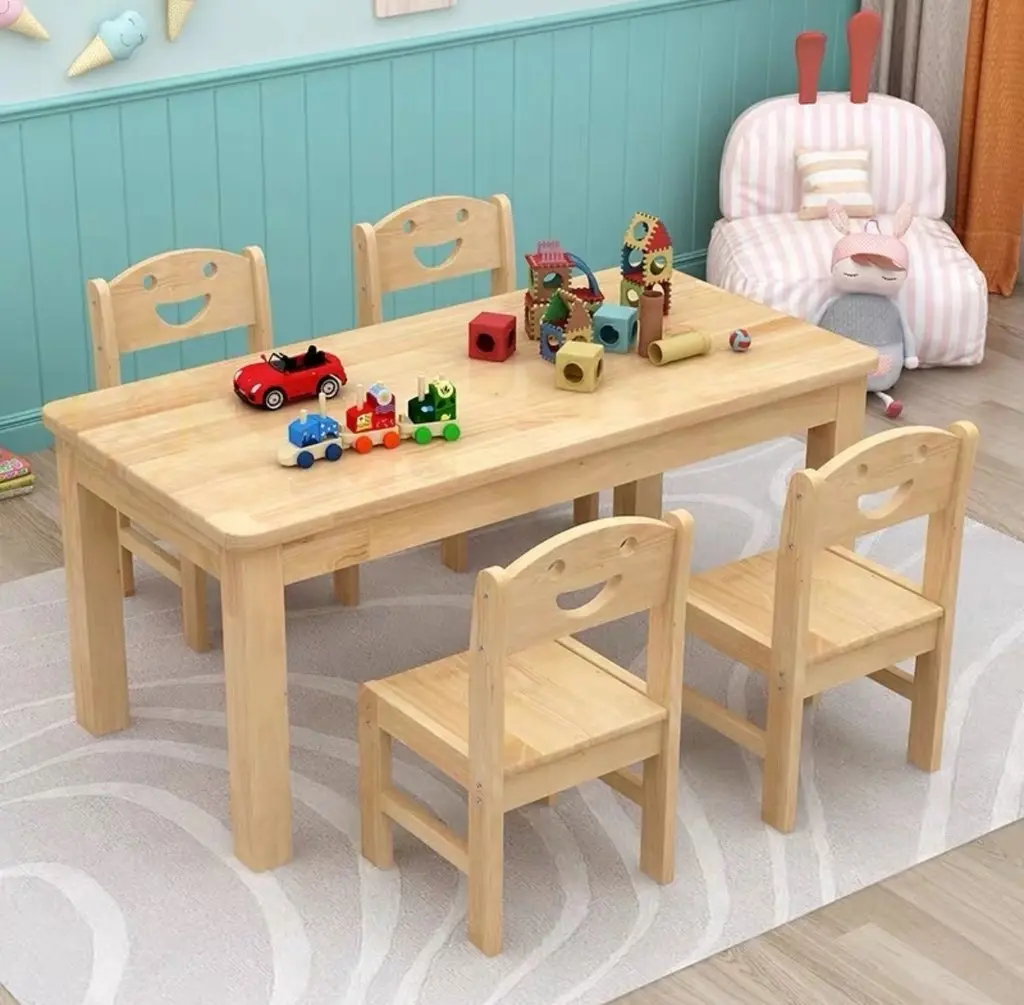
Material Comparison Chart for Classroom Furniture
Material selection determines service life, cleaning workload and repairability. Surface‑coating performance is equally critical as base‑board material; water‑based low‑VOC coatings represent the preferred option for occupied classrooms. Surface finishes must resist chemical erosion from disinfectants used in daily routines.
| Material | Strengths | Weaknesses | Best‑fit scenarios |
|---|---|---|---|
| Solid hardwood | High density, repairable joints, strong impact resistance | Higher price, heavy weight, susceptible to ambient‑humidity changes | Chair frames, table frames, heavy‑duty storage cabinets |
| Plywood with high‑pressure laminate | Dimension‑stable surface, easy‑to‑wipe finish, good screw‑holding performance | Risk of edge‑banding chipping with low‑quality edge sealing; risk of water damage at cut edges | Table tops, storage cubbies, activity cabinets |
| Rotomolded plastic | Light‑weight, stackable, fully washable | Risk of UV‑induced fading; cannot be repaired once cracked | Stackable chairs for multi‑room shared usage |
| Plain particleboard | Low procurement price, flat uniform surface | Swells permanently upon water exposure; short service cycle | Not recommended for high‑frequency daily classroom use |
Classroom Layout Planning: Circulation Zones, Sightlines & Activity Partition
Good classroom‑environment design involves more than placing correctly‑sized furniture. Even perfectly‑specified tables and chairs cannot function well if movement passages get blocked, teacher sightlines are interrupted, or conflicting activity zones overlap. Design clear circulation routes first, then arrange furniture within the remaining available floor space.
These practical dimension references support real‑site layout work. The main passage between different activity zones requires 90‑100 cm of clear width. A secondary walkway between a table edge and wall needs a minimum 60‑70 cm clearance; this space also provides enough room for pulling out chairs. Leave a 75‑90 cm gap between back‑to‑back placed tables. Never block fire‑exit routes, door‑swing zones and radiator areas. Install low‑height furniture below windows instead of tall‑storage units.
Reasonable zoning separates high‑movement noisy activities away from quiet reading and rest corners. Keep the doorway‑to‑washroom passage fully unobstructed. Place heavy tall‑storage units against perimeter walls or room corners to avoid blocking teachers’ observation sightlines. Every licensed classroom needs at least one accessible‑height table with adequate knee clearance for children with special needs. If indoor‑play structures are installed inside classroom areas, keep required fall‑protection zones completely free of tables, chairs or storage items.
Calculate Total Cost of Ownership Beyond Initial Purchase Price
Unit purchase price only accounts for a small share of the full‑lifecycle costs for classroom furniture. Cleaning labour, spare‑part replacement and premature scrapping dominate long‑term expenditure. These factors are already determined during quotation evaluation by edge‑banding grade, coating chemical‑resistance and hardware quality. Verify whether suppliers can provide separate spare‑part ordering years after delivery.
Request a component‑level spare‑parts list along with commercial quotations. Focus pricing assessment on high‑wear components: chair glides, casters and soft‑close hinges. Suppliers unable to sell these spare parts separately provide essentially disposable‑grade furniture. Routine inspection and maintenance schedules shall be written into facility‑management workflows.
| Inspection Interval | Key Checking Content |
|---|---|
| Daily | Wipe contact surfaces; remove cracked or broken furniture pieces |
| Weekly | Retighten exposed fixings; inspect caster‑lock function and chair glides |
| Monthly | Test anti‑tip wall anchors; check hinges, drawer stops and chipped edge banding |
| Each teaching term | Review furniture fitness against children’s physical size; log damage records and replacement needs |
Reference service‑life benchmarks: hardwood and laminate tables 8‑15 years; shared‑use stackable plastic chairs 5‑8 years; soft‑seating furniture 3‑5 years. Replace furniture based on functional damage rather than cosmetic appearance: wobbly joints, lifted edge‑banding and loose anti‑tip anchors call for immediate repair or replacement. Integrate furniture inspection within existing daily classroom‑management workflows to extend service lifespan.
Write Precise Purchase Specifications to Avoid Supply Deviation
Most furniture‑delivery disputes originate from vague requirement descriptions. If your purchase order does not clearly define size grade, board thickness, edge‑sealing treatment, hardware grade and coating requirements, delivered goods may technically meet loosely‑worded agreements while failing practical classroom needs. Convert requirements into measurable‑specification tables and attach them as formal‑contract attachments.
At minimum, written specifications shall lock down these items:
- Exact seat height / table height plus allowed tolerance range and size‑grade mark.
- Base‑panel material and nominal thickness, including back‑panel thickness.
- Edge‑sealing solution, banding thickness and radius value for all exposed corners.
- Surface‑finish system and verified disinfectant‑resistance performance.
- Hardware‑functional requirements: soft‑close hinge, drawer anti‑drop stops, concealed fixings.
- Caster loading rating and locking‑mechanism description.
- Wall‑mount anti‑tip anchor specifications.
- Packaging requirement, spare‑parts allowance and warranty‑response time.
Approve physical pre‑production samples against specification tables and keep signed reference samples on file. Require pre‑shipment production‑batch photos instead of relying on showroom‑sample images. A small‑percentage spare‑parts allowance for glides, casters and shelf pins adds little cost yet prevents urgent mid‑term‑replacement troubles.
FAQ
What furniture items do daycare licensing regulations normally require?
Requirements differ among regions. Most licensing codes demand age‑matched seating and table positions for every enrolled child, safe rest surfaces for infants, wall‑anchored storage units, and furniture free of sharp edges, hazardous paint or accessible small loose parts. Indoor‑play structures go through independent inspection procedures. Always confirm local licensing rules before placing purchase orders.
What are correct cleaning steps for preschool classroom furniture?
First wipe surfaces with mild neutral detergent, then apply disinfectant following local public‑health guidance. Maintain the required chemical contact time instead of immediately wiping surfaces dry. Avoid abrasive scrub pads on laminate tops and solvent‑based cleaners for plastic furniture, to prevent surface dulling or cracking. Rinse food‑contact tabletops with clean water after disinfection work.
How many tables and chairs should one preschool classroom prepare?
Provide one seat plus one table position for each child during peak‑activity hours. Add at least one accessible‑design position and 2‑4 spare backup chairs. Total table quantity depends on per‑table seating capacity instead of simple room area. Reserve enough open floor area for group‑gathering circle‑time and indoor large‑movement activities.


