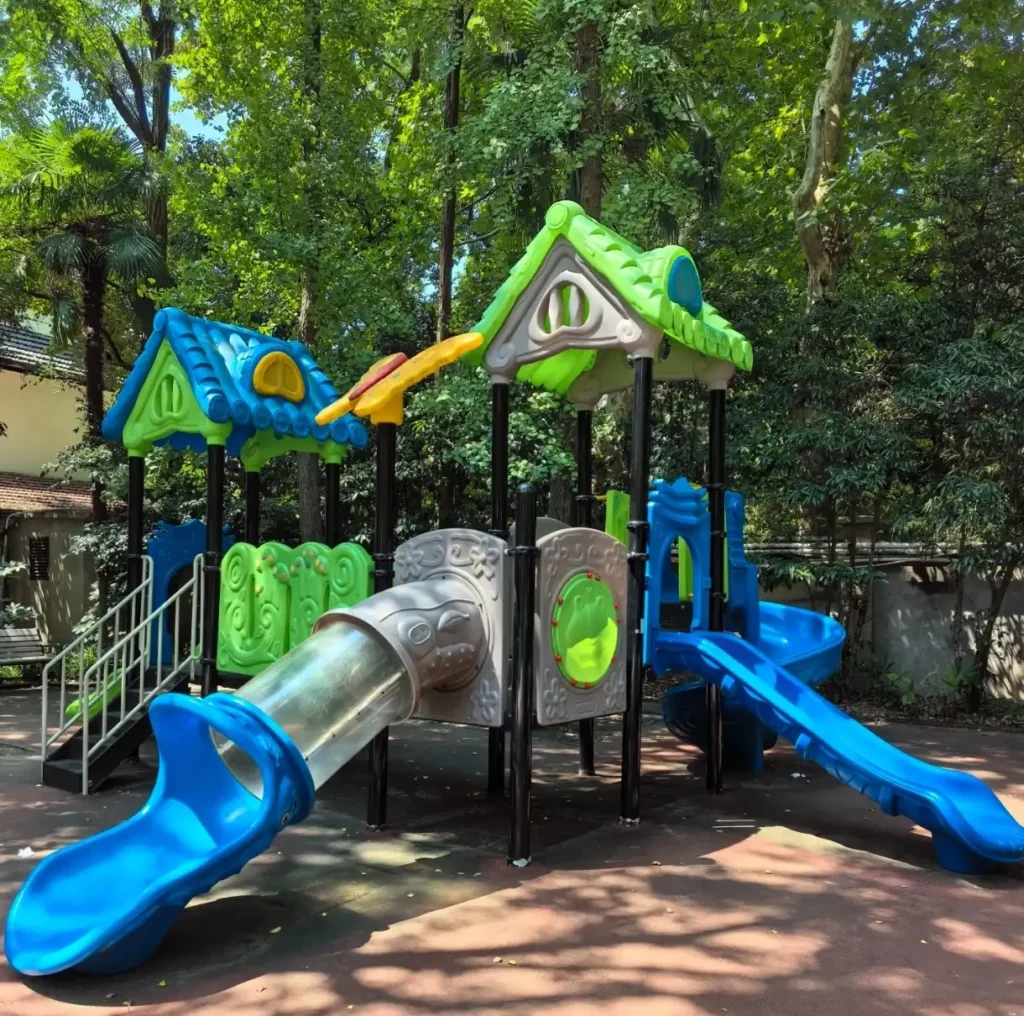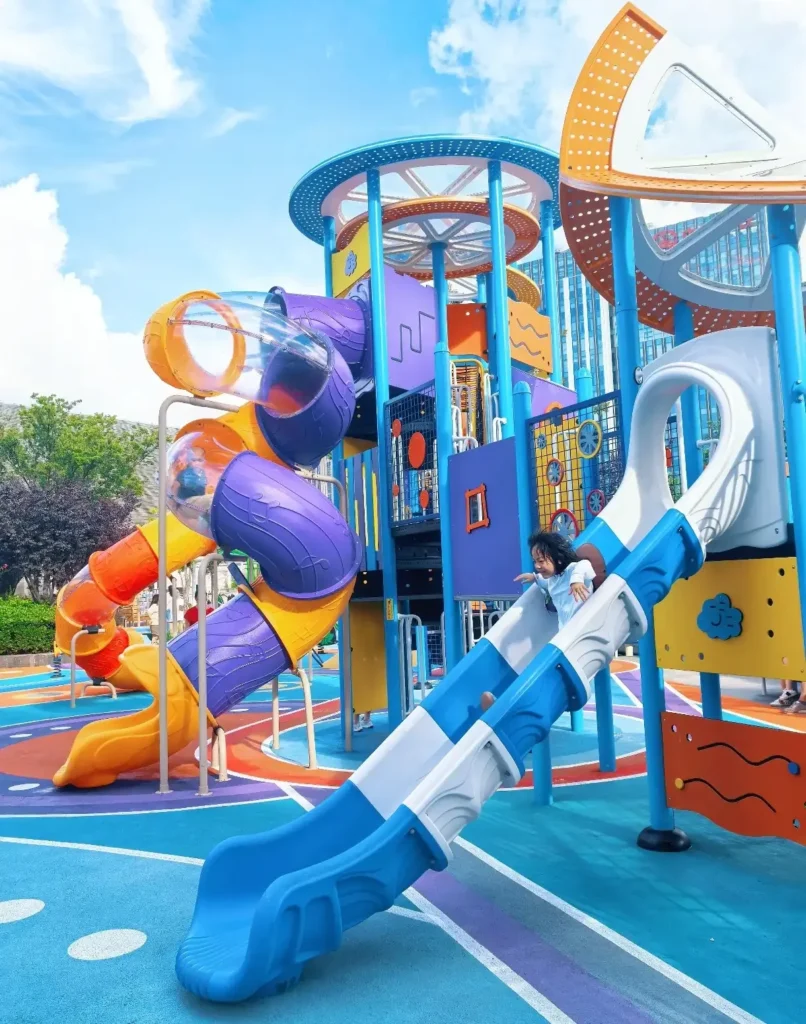
Consumer‑grade backyard slides may look fully functional until multiple children climb and slide continuously for hours. Plastic surfaces develop scratches, support frames become loose, and after several seasons the whole set becomes unsafe for play. Kindergarten operators and venue owners face far stricter requirements: playground slides that fail under public use will create safety hazards, trigger unexpected repair costs, and generate negative parent reviews. Many venue operators have learned costly lessons after purchasing low‑cost household‑grade slides for public locations. These lightweight products are never engineered for heavy‑duty daily use; they frequently suffer colour fading, structural wobbling, and even component fractures within one or two years of outdoor exposure.
Low‑cost light‑duty slides and heavy‑duty commercial combined slides are entirely different products. A qualified commercial‑grade kids combined slide must withstand heavy daily use by groups of active children, remain stable under changing outdoor weather including intense sunlight, heavy rainfall and temperature fluctuations, and keep smooth, burr‑free surfaces free of sharp edges year‑round. For long‑term public operations, modular playground slides built with UV‑resistant engineering plastic and galvanized steel frames deliver lower annual operating costs and come with complete safety documentation required by insurance providers and local inspection authorities. Many project buyers overlook material standards at the purchasing stage, only to face equipment replacement, site rectification and insurance‑claim complications further down the line.
This buying guide outlines core points to verify before placing orders, key material benchmarks, installation prerequisites, theme‑selection tips, and certification documents you should request from manufacturers. It focuses on outdoor modular combined playground slides widely sourced for kindergartens, residential communities, outdoor zones within shopping malls, and public amusement venues. Whether you are procuring for new playground construction or existing‑site renovation, this article will help you make well‑informed purchasing decisions.
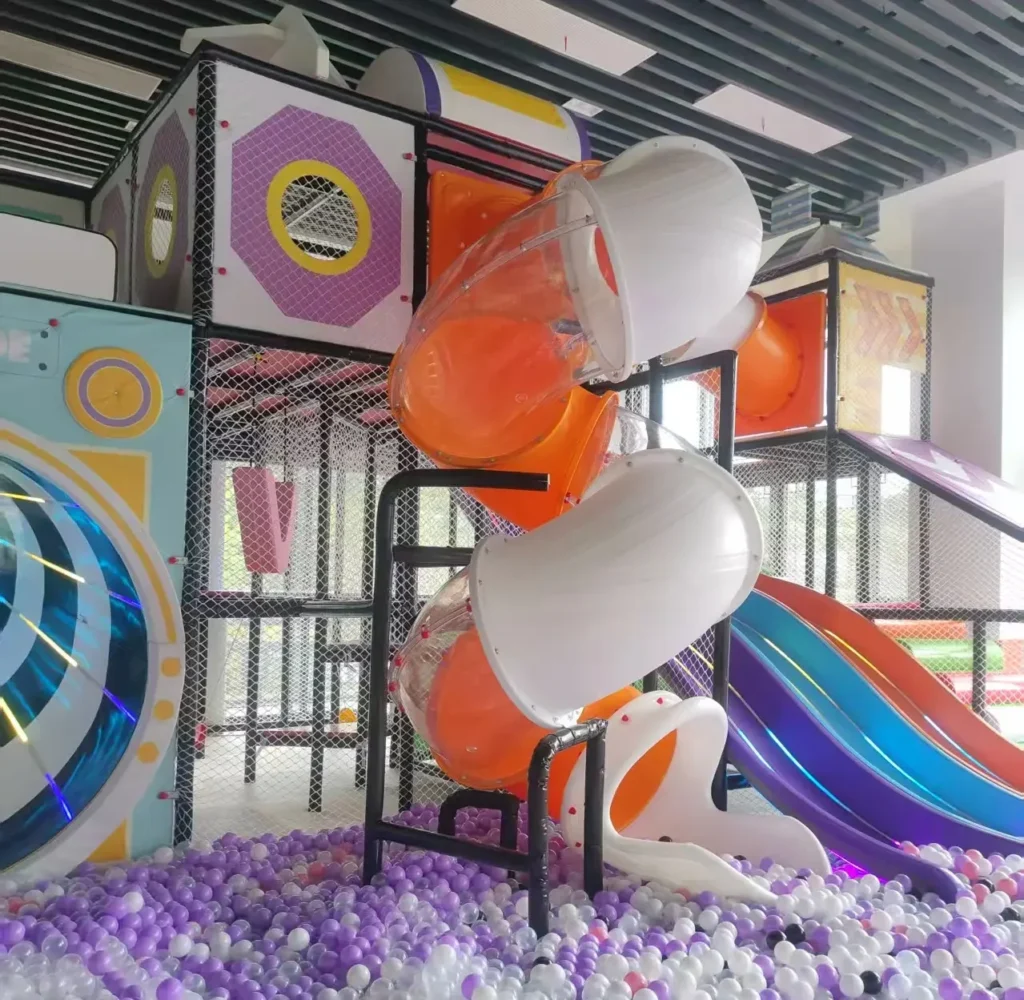
Outdoor Combined Slides: What Makes Commercial Grade Different
Many buyers confuse home‑use slides with commercial playground slides during procurement. Household slides are designed for intermittent play by a small number of children at most, whereas commercial combined slides endure continuous heavy‑duty use by mixed‑age groups ranging from 4‑12 years old. At high‑traffic public sites, dozens of children may climb, slide and lean against equipment within a single hour, placing enormous mechanical stress on every structural component of the play unit.
Modular outdoor combined slides integrate slide lanes, climbing steps, elevated play platforms, protective baffles, themed decorative fittings and interactive game panels. Dimensions are typically specified in centimetres, and most suppliers accept single‑unit orders for small‑scale venues. Compact models start at approximately 250×200×300 cm, while large multi‑play‑zone versions can exceed 1000 cm in total length, fitted with dual or triple slide lanes, climbing nets and multi‑level activity platforms.
Three critical site factors determine whether your slide project will perform as intended:
• Safety fall zone: The buffer space around slide exits counts as part of the equipment footprint, not leftover vacant ground. You must reserve sufficient room for protective rubber surfacing or soft ground coverings at the initial layout‑planning phase. Insufficient fall‑zone clearance represents one of the most frequent non‑compliance issues identified during official playground inspections.
• Foundation condition: The ground surface must be flat and solid. Loose sand, uneven soil or bare concrete without protective surfacing greatly increases injury risks for playing children. Uneven ground also creates abnormal stress on steel support posts, accelerating structural deformation.
• Lighting and drainage: Outdoor playground sites should feature effective drainage to prevent standing water beneath play equipment. Persistent pooled water accelerates corrosion of metal base components and shortens overall equipment service life.
Material differences between residential and commercial combined slides
Home‑oriented slides often use thin‑wall plastic and lightweight metal tubing to cut production costs. Commercial playground combined slides adopt thick‑walled HDPE engineering plastic and heavy‑duty galvanized round‑steel posts. Wall‑thickness gaps directly govern impact resistance and anti‑aging performance.
Plastic components for public playground slides require UV‑stabilized formulations. Without UV‑resistant treatment, bright colours fade rapidly under sunlight, and plastic parts turn brittle and crack after repeated summer‑winter cycles. All edges and corners must be fully rounded to eliminate bump and scratch hazards. Slide surfaces should remain smooth, free of burrs, dents or injection‑mould seams that could catch children’s clothing.
For support frames, 76 mm or 89 mm galvanized steel pipes represent the industry mainstream for commercial projects. The whole frame should undergo full welding plus outdoor anti‑rust coating. Thin‑walled steel tubing will deform under frequent child‑powered climbing, creating hidden safety risks. Fasteners must be 304‑stainless‑steel anti‑theft lock screws to prevent accidental loosening or deliberate removal. Ordinary iron screws corrode rapidly outdoors and can lead to joint failure.
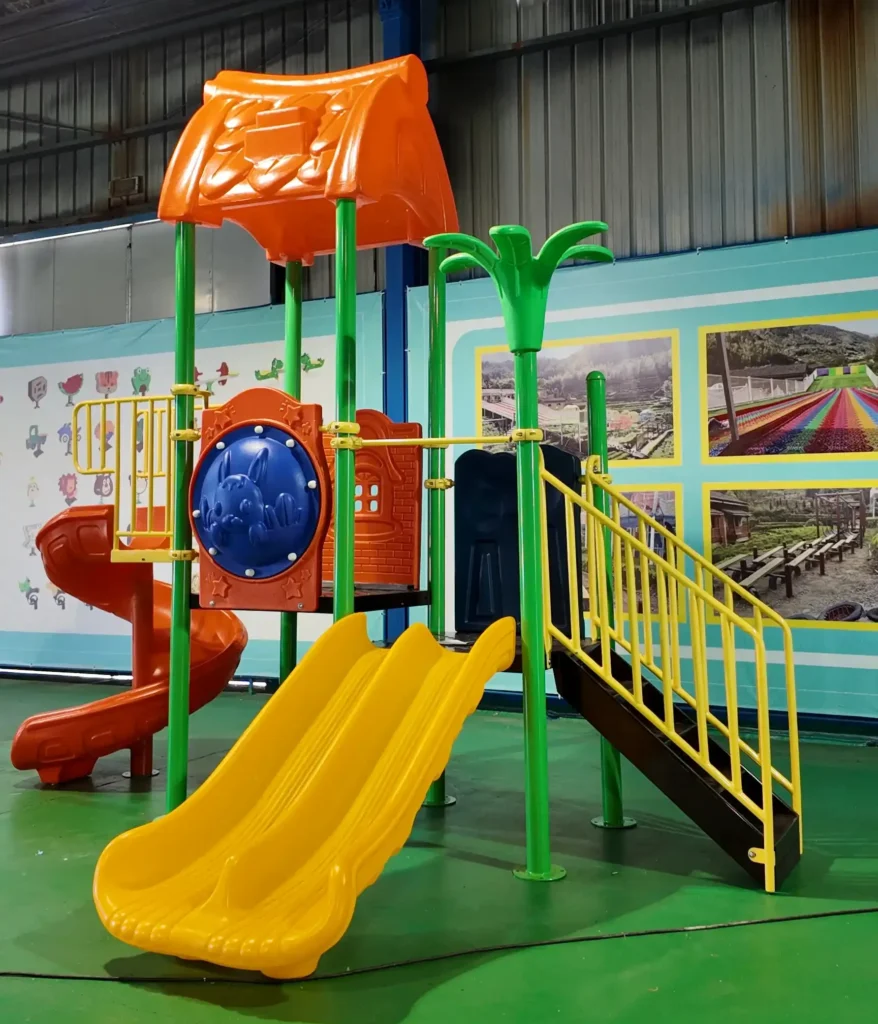
Theme Customization & Modular Expandable Design
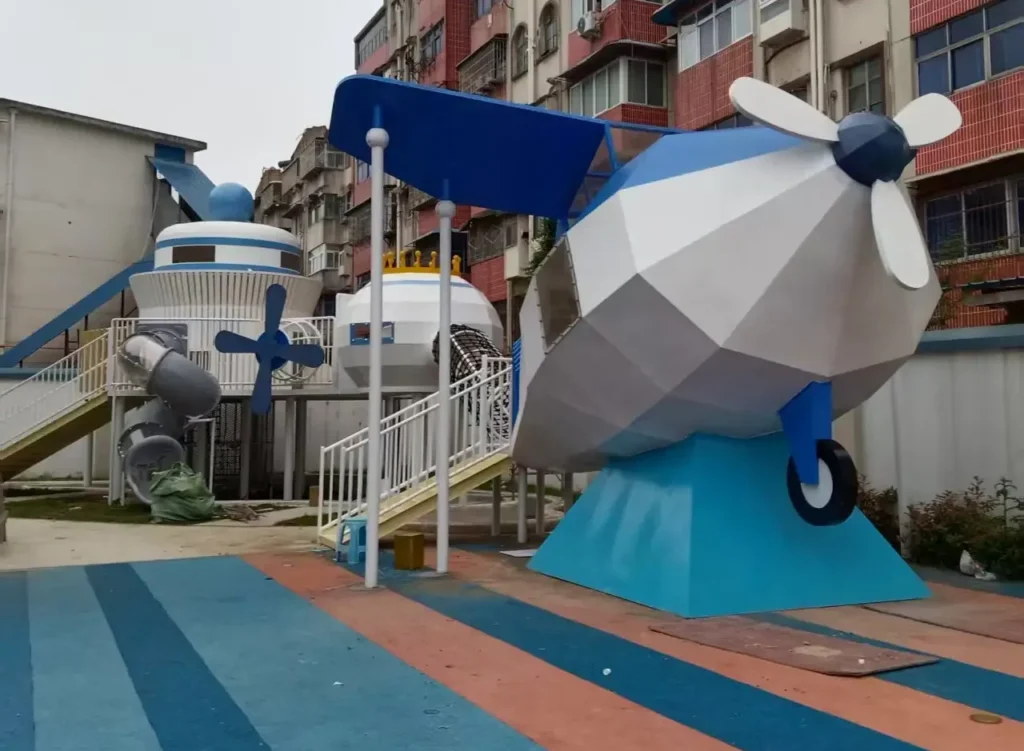
Modern outdoor combined slides are no longer simple single‑lane sliding devices. Theme‑driven design greatly boosts children’s engagement and elevates the overall visual appeal of playground zones. Ocean‑themed, space‑exploration and forest‑animal series remain highly popular among kindergartens and community parks. Top‑mounted cartoon ornaments, printed play panels and harmonized bright colour schemes build immersive play scenarios for kids. Children are more motivated to take part in physical activity when playground equipment delivers playful storytelling elements beyond basic sliding functions.
Modular construction delivers major advantages for venue operators. Standardized separate modules enable fast on‑site assembly, lowering labour costs and shortening construction timelines. If your venue expands in future, you may add swing sets, climbing nets, spiral slides or extra slide sections without replacing the entire playground. When visitor numbers grow, you avoid full‑scale reinvestment. For community parks and expanding preschools, expandable modular design delivers substantial long‑term economic benefits.
When evaluating expandable playground slides, confirm the following points with suppliers:
- Whether the product comes with standard connecting interfaces for additional play accessories. Non‑standard custom‑built units generally cannot support later upgrades.
- Whether the manufacturer can supply updated layout drawings for post‑delivery reconstruction, rather than only providing drawings for the initial shipment.
- Component compatibility: newly‑added parts must match original material grades, colour palettes and hardware specifications, to preserve visual consistency and structural integrity.
Theme customization also carries practical safety limits. Over‑complicated protruding decorations may introduce potential hazards. Reputable manufacturers balance creative visual design against safety requirements set by EN1176 and other global playground standards.
Safety Certifications & Practical Buying Advice
Safety compliance is non‑negotiable for public children’s playground equipment. Qualified commercial combined slides shall hold international certifications including EN1176, CE, SGS and ISO9001. For local‑region projects, you also need to verify whether documentation satisfies regional inspection requirements. Please note that general ISO factory certificates cannot substitute playground‑specific safety test reports.
Before confirming mass‑production orders, B2B buyers should request the following documentation from suppliers:
• Complete technical drawings with precise dimension parameters, platform height, fall height and required safety‑zone measurements
• Material test reports for plastic components and steel frames, covering UV‑ageing tests and metal anti‑corrosion assessments
• Full certification copies with valid report reference numbers for independent verification • Bilingual English‑Chinese installation manuals and site‑layout sketches
• Clear warranty descriptions for different components (plastic parts, steel posts and metal fasteners feature differing service lifespans) • Operational guidelines covering routine on‑site safety‑check procedures for your maintenance staff.
Pay close attention to warranty clauses. Trustworthy manufacturers offer segmented warranties ranging from 1‑3 years: steel frames normally receive longer coverage, while consumable plastic components come with relatively shorter guarantee periods. Avoid unrealistic “lifetime warranty” promises for wearable play‑equipment parts. Ask suppliers to clarify which types of damage fall under warranty coverage and which issues count as normal operational wear‑and‑tear.
Beyond paperwork, you may ask for real‑world project photos or existing customer references. Reviewing installed playground cases helps you assess real‑life colour retention and structural condition after months or years of outdoor service.
Routine on‑site inspection checklist for playground operators:
• Inspect steel‑pipe connection screws for tightness on a monthly basis
• Check plastic surfaces for cracks, deep scratches or broken decorative pieces
• Examine handrails and anti‑slip step surfaces for excessive wear
• Clear drainage openings at equipment bases to prevent standing‑water buildup
Common Pitfalls When Sourcing Commercial Combined Slides
Many purchasers run into typical traps while selecting playground slides. The first mistake is judging product quality purely from appearance. Two slide sets may look nearly identical in product photos yet differ drastically in pipe‑wall thickness, virgin‑plastic raw‑material grades and anti‑rust finishing. Photographs cannot reveal underlying material quality.
The second pitfall is disregarding safety rules related to fall height. Higher play platforms deliver greater play excitement, yet they demand larger safety buffer zones and higher‑performance ground‑protection materials. Blindly pursuing tall, eye‑catching slides without matching site conditions will result in regulatory non‑compliance.
Third, resist over‑prioritizing low unit prices. Ultra‑low‑priced so‑called “commercial‑grade” slides usually cut corners on raw‑material quality, galvanizing thickness or safety‑detail processing. Although initial procurement costs stay low, high failure rates, frequent repairs and latent safety risks create far higher comprehensive costs over the equipment lifecycle.
Final Thoughts
When sourcing outdoor kids’ combined slides, do not compare unit prices in isolation. Calculate total long‑term costs, taking material durability, anti‑aging performance, after‑sales support and compliance documentation into consideration. Low‑grade budget slides may save money at the point‑of‑purchase, yet they bring higher maintenance expenses and potential safety liabilities for public‑site operations.
First define your site dimensions, target‑age user groups, expected visitor volumes and future‑expansion plans. Next select appropriate material standards, theme styles and modular configurations. Partner with experienced playground manufacturers, double‑verify all safety documentation, and implement regular on‑site inspections post‑installation. By following these steps, you will acquire durable, visually appealing and low‑risk play equipment for your venue and deliver safe, joyful outdoor play experiences for children.