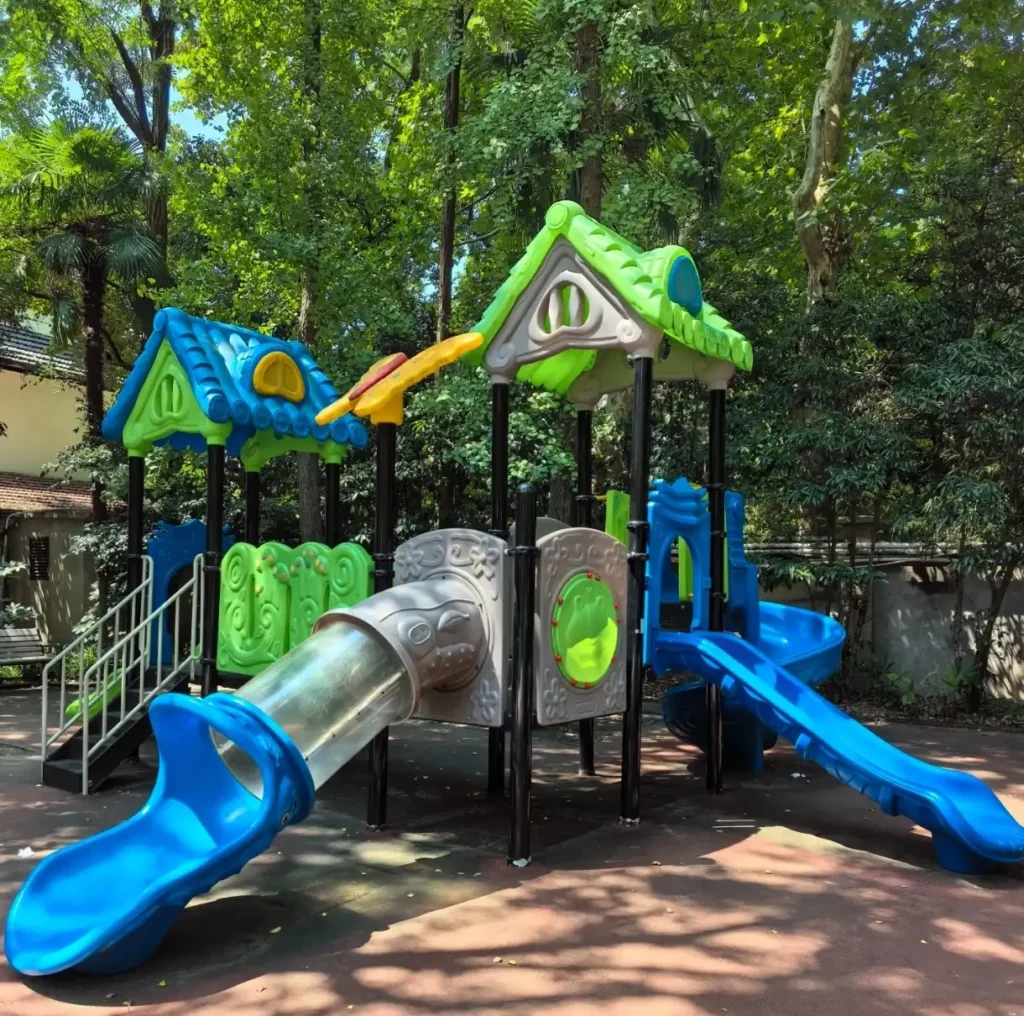
Search results for Kids Outdoor Combined Slide all look similar: product render photos, age labels, price tags and star ratings. What most product listings omit are practical details that determine how well the unit performs year after year: platform height, required safety use‑zone area, material specifications and the exact safety standard against which the hardware has been tested.
The right outdoor combined slide matches platform height, safety clearance zone and raw materials to the actual age group of users. Its slide slope and exit‑run‑out length should fit children’s physical condition instead of only looking attractive on product photos. Buyers often make two typical mistakes. Some customers purchase high‑deck slides for toddlers who actually need low platforms and longer run‑out distance. Park purchasers select toddler‑oriented equipment for sites mainly occupied by children aged 8‑12. Both risks can be identified before placing orders. These assessment criteria also apply to single‑unit installations in kindergarten yards and multiple sets for community parks. They are also the key points our design team evaluates when quoting layouts from our outdoor playground equipment collection.
This buying guide walks you through core considerations: target user group, site space requirements, outdoor‑grade material performance, and compliance documents you should receive before paying deposit.
What should you check before purchasing an outdoor combined slide?
Six major checks cover most purchasing risks: intended user age range, required safety clearance zone, material configuration, ground anchoring solution, access‑and‑exit design for kids, and official test documentation.
| Check | What it decides | How to verify before ordering |
|---|---|---|
| Age band & peak play headcount | Platform height, slide style, number of play stations | Calculate maximum simultaneous children on‑site, not total registered kids. |
| Deck height & slide exit height | Which age group can use slide without extra adult assistance | Request written figures including run‑out length. |
| Clear use zone | Whether equipment can physically fit your location | Measure actual site dimension and cross‑check supplier‑stated use‑zone requirement. |
| Material specification | Anti‑UV, rain‑proof service life under open‑air conditions | Enquire steel pipe thickness, surface‑coating procedure and plastic UV‑stabilizing treatment. |
| Anchoring method | Frame level stability after years of heavy play | Confirm fixing solution and applicable ground surface. |
| Certification & test reports | Whether products satisfy tender, school or public‑park requirements | Request test report number and corresponding standard version. |
Start with age grouping rather than unit price.
Slides designed for toddlers feature low‑height platforms, gentle slide slope and short run‑out zone. Models for older kids adopt higher decks, longer sliding lanes and wider access spacing for larger children. These two categories cannot replace each other. Even products marked for ages 3‑12 must balance accessibility for 3‑year‑olds and sufficient fun for 12‑year‑olds. That is why professional manufacturers apply age‑zoning design instead of one‑size‑fits‑all compromise height. When comparing options between outdoor playground equipment and indoor solutions, always confirm age rating matches your venue.
Measure safety use‑zone, not only equipment footprint.
Footprint means ground area occupied by the playground unit itself. The use‑zone is the surrounding buffer area that must stay completely clear. This detail frequently causes problems for compact courtyards and small urban sites. According to CPSC Public Playground Safety Handbook, use‑zone requirement belongs to formal specification rather than optional suggestion. Static playground equipment needs minimum six‑feet clear space in all directions. Additional buffer space is needed for swing attachments. The handbook also defines protective surfacing thickness matching fall‑height, with its latest update released in 2025. For limited‑space projects, adjusting layout (relocating, rotating or splitting play modules) is usually more cost‑effective than buying smaller‑sized equipment. If your venue is indoors instead, look at our indoor playground equipment range, which has different clearance and ceiling height rules.
Commercial public slide vs residential backyard slide: key engineering differences
The difference lies not in overall dimensions, but in which user group the whole structure is engineered for. Toddler‑focused slides are built for kids requiring climbing assistance and soft landing protection. Larger public‑use slides are engineered for higher speed, elevated deck and heavier dynamic load.
| Toddler‑oriented combined slide (18 months‑5 years) | Public / Backyard slide for elder kids (5‑12 years) | |
|---|---|---|
| Platform height | Low deck, wide steps with full handrail | Higher deck, ladder or climbing‑net access |
| Slide lane | Short sliding distance, gentle slope, high side baffles | Longer run‑out, double‑parallel, spiral or tunnel‑tube slide options |
| Additional play parts | Bucket swing seats with narrow spacing | Belt‑type swing seats with wider gap, heavy‑duty frame |
| Play experience | Single activity focus | Integrated climbing, sliding, swinging and route exploration |
| Applicable standard | ASTM F1148 for private home playground equipment | ASTM F1487 for public‑access playground facilities |
| Common customer complaints | Equipment gets outgrown quickly within 1‑2 seasons | Insufficient surrounding safety space for use‑zone |
It is critical to distinguish these two standards. ASTM F1148 applies to residential backyard use and explicitly excludes kindergarten, daycare and public park scenarios. ASTM F1487 targets public playground installations. Two sets follow different testing criteria even if appearance looks highly similar. Whether sourcing outdoor playground equipment or indoor play structures, always ask for matching standard certificates.
Clear signals showing a slide set has been outgrown
Warning signs appear before children start complaining. Kids begin climbing outer frame instead of designated ladder. Slides become a serious bottleneck due to too‑short sliding path. Multiple children crowd into a single swing seat. Play equipment for older children needs thicker‑gauge metal frames and wider base stance, for higher single‑seat load and stronger movement impact. Light‑duty backyard metal slides purchased for 5‑year‑olds seldom survive heavy play of 8‑12‑year‑old users. For indoor play cafes, the same overuse risk exists when selecting indoor playground equipment without considering peak visitor loads.
Why public‑grade combined slides demand larger safety buffer zones
Higher sliding speed needs adequate run‑out distance. Long‑lane slides generate faster exit velocity, requiring extra empty space beyond slide outlet. Swing attachments for older children travel larger amplitude forwards and backwards. Many sites look spacious on drawing paper but fail to satisfy full use‑zone requirement after equipment delivery. When total area is restricted, multi‑function integrated modular units are a practical solution. One compact frame housing double‑parallel slide and spiral slide allows multiple‑kid simultaneous play without occupying extra ground footprint.
Galvanized‑steel frame, plastic components or wood: material comparison for outdoor playground
Galvanized‑steel frames paired with UV‑treated plastic play components deliver best service performance for public and semi‑public locations. Wooden structures suit garden projects where visual appearance carries more weight than routine maintenance. For all material categories, surface treatment determines real service life more than raw‑material category itself.
| Material | Strength points | Potential risks | Best application scenarios |
|---|---|---|---|
| Hot‑dip galvanized steel frame | High load‑bearing capacity, long service cycle, stable mechanical performance | Thin‑wall tubing, untreated cutting edges, ordinary mild‑steel fasteners | Park, school, residential community, kindergarten projects |
| Stainless‑steel sliding surface | Ultra‑smooth sliding feel, outstanding corrosion resistance | Material grade substitution, thin plate thickness, unpolished sharp edges | Coastal sites, high‑traffic public playground, premium projects |
| UV‑stabilized engineering plastic | Anti‑fading, full rounded corner design, easy daily cleaning | Non‑UV‑stabilized resin, sharp injection‑molding seams | Slide lanes, decorative panels, roof cabins, toddler play elements |
| Timber / Wood material | Natural visual effect, well‑blended with landscape setting | Rot risk, splitting, seasonal cracking, periodic refinishing requirement | Private garden, landscape‑oriented projects with dedicated maintenance plan |
Hot‑dip galvanized steel frame & stainless‑steel sliding surface
The most durable outdoor configuration is hot‑dip galvanized steel main‑frame matched with stainless‑steel sliding surfaces. Hot‑dip galvanization offers corrosion protection for tube inner walls as well as outer surface. Stainless steel maintains smooth sliding surface after long‑term abrasion by clothing, sand and grit. For coastal salt‑fog projects, 304 or even 316‑grade stainless‑steel hardware is specified. These material choices respond to real‑world salt‑air erosion rather than pure marketing selling‑points. Double‑layer electrostatic anti‑rust coating and top UV‑resistant finish further extend whole‑set service life. Nylon climbing net accessories and anti‑theft stainless‑steel locking screws are standard‑level configurations for high‑end seaside playground projects. This robust material formula is exclusive to outdoor playground equipment, as indoor models usually skip heavy anti‑corrosion coating.
Real value of anti‑UV playground‑grade plastic resin
Plastic components undertake most daily contact on outdoor slides. UV‑stabilizer additive slows down colour fading and surface chalking even under continuous sun exposure. Play‑grade resin avoids harmful chemical additives contacting children’s hands and skin. Integral one‑piece molding with polished rounded edges eliminates sharp injection seams which cause most minor scratching injuries. Indoor play plastic parts for indoor playground equipment do not require UV stabilizers, which is one key material difference.
Outdoor combined slide vs indoor slide: can one unit serve both scenarios?
You can move an outdoor‑designed slide indoors, yet performance changes greatly. Wind‑load calculation is no longer required for indoor deployment, meanwhile new constraints emerge including ceiling clearance height, floor‑protection measure and building evacuation rules. Even with identical appearance, evaluation criteria differ significantly.
Many kindergartens and indoor play‑cafés hope to reuse same play equipment for both indoor and outdoor conditions. Some modular units support cross‑scenario deployment; most cannot adapt well.
Main differences when moving slide installation indoors
Sufficient ceiling height becomes top priority. Outdoor slide requiring 3‑meter vertical clearance still demands equivalent headroom inside buildings, plus extra space for adult supervisors to reach children at platform top. Indoor ground needs rubber padded surfacing instead of bark or lawn. Drilling permission is required for floor anchoring. Safety standards also diverge: home‑use playground standard, public outdoor playground standard and soft contained‑playground all follow separate testing specifications. One product passing one standard does not automatically satisfy requirements of another. Clearly state your venue type at quotation stage to ensure matching compliance documents, whether you need outdoor playground equipment or indoor playground equipment.
Slide specification for coastal and pool‑surrounding locations
Water‑exposed environments need adjusted material lists. Near swimming pools, stainless‑steel sliding surface is preferred over plastic which will degrade quickly under chlorine plus sunlight. Avoid structures with downward‑facing water‑trapping cavities. Fastener hardware must not stain surrounding deck surface. Slide exit should land onto anti‑slip flooring instead of slippery wet tiles. For salt‑spray marine‑coast projects, 304 stainless works for general weather exposure, while splash‑zone fittings upgrade to 316 stainless steel.
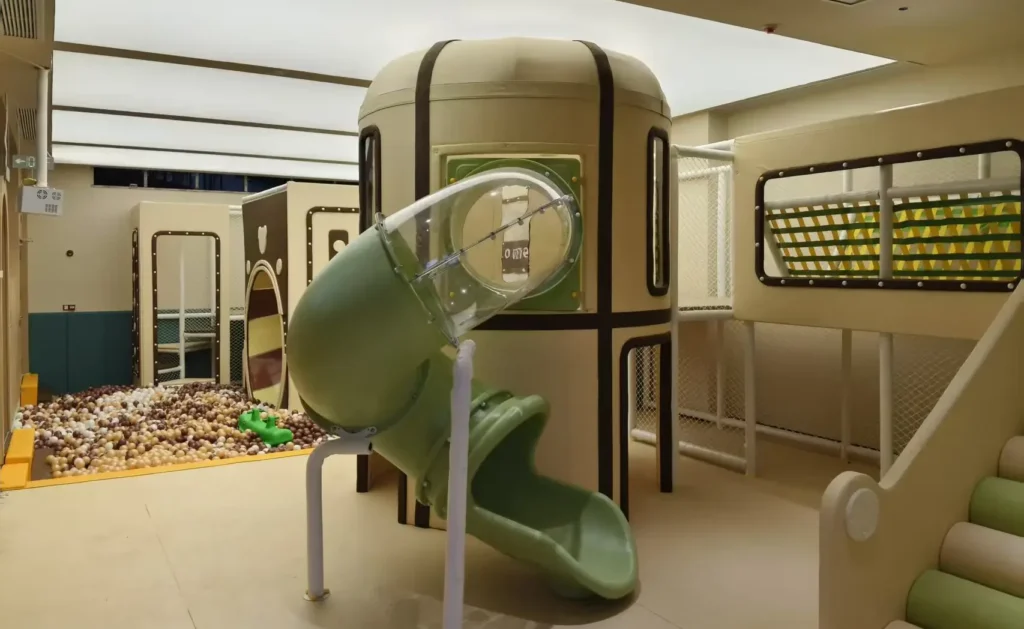
Sizing your combined slide: matching slide dimension to children’s age
Slide dimension must follow end‑user’s physical characteristics instead of available yard space. 5‑year‑olds need reachable‑height platform and gradual‑speed run‑out section. Play slides for older kids need enough deck height to bring play satisfaction plus sufficient exit‑zone clearance for high‑speed landing safety.
| User Age Group | Core slide performance requirements | Recommended slide style | Key points for inspection |
|---|---|---|---|
| 2‑4 years | Build confidence, limit drop height | Short straight slide, low‑elevation deck, high side baffles | Step height, component gaps, sharp edges elimination |
| 4‑6 years | Independent climbing, controlled sliding velocity | Gentle‑curve or straight slide, moderate deck height | Ladder accessibility, run‑out length, supervisor sightlines |
| 6‑10 years | Higher speed, play challenge, heavy repeated usage | Double‑parallel, spiral or tunnel tube slide | Exit velocity, post‑exit safety clearance, queuing‑space layout |
| 10‑14 years | Diverse multi‑route play experience | Long spiral slide, drop‑style tunnel slide | Overall structural load capacity, zoning separation from younger kids |
Slide angle, exit‑height and run‑out distance
Three dimensions define user experience: entry slope angle determines sliding speed; exit‑height influences landing impact force; run‑out means flat buffer distance after slide outlet for children to decelerate and clear way for next user. Insufficient run‑out easily causes collision risks during peak‑hour queuing. Always read supplier technical drawings carefully. Quotation‑listed “equipment height” usually refers to platform deck height, not total overall height or slide exit height. Mixing‑up these parameters ranks among most frequent ordering mistakes.
Fall‑protection surfacing belongs to slide specification, not post‑purchase landscaping
Protective surfacing is integral part of playground specification rather than later landscaping decoration. Required surfacing thickness links directly to fall‑height value and varies for rubber tile, poured‑in‑place rubber, wood fiber, bark or sand filling. Loose‑fill materials need larger thickness compared to certified rubber systems under same fall‑height condition, plus regular raking maintenance. Surfacing material must extend past slide exit and cover area beneath swing seats, with physical containment border preventing filler material spreading outside play zone. If surfacing budget is fixed, finalize playground layout first before selecting surfacing products.
What does a manufacturer‑supplied commercial combined slide package contain?
Beyond steel frame and slide lanes, qualified commercial‑grade unit includes configured slide variants, age‑matched swing bay, multiple climbing routes, full safety railings for every elevated platform, plus installation‑maintenance documentation to keep compliance valid.
Common slide types you may receive in quotation
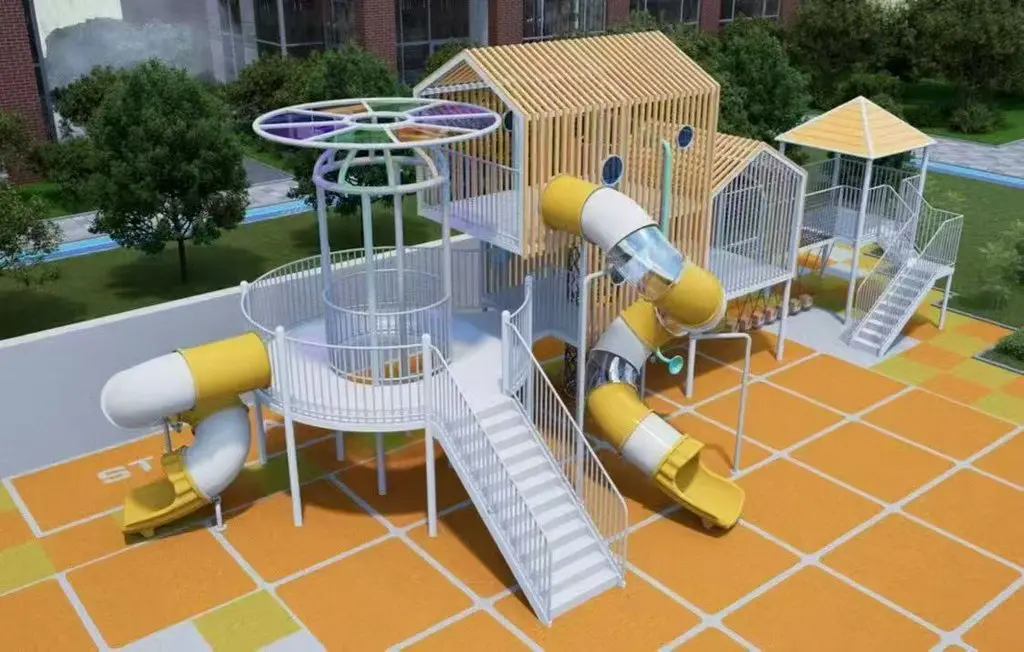
Spiral slide: creates long sliding journey within compact ground footprint ‑ Straight slide: easiest for staff supervision, low‑cost spare‑part replacement ‑ Double‑parallel slide: allows two‑child simultaneous sliding and reduces peak‑time queue pressure ‑ Transparent tunnel tube slide: adds adventure route‑finding fun for elder children
Multi‑functional themed combined playground slide integrates these variants into one modular unit. Ocean, forest, space‑cabin appearance options are available, built upon UV‑resistant playground‑grade plastic and hot‑dip galvanized steel framework, equipped with anti‑slip climbing ladders and complete platform guard‑rail systems. Some configurations add swing bays as optional attachments. This modular design philosophy is shared by both outdoor playground equipment and indoor playground equipment, only differing in material and safety zoning.
Theme design, age‑zoning and site layout planning
Theme decoration is more than simple cosmetic appearance. Ocean, forest, space‑cabin themes hide structural hardware inside immersive scene. Designers can separate different‑age‑group play zones through thematic layout without building physical fences. Proper age‑zoning raises site capacity: high‑activity play area and quiet rest zone divide visitor flow and avoid competing for same safety‑use‑zone ground space.
Documentation and installation‑support included in shipment
Check documents delivered together with goods: contractor‑readable installation manual, anchor‑position ground‑plan drawing, periodic‑maintenance checklist and spare‑parts inventory list. For large‑scale projects, on‑site installation guidance brings more real‑world value than small‑percent price discount. Correct initial assembly defines frame levelness, anchor stability and alignment quality for all slide joints.
Key questions you should ask playground supplier before placing order
Always request standard edition number and corresponding test‑report ID first. Next confirm customization scope, production lead‑time, shipping‑related paperwork, warranty clauses and spare‑part availability. Supplier’s reply reveals more practical information than product catalogue pictures.
| Question | Reliable supplier reply reference |
|---|---|
| Which safety standard version was this model tested against? | Clear named‑standard with published year plus verifiable test‑report number |
| How much layout modification can be done for my specific site? | Clear limitation statement for platform height, slide length, tunnel curvature, colour scheme and modular adjustability |
| What is production lead‑time and what factors may change delivery schedule? | Reasonable time range linked to design complexity instead of one fixed value for every project |
| Who provides installation drawings and what language versions are included? | Bilingual manuals plus anchor‑marked ground‑plan drawing as standard delivery |
| What export documents come with container shipment? | Full customs‑clearance documents, material inspection files for tender‑project requirement |
| What items does warranty cover and respective warranty duration? | Separated warranty periods for different components instead of one general blanket‑period statement |
| Can individual damaged spare‑parts be reordered several years later? | Written spare‑parts list and clear re‑order procedure |
Pay attention to standard version validity: ASTM F1487 updated in year 2025. If supplier only references older edition, their technical documentation may already be outdated. Public‑park, school and community tender projects should follow ASTM F1487 requirement at procurement phase. Private backyard projects apply residential playground standard. Clarify venue‑type before comparing quotations.
How JinQiKai delivers custom combined‑slide playground projects
Fujian JinQiKai provides one‑stop custom themed‑playground solution covering site survey, design, manufacturing up to after‑sales service. This integrated service removes hand‑over risks caused by separate suppliers for design, structure and installation.
JinQiKai has specialized in children playground manufacturing since year 2016, owning a 35,000‑square‑meter production workshop. Our products have been supplied for over 10,000 kindergartens and community playgrounds. Our outdoor playground portfolio includes compact Little Doctor slide series and large‑size full‑theme combined playground sets.
On‑site survey & themed playground design based on plot dimension, target‑user age group and project‑budget ‑ Custom‑configurable platform height, slide‑lane selection and swing‑bay layout matching actual children user groups ‑ Production with complete material‑inspection and tender‑required documentation ‑ Modular export‑oriented packing, bilingual construction drawing and installation‑manual included ‑ On‑site installation guidance and after‑sales support including spare‑part supply
Customization applies to core‑structure parameters rather than only colour swaps. Overall unit dimension, platform elevation, slide‑lane length, tunnel curvature and colour‑gradient scheme can all be adjusted for your site. Send us your site drawing, target‑user age range and budget, and our team will send you a free customized layout proposal plus price quotation within 12 hours with no purchase obligation. Site‑specific layout drawings make cross‑supplier comparison much easier than standard catalogue pages.
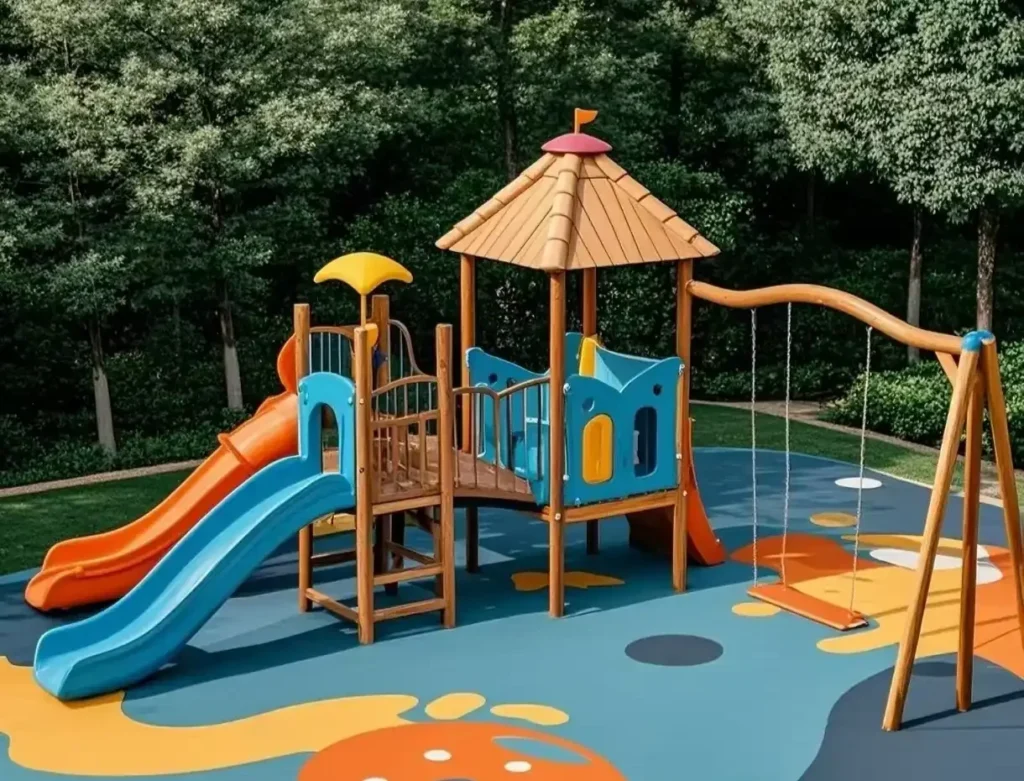
FAQ
Below are common questions buyers ask about outdoor combined slides.
Can an outdoor combined slide stay outside all year round?
Yes, on condition it is specified for permanent outdoor exposure. Most early‑failure issues root in neglected details: uncoated fasteners, non‑galvanized tube inner walls, plastic components without UV‑stabilizer and low‑grade sliding surface material. In cold‑climate regions, equipment does not need removal in winter; spring‑thaw‑season inspection on anchor base, hardware fittings and moving components is recommended.
How many children can play on one combined‑slide unit at the same time?
Maximum capacity depends on quantity of independent play stations and layout solution, not overall equipment dimension. Double‑parallel slide supports two‑kid sliding at once. Spiral slide relieves queuing pressure better than straight slide for heavy‑traffic sites. Each swing‑seat holds one child. Tell supplier peak‑hour maximum expected children number rather than average visitor volume and request suitable layout solution.
Can an outdoor combined slide be installed on sloped or uneven ground?
It can be deployed on slope terrain, but the playground deck and slide‑lane itself must remain horizontal. Ground‑foundation construction gets adjusted for sloped site instead of modifying play‑equipment structure. Available solutions include levelled concrete platform, adjustable anchor feet or stepped multi‑level layout adapting terrain contour. For steep sites, designers usually split structure into separated levels and arrange slide‑lane on flat section to guarantee safe exit‑run‑out performance.