
Most operators who maintain outdoor playground equipment plan replacement on a five to seven year capital cycle, with a bid calendar and an approval queue that assume nothing breaks early. Then a wind event peels the roof off a shade structure, a corroded post pulls out of its footing, or an inspector condemns a deck for a head entrapment opening, and the same decision has to be made in five days instead of five months. The question stops being which structure to buy and becomes what authority exists to buy it this week without losing the funding that is supposed to pay for it.
Emergency spending on playground equipment is triggered when a defined event removes a structure from safe use faster than the normal procurement calendar can respond, and the purchase is authorized by a written determination made before the order is placed. The event family determines who signs, the funding source determines which procurement method is allowed, and the file determines whether the cost is reimbursed or disallowed.
What follows covers what qualifies, what authority waives, and how to build a file that still holds up under audit.
What Qualifies as a Trigger Event for Emergency Playground Spending?
A trigger event qualifies when three conditions hold at once: the loss is sudden and unplanned, it removes equipment from safe use or breaks a program that cannot pause, and the repair cannot be scheduled through the normal cycle without extending the closure. Missing the third condition is what turns an emergency purchase into a sole-source purchase with no defensible justification.
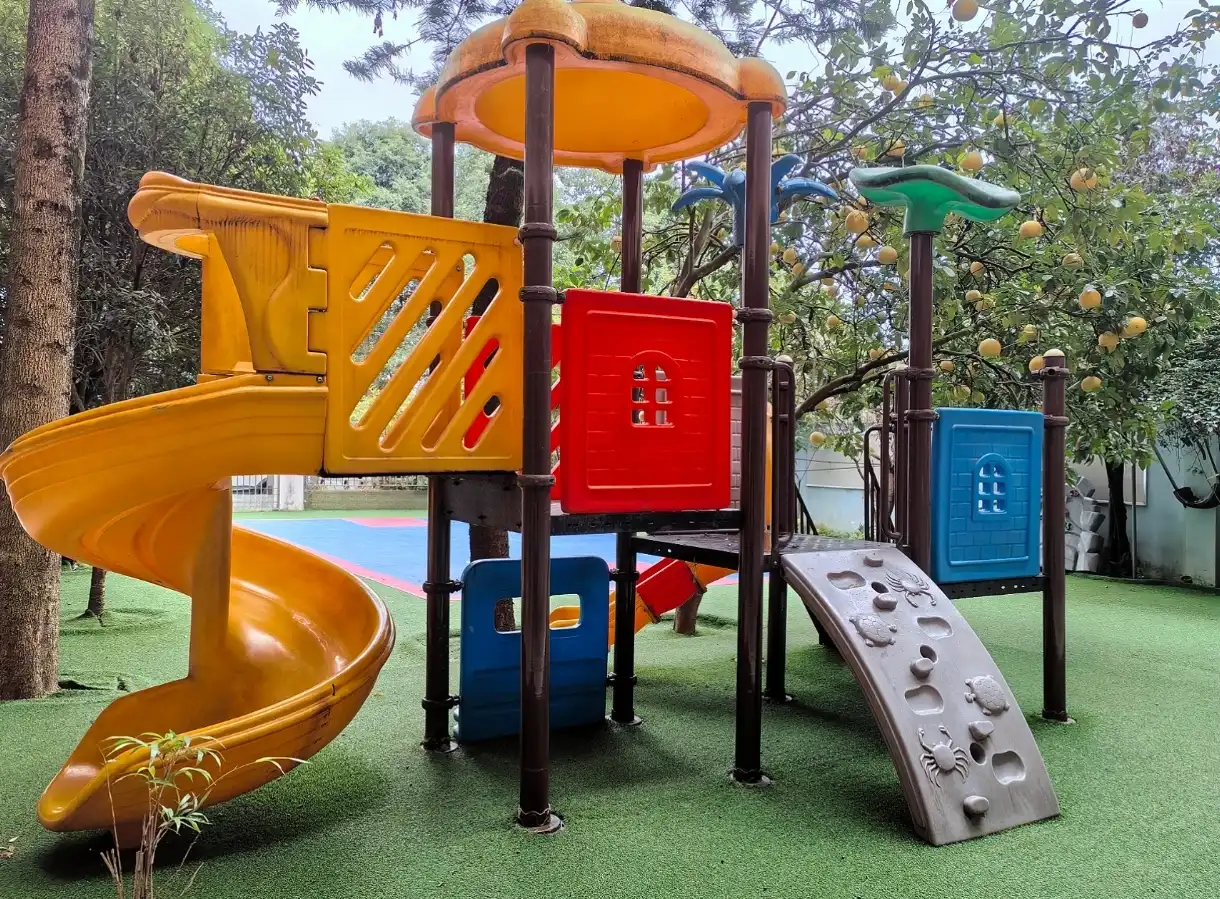
The third condition is the one most often stretched. A worn swing seat found during a routine inspection is a maintenance item, because it can be replaced inside a normal work order. The same seat found after a vandal cut the chains on every bay is different: the site is unusable, the closure has no end date, and replacement cannot wait for a quarterly bid opening.
| Trigger family | What it looks like on site | Evidence the file needs |
| Declared disaster | Wind or flood damage to decks, footings scoured, surfacing washed out | Declaration number, damage assessment with coordinates, pre-event inspection photos |
| Structural failure | Post corrosion failure, anchor pull-out, deck collapse under load | Engineer or certified inspector report, closure log, scaled photos |
| Vandalism or fire | Burned panels, cut netting, destroyed swing chains | Police or fire report number, itemized repair estimate |
| Health or safety order | Contamination finding, injury investigation, agency closure notice | Order or notice, closure date, remediation scope |
| Inspection failure | Entrapment opening, exposed bolt, guardrail gap below spec | Certified inspection report, dated re-inspection request |
Hazards That Justify Immediate Closure
The hazard profile is well documented. The Consumer Product Safety Commission reports an average of more than 190,000 emergency room treated playground injuries per year between 2021 and 2023, and in its study of 1,775 incidents, equipment related hazards such as breakage, tip-over, design and assembly accounted for 38 percent, followed by falls at 29 percent. Reported deaths involved entanglement of ropes, leashes, bike helmets and drawstrings.
That record sets a practical threshold. Hazards that can be isolated with fencing and a posted closure are maintenance on an accelerated schedule. Hazards that cannot be isolated, meaning entanglement points, head entrapment openings and anything that shifts under load, force whole-site closure and meet the third condition above on their own.
What the Exigency Exception Actually Waives
The exigency exception waives competitive solicitation for playground equipment. It does not waive product certification, required contract clauses, an independent cost estimate, or the written record. It permits a noncompetitive award when a public exigency will not tolerate delay, and it requires the file to show why delay was unacceptable in this specific case.
FEMA guidance on procurement under awards is explicit that recipients should understand the emergency and exigency exception before sole-sourcing, and that where state, local and federal rules differ, the most restrictive rule governs. Dollar thresholds shape the method: micro-purchases up to 15,000 USD, up to 50,000 USD where the entity self-certifies, and simplified acquisitions up to 350,000 USD with quotes from an adequate number of qualified sources.
State law adds a signature layer on top. Texas Education Code 44.031(h) requires a board determination that following normal purchasing methods would prevent or substantially impair classes or other essential school activities. New Jersey requires written notice to the purchasing agent stating the nature and timing of the emergency. Both routes are narrower than they appear: they relax the method, not the accountability.

Which Funding Path Fits the Trigger
Match the funding source to the trigger before choosing a procurement method. A purchase made under emergency authority but charged to a program that never authorized emergency treatment is an unallowable cost, however defensible the safety argument was at the time.
Disaster reimbursement is the clearest example. Published public assistance category lists place playground equipment under Category G, parks and recreational facilities, with a federal share typically at 75 percent and the remainder carried by the state. The declaration is the gate: work must fall inside the incident period and restore pre-disaster design, function and capacity. Insurance proceeds are deducted first, which is why the two paths are sequenced rather than stacked.
| Funding path | Fits when | Binding constraint |
| Disaster public assistance, Category G | Federally declared disaster in the county | Restores pre-disaster function only, and procurement must satisfy federal standards |
| Property or inland marine insurance | Any insured peril, including vandalism | Proof of loss, pre-loss baseline, replacement cost versus actual cash value |
| Capital or operating budget transfer | Safety failure with no declaration | Governing body action and a published budget amendment |
| Grants and community fundraising | Planned upgrade or a funding gap after the above | Match requirements and applicant eligibility |
Cost Benchmarks by Site Type
The independent estimate has to defend a number, so it helps to know the market before the quote arrives. Equipment typically runs 45 to 60 percent of a project, surfacing 20 to 30 percent, installation and site work 15 to 25 percent. This guide to playground equipment cost breaks the line items down further.
| Site type | Equipment only (USD) | Turnkey (USD) |
| Child care center or church, 500 to 1,500 sq ft | 15,000 to 30,000 | 25,000 to 75,000 |
| School, 1,500 to 4,000 sq ft | 50,000 to 90,000 | 100,000 to 150,000 |
| Community park, 4,000 to 10,000 sq ft | 100,000 to 250,000 | 250,000 to 850,000 |
| Destination park, 10,000 sq ft and above | 200,000 to 500,000 | 500,000 to 1,500,000 |
Emergency work adds cost a scheduled project never sees: expedited freight, temporary fencing and supervision, surfacing retested after installation, demolition and disposal. Budget 10 to 20 percent above the scheduled figure.
Faith-Based and Nonprofit Sites
A church-run preschool or faith-based community center is not automatically excluded. Disaster assistance treats qualified private nonprofit organizations as eligible applicants, and some houses of worship now qualify for facility damage reimbursement. Grants run on a different test: foundations generally require 501(c)(3) status or a public entity acting as fiscal sponsor. Two questions, two files.
Six Steps From Trigger to Purchase Order
Run the sequence in order for any playground equipment order: secure and isolate the site, record a written trigger determination, obtain an independent cost estimate, select the method the funding source allows, award with the required clauses, then verify delivery against the damaged scope. Skipping the estimate is the most common reason a legitimate emergency gets reversed on review.
- Secure and isolate, within hours. Fence the area, post the closure, and log the time and reason before anything is moved or photographed.
- Record the determination, within 24 to 72 hours. The official with authority states the nature of the event, when it occurred, and why delay is unacceptable. Written, signed, filed.
- Obtain an independent cost estimate before solicitation. Even under exigency, this is what separates a reasonable price from an appearance of favoritism.
- Select the method. Micro-purchase, simplified acquisition, or noncompetitive with a written exigency justification. A cooperative contract that was competed before the event is often the cleanest route, and board-approved playground contracts already carry pricing that survived a public solicitation.
- Award with the required clauses. Domestic preference, a debarment check, and bonding where construction work is involved.
- Verify and archive. Check delivery against the damaged scope, record serial numbers and the installation date, and commission a post-install inspection.
The Documentation Package That Survives Audit
An audit does not count photographs. It tests a four part chain: what the asset looked like before the event, what the event did to it, what you did in response, and what you paid. Any break in that chain converts a legitimate emergency into an unsupported cost.
The weakest link is almost always the first. Without a pre-event inspection record, a department cannot prove the structure was serviceable, which invites the argument that the failure was deferred maintenance. Quarterly condition logs cost almost nothing and carry the most weight.
| Document | What it proves | Where it comes from |
| Baseline inspection and maintenance log | Asset was in service before the event | Certified inspection reports, work orders |
| Damage record with coordinates and time stamps | Extent and location of the loss | Field photos, video walkthrough, assessment form |
| Written trigger determination | Authority to depart from the normal method | Signed memo, board resolution, purchasing notification |
| Independent estimate and quotes | Cost reasonableness | Estimator worksheet, vendor quotations |
| Award and contract file | Method, selection basis, required clauses | Solicitation record, evaluation notes, executed contract |
| Completion record | Work delivered as scoped | Delivery tickets, installation report, post-install inspection |
Five Ways Emergency Claims Fail
Playground equipment claims fail on process rather than merit. The five recurring failures are competition run after the fact, a scope that improves instead of restores, a multi-year commitment signed on emergency authority, missing certification, and no pre-event baseline.
Retroactive competition is the most damaging: quotes collected after the order read as a formality, not a decision. If the method allows quotes, make the calls inside 48 hours and record who was contacted. Scope creep is the most expensive, since a new shade sail or upgraded surfacing turns a restoration into an improvement, and improvements fall outside disaster eligibility. Emergency authority is limited duration, so a single delivery at a fixed price is defensible and an open-ended term is not. Certification is checked at the purchase order, not at delivery, and a structure outside ASTM F1487 will not pass most jurisdictions however tight the schedule. The fifth failure is the baseline, and it costs the least to prevent.
Reopening and Rebuilding: From Temporary Play to Permanent Replacement
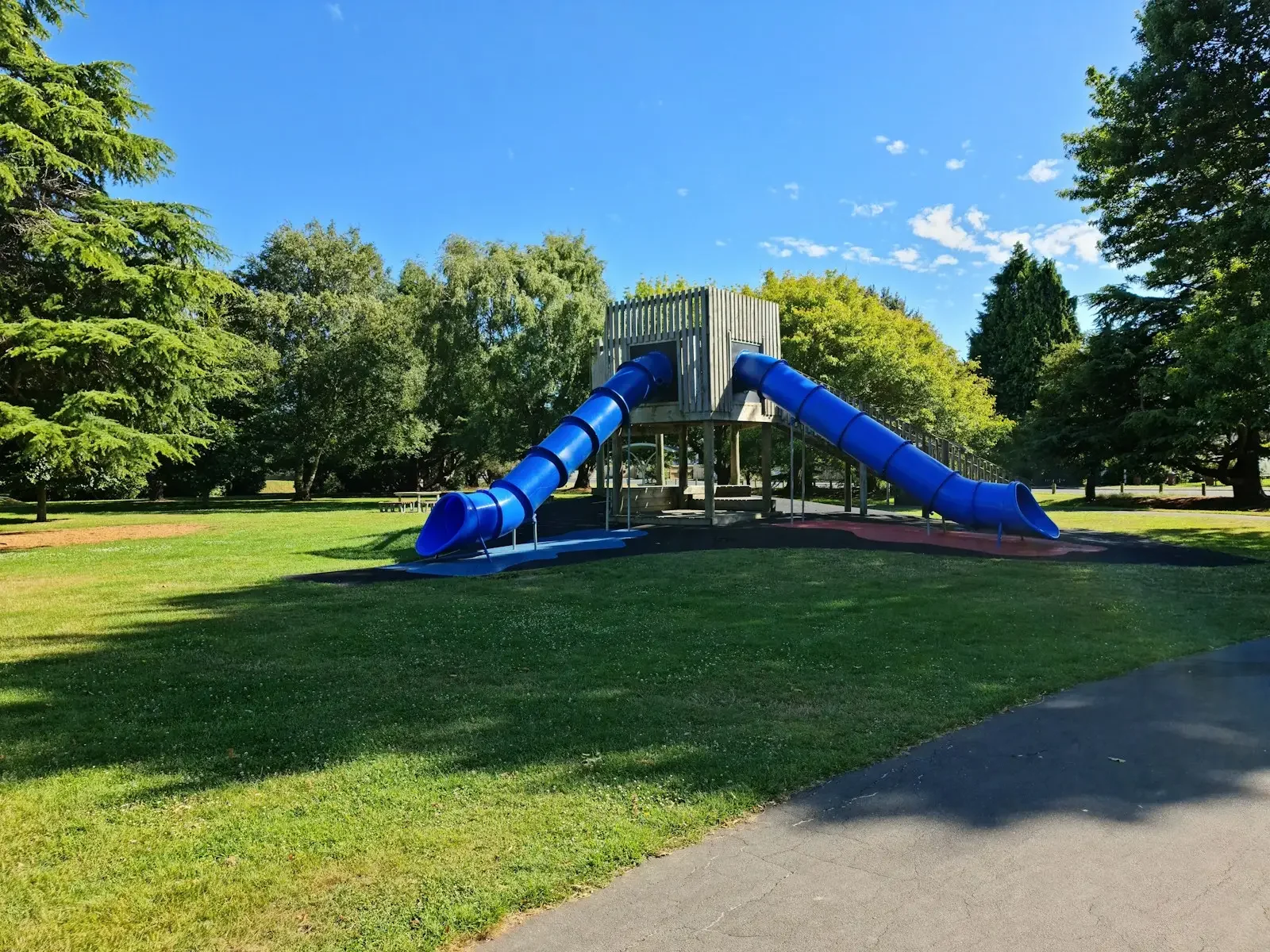
Temporary play restores program continuity. It does not restore compliance. A site reopens only after the surfacing has been retested against the new fall height, anchors and fasteners have been verified, and entrapment and entanglement points have been rechecked against the design as installed.
Interim options fall into three groups: leased structures on a temporary surface, relocation to an indoor or adjacent site, and staggered scheduling across remaining play areas. Each still has to meet the same standard if children use it, which is why a leased structure needs the same certification as a purchased one. A standing playground maintenance guidelines routine turns the reopen inspection into a checklist.
Permanent replacement is the chance to reduce the next trigger. Specify a corrosion class matching coastal or de-icing exposure, footings designed for the local wind zone, replaceable wear parts at high traffic points, and a documented inspection interval with a named owner.
The operators who recover fastest are rarely the ones with the largest budget. They are the ones whose file was already in order when the event arrived.
FAQ
Three questions come up after the purchase order is signed, and each one changes how the file should be built.
Does an emergency declaration waive playground safety certification?
No. Expedited procurement changes how a supplier is selected, not what the product has to be. A structure bought under exigency still needs to conform to ASTM F1487 and, where the jurisdiction requires it, carry third-party validation. Buying an uncertified structure to save two weeks converts a reimbursable emergency into a liability exposure that outlasts the equipment itself.
Can emergency funds cover surfacing, installation, and demolition?
Usually yes, when those costs sit inside the playground equipment scope that restores the damaged facility to its pre-disaster function and capacity. Demolition and disposal of the damaged structure, use zone surfacing and installation labor are commonly eligible if they are itemized in the scope and supported by the estimate. Improvements beyond the pre-disaster condition, such as a larger footprint or added amenities, are not, and mixing the two in one contract is what causes the reduction.
What if the site has to reopen before the claim is filed?
Document first, reopen second, file third, in that order. Photograph the damaged condition before demolition, keep removal and disposal records, and record the date the site reopened. A filing can wait for an invoice. Evidence cannot wait for a demolition crew.


