
California regulates outdoor playground equipment differently from most states. There is no state inspection calendar and no agency that issues a citation. The Health and Safety Code sets a performance bar at installation and then steps back, leaving operators to absorb the consequences through civil liability, insurance terms, and licensing review.
Compliance spending in California is the cost of satisfying three statutory duties, not the cost of a permit: new and modified playground equipment must conform to ASTM and CPSC standards, an inspector certified by the National Playground Safety Institute must perform an initial inspection before public use, and any project seeking state funding must be compliant when it is finished. In practice that bundles equipment, impact-attenuating surfacing, accessible routes, testing, installation, and documentation into one budget line, and the total runs from roughly $8,000 for a single small structure to more than $1 million for a full park rebuild.
The sections below separate what the statute obliges you to buy from what the market behind those purchases is doing to your bid.
What California Playground Equipment Regulations Require You to Buy
The statute imposes three obligations, and each maps to a specific expenditure: conformance at installation or modification, an independent initial inspection before the site opens, and a funding condition that ties state money to compliance.
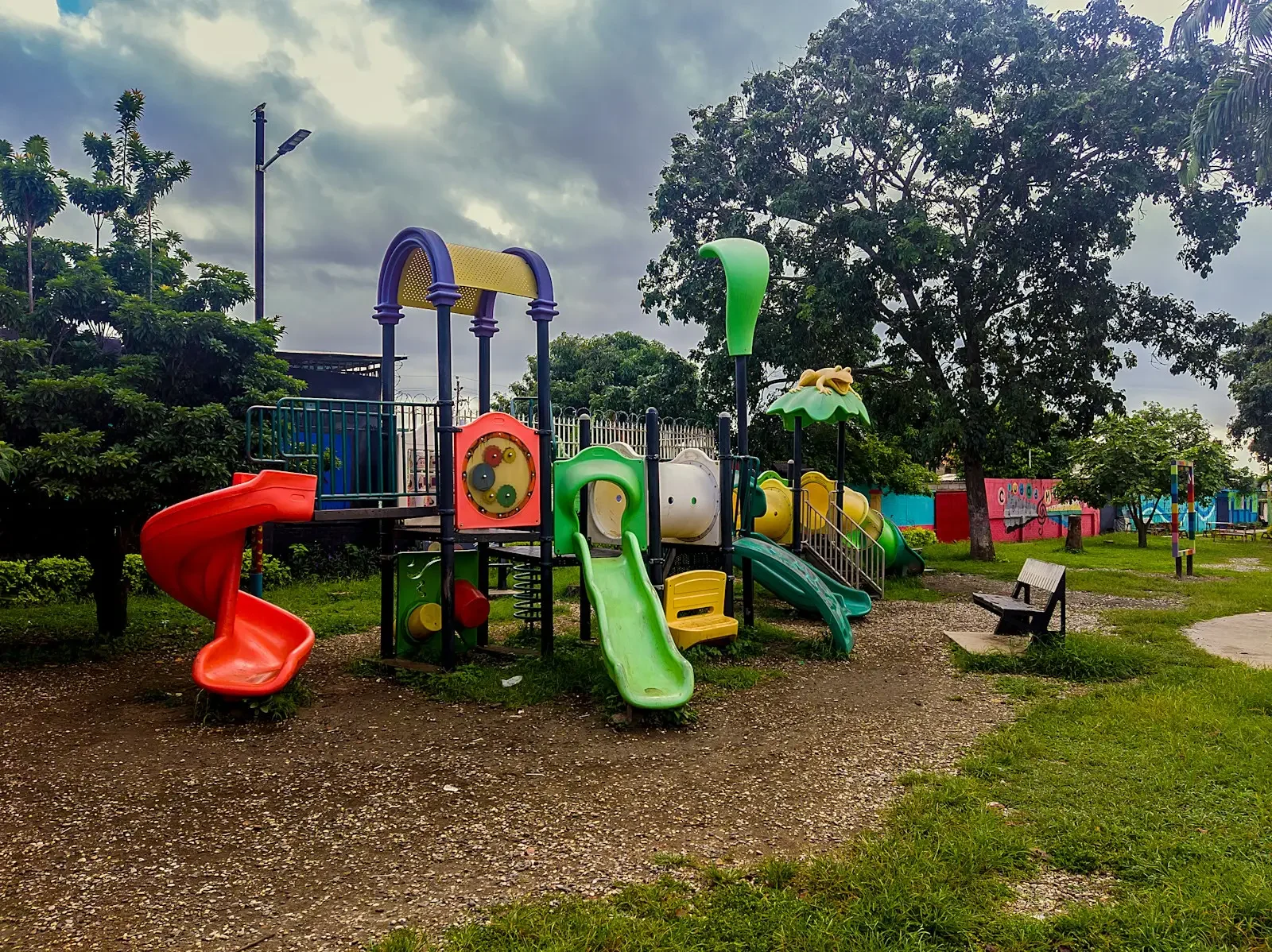
Sections 115725 through 115735 of the Health and Safety Code are the operative text. Subdivisions (a) and (b) point to the playground-related standards of ASTM International and the playground-related guidelines of the U.S. Consumer Product Safety Commission, which is why the CPSC Public Playground Safety Handbook functions as a de facto specification document in California even though it is formally guidance.
| Statutory duty | What it obliges | Budget line it creates |
| 115725(a) and (b) | Conformance to ASTM and CPSC standards at installation or modification | Compliant equipment, use zones, surfacing, accessible routes |
| 115725(c) | Initial inspection by an NPSI-certified inspector before public use | Inspection fee plus a written report |
| 115725(d) | Playgrounds installed 1994 to 1999 conform within 15 years | Retrofit or replacement for legacy sites |
| 115725(g) | No state funding unless the finished site conforms | Compliance as a grant eligibility condition |
Subdivision (c) repays a close reading: the inspection report may serve as a reference when upgrades are made, but the statute says it is not intended for any other use. Subdivision (g) is the provision most often missing from compliance discussions: state funding is unavailable for construction, operation, or maintenance unless the site conforms, which makes compliance a precondition for the capital itself. The full text is short enough to read at California Health and Safety Code section 115725.
Who the Mandate Covers, and Who It Excludes
The definition of an operating entity is deliberately broad. Subdivision (e)(1) names a church, subdivision, hotel, motel, resort, camp, office, hospital, shopping center, day care setting, and restaurant, and introduces that list with includes, but is not limited to, while carving out licensed family child care homes regulated by the State Department of Social Services. Subdivision (e)(2) then defines a playground to include equipment, fall zones, surface materials, access ramps, and all areas within the enclosure, so surfacing and fencing sit inside the scope.
Why Compliance Spending Is Driven by Liability Rather Than Fines
California does not levy an administrative fine for playground equipment non-compliance. The consequence arrives later, through negligence exposure, insurance pricing, and licensing findings, which is why the cheapest compliant-looking option is often the most expensive across ten years.
The state runs a standard-setting model, and standard-setting models push cost into the civil side. California Civil Code section 1714 imposes a general duty of ordinary care on property owners. When an injury occurs, the question a court or adjuster asks is not whether an inspection was mandated on that date but whether a reasonable operator would have found and corrected the condition. A dated inspection record answers that question; its absence answers it badly, and underwriters read the same file when they set premiums.
The maintenance obligation also survives the statute’s silence on frequency. ASTM F1487, the playground equipment standard, requires manufacturers to supply inspection, maintenance, and repair instructions, and requires operators to follow them for the life of the equipment. The CPSC handbook devotes a chapter to maintenance and record keeping, noting that frequency depends on equipment type, age, use level, and climate. For licensed child care centers, Title 22 of the Division 12 regulations adds a layer of its own, and an uncorrected hazard can be recorded as a Type A deficiency, which must be disclosed to parents in writing and posted at the facility for 30 days.
How Much Compliance Costs by Project Size
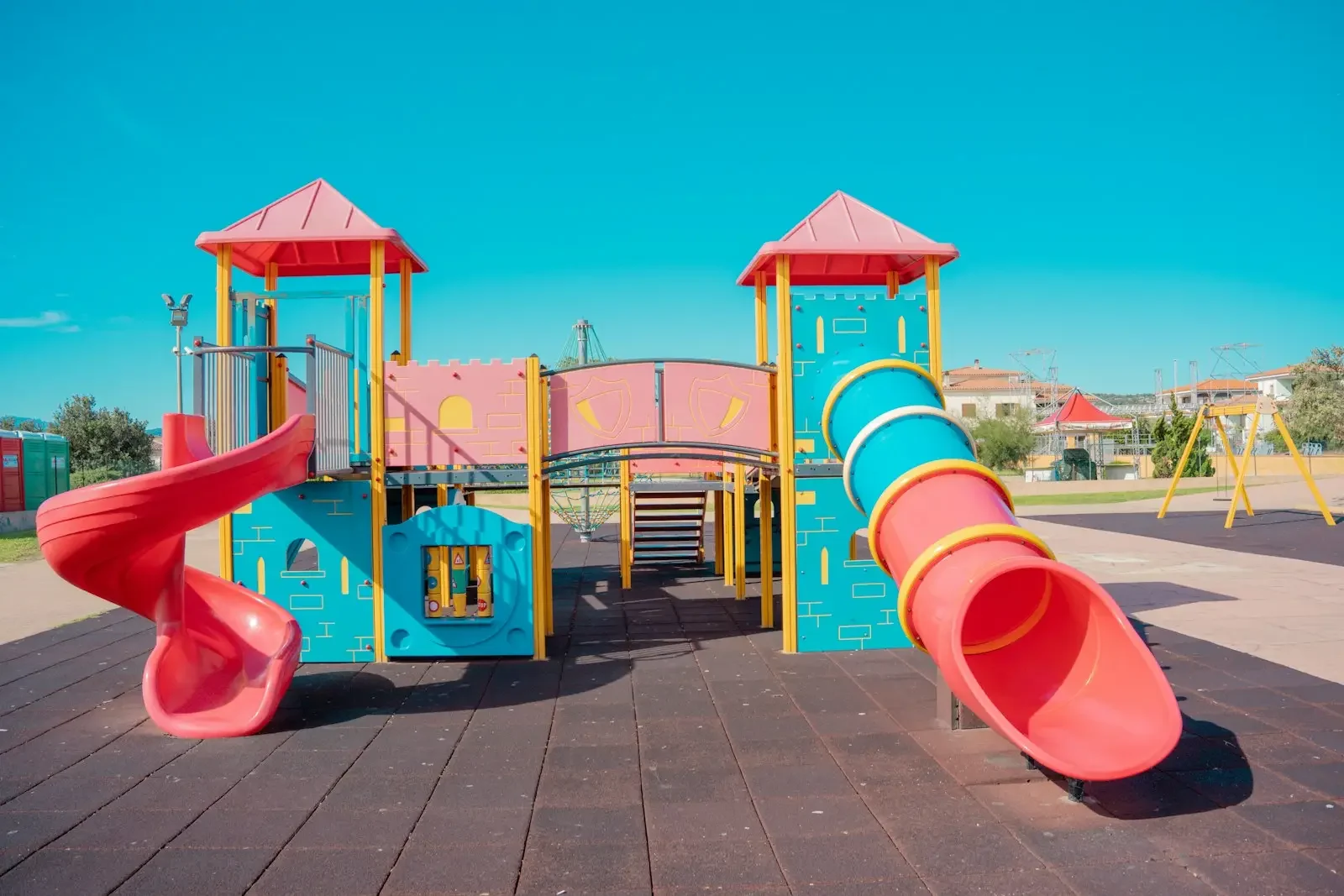
Published planning ranges put a single small community structure at roughly $8,000 to $35,000 installed, a school or neighborhood park at $50,000 to $250,000, and a full multi-structure rebuild with engineered surfacing and accessible routes above $1 million.
Those bands are planning tools rather than price lists, and an individual bid moves for reasons unrelated to equipment selection. A component-level breakdown of playground equipment cost shows where that variance sits; the tier is set mostly by footprint and by how much of the site gets rebuilt.
| Project tier | Typical scope | Installed planning range |
| Single small structure, association or courtyard | One composite unit, compact use zone, basic surfacing | $8,000 to $35,000 |
| School or neighborhood park | Two to four structures, engineered surfacing, accessible route | $50,000 to $250,000 |
| Full park rebuild | Multiple age zones, shade, ramps, testing, site work | $250,000 to $1,000,000+ |
Installation typically lands at a quarter to a third of equipment value, and site work and permitting add a band that varies more by jurisdiction than by design.
The Surfacing Premium
Surfacing is the item that most often surprises a first-time buyer, and in California it is bound most tightly to fall height. Poured-in-place rubber, a seamless recycled base with a colored wear course, typically prices between $12 and $28 per square foot installed. The low end corresponds to roughly 2.5 inches of depth serving a four to five foot fall height, the high end to roughly 4.5 inches serving structures of eight to ten feet. Prevailing wage requirements on public school and municipal work push labor-heavy scopes toward the upper end, and base repair and drainage correction are the items most often excluded from a headline number.
| Surface type | Installed cost per sq ft | Main compliance constraint |
| Engineered wood fiber | $3 to $6 | Depth and compaction must be maintained continuously |
| Rubber tiles | $8 to $18 | Seam lift and individual tile replacement |
| Poured-in-place rubber | $12 to $28 | Thickness must match documented fall height |
Which Line Items Are Regulation-Driven and Which Are Optional
Regulation-driven spending on playground equipment covers impact-attenuating surfacing sized to fall height, clear use zones, entrapment and entanglement geometry, anchoring, an accessible route, and the documentation that proves all of it. Shade, fencing, theming, and signage are discretionary unless a local ordinance or a funding agreement says otherwise.
Compliance is routinely invoked to justify upgrades that are really about programming, and a mixed budget cannot be defended line by line. The defensible set is short:
- Surfacing matched to the documented critical fall height and verified against the impact attenuation standard.
- Use zones and fall zones clear of conflicting equipment, hard edges, and obstructions.
- Openings, gaps, and moving joints assessed against entrapment, entanglement, and crush criteria.
- Footings and anchoring that resist displacement and sit below the finished surface.
- An accessible route, plus the required share of elevated components reachable by ramp or transfer system.
- Impact test results, inspection reports, and maintenance logs retained for the life of the equipment.
Accessibility is the item most often underestimated in California budgets. Under the 2010 ADA Standards at least half of elevated play components must sit on an accessible route, and a composite structure with 20 or more elevated components must use ramps to reach a minimum of 25 percent of them. Operators mapping playground equipment compliance in California usually find the binding constraints in three places: product standards, accessibility law, and site-level environmental rules.
How a Consolidated Supply Market Affects Your Bid
Five companies hold approximately 85 to 90 percent of U.S. commercial outdoor playground equipment sales, and in October 2026 the Federal Trade Commission and a coalition of 12 states including California sued to block a merger between two of them. The parties abandoned the transaction shortly after the complaint was filed.
The figure comes from the complaint filed in the Northern District of California, which alleged the combination would substantially lessen competition in violation of Section 7 of the Clayton Act. The California Attorney General’s office framed the issue in procurement terms: purchases in this market are funded mostly by taxpayer money through schools and parks departments, so a price increase lands on a public budget rather than on a buyer who can walk away.
Three consequences follow for a project budget. Bid validity windows shorten when suppliers are repricing, so an approval cycle that runs past a quote expiry changes the project cost. Brand-level competition is weaker than a catalog count suggests, because several apparently independent lines answer to the same owner. And timing becomes a budget decision, since a project that slips a fiscal year can lose the pricing it was funded at.
How Schools, Cities, and Associations Fund Compliance Work
Public agencies fund playground equipment compliance through facilities master plans supported by local bonds and state grants, while homeowners associations fund it through capital reserve accounts and phased purchasing. Both approaches hold only if the compliance scope is estimated before the funding request is written.
For a school district or city, playground equipment replacement is rarely a standalone purchase. It enters a facilities master plan alongside roofing, mechanical systems, and accessibility upgrades, and competes for the same bond proceeds. That helps where the work is bundled with an accessibility or drainage project, since mobilization, grading, and inspection costs are shared.
The funding condition in subdivision (g) changes the arithmetic. Because state money is unavailable for construction unless the finished site conforms, and unavailable for operation and maintenance unless it conforms, a district that defers compliance is not deferring a cost; it is risking the funding stream that would have paid for the work. For an association the mechanism differs but the math does not: compliance comes out of reserves or a phased purchase, and a reserve study never revisited since installation will understate the surfacing replacement that arrives first.
How to Build a Compliance Budget That Survives Review
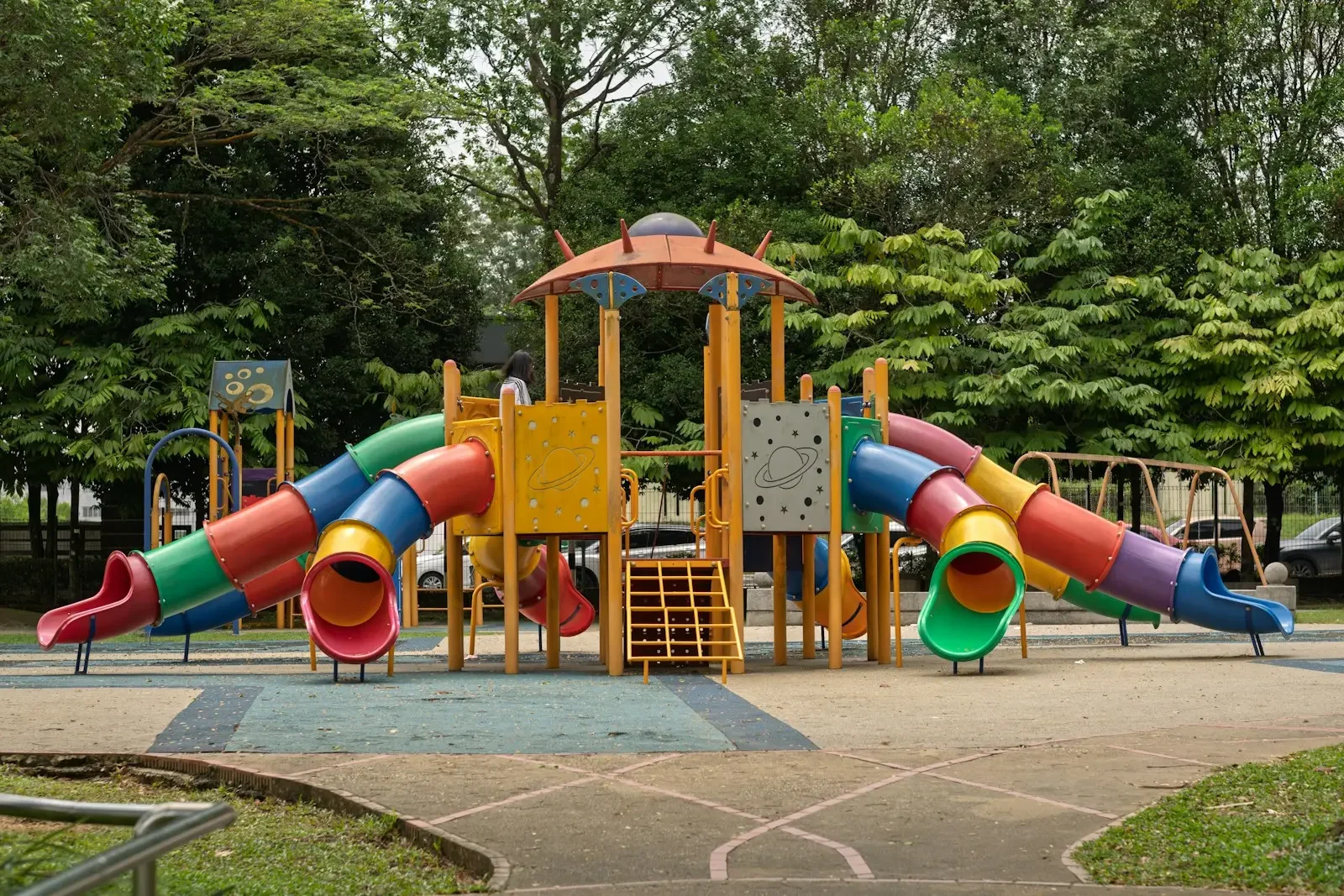
Build the budget in the order the risk arrives rather than the order the invoice arrives: audit the existing site, set surfacing thickness from measured fall heights, price testing and documentation as line items, and carry contingency for conditions an audit has not yet found.
- Commission a baseline audit against the current ASTM edition and the CPSC handbook, not the edition in force at purchase.
- Record the critical fall height of every structure and derive surfacing thickness from it rather than from a round allowance.
- Price impact attenuation testing and the written report as separate lines, since both are commonly quoted as exclusions and then reappear as change orders.
- Budget the inspection cycle with the hardware and surfacing replenishment it generates, at a frequency reflecting use level and climate.
- Carry contingency for drainage, base repair, and footing condition, the three findings most likely to surface after demolition starts.
- Keep every report, test result, and repair record in one file that can be produced on request.
The last item is not housekeeping. In a state that sets standards without scheduling inspections, that file is the only record separating an operator who managed the risk from one who was unaware of it, and playground inspection frequency decides how much of it exists.
FAQ
Three questions tend to come up once the budget is drafted and the standards have actually been read.
Does California law require annual playground inspections?
No. Section 115725 requires an initial inspection by an NPSI-certified inspector at installation or modification and sets no recurring schedule. An annual comprehensive inspection is professional practice rather than statute, driven by the maintenance instructions a manufacturer must supply and by the value of a dated record in a negligence claim.
Do you have to upgrade equipment when ASTM publishes a new edition?
Not by statute. The conformance trigger is new construction, replacement, or modification, and the section does not require retrofitting an unmodified playground when a standard is revised. The exposure is indirect: a revised edition reflects updated knowledge, so an operator who has never assessed the site against it is harder to defend than one who assessed it and documented a plan. A periodic audit is the practical middle path between doing nothing and rebuilding.
Is engineered wood fiber acceptable in California, or is rubber required?
No statute names a material. What is required is a surface that performs to the impact attenuation standard for the fall height, and wood fiber, loose rubber, tiles, and poured-in-place systems can all satisfy it. Loose surfaces lose depth under swings and slide exits and drift out of performance when they are not raked and replenished, so a lower capital cost becomes a permanent labor obligation and a recurring compliance risk.


