
Shopping malls, supermarket entrances, restaurant waiting lounges and family‑focused retail spaces often have leftover under‑used floor corners. Many venue owners plan to place coin‑operated kiddie rides to enrich on‑site family‑oriented experiences and boost customer dwell time. However, plenty of operators only focus on ride appearance and theme styling, ignoring practical site constraints, power conditions, safety compliance and daily‑operation challenges. Inadequate pre‑installation assessment may lead to frequent faults, hidden safety risks, or even render equipment inoperable after delivery.
This practical guide covers key pre‑installation evaluation points for coin‑operated kiddie rides. It walks through site conditions, power requirements, payment‑system selection, safety standards, routine maintenance and multi‑site deployment suggestions, helping venue planners complete comprehensive checks before ordering equipment.
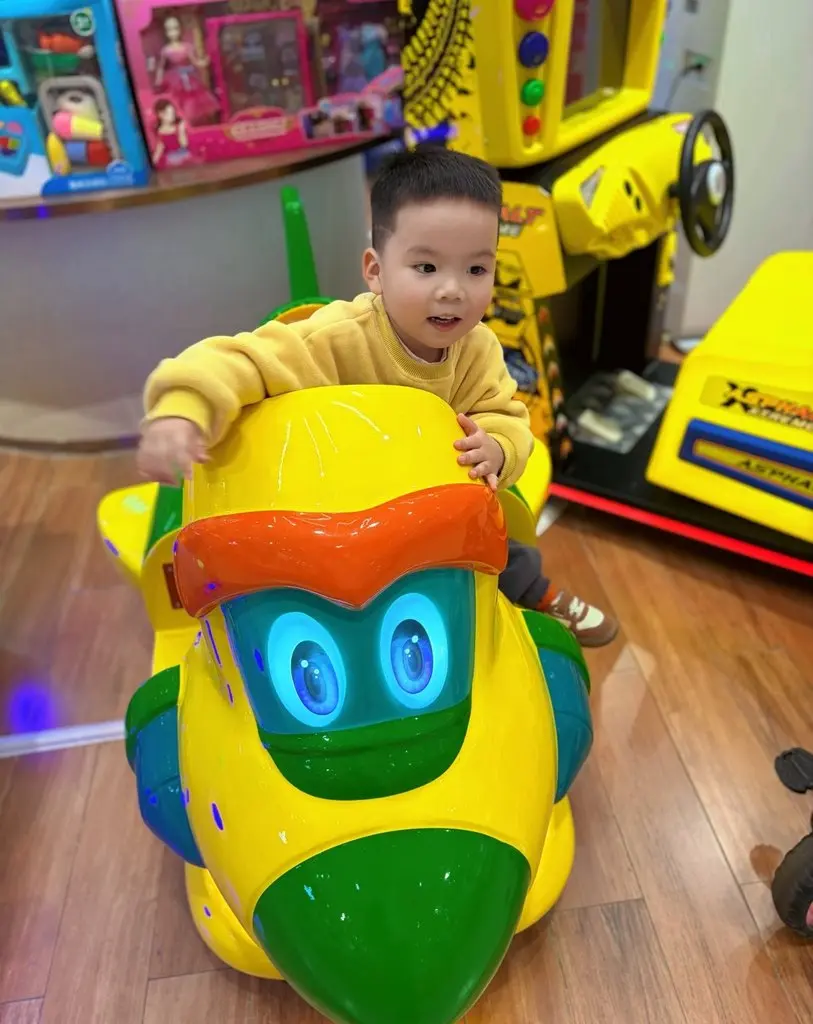
What Core Site Conditions Do Coin‑Operated Kiddie Rides Require
Three basic site prerequisites determine whether kiddie rides can run stably: sufficient footprint plus safety buffer space, flat solid floor surface, and accessible power supply. Site evaluation should start with these practical conditions instead of decorative themes or cartoon appearances.
Most standard kiddie rides are compact‑sized, but operators still need to reserve extra buffer space for children to climb on and off. Obstacles such as pillars, display racks and handrails must not fall within this active zone.
| Site Requirement | Practical Specification |
|---|---|
| Total occupied area (including safety clearance) | 1.5‑2.5 ㎡ per single kiddie ride |
| Floor surface | Flat, solid hard floor; avoid uneven soft carpet or loose flooring |
| Power access | Standard single‑phase socket, under 150W per unit |
| Surrounding obstacles | No sharp corners or protruding structures within activity range |
| Pedestrian route | Kept clear of main crowd passageways |
Why Floor Flatness Matters for Kiddie Ride Operation
Uneven ground creates excessive mechanical vibration during rocking or swinging cycles. Long‑term vibration loosens internal fasteners, accelerates gearbox wear and generates abnormal noise. Thick soft carpets are not recommended: they may obstruct bottom moving mechanisms and trap dust and debris.
Suitable & Unsuitable Venue Scenarios
Kiddie rides fit locations with natural family footfall: mall concourses, supermarket lobbies, clinic waiting zones and holiday park public areas. Avoid placing units in narrow crowded aisles, damp poorly‑ventilated corners, or positions that block fire‑escape routes.
Power Supply & Payment System Options for Kiddie Rides
Most commercial kiddie rides run on ordinary single‑phase AC power and do not require special high‑voltage circuits. Even so, operators need to clarify circuit load, socket layout and grounding requirements before installation. Meanwhile, multiple payment modes bring differences in hardware specifications and day‑to‑day management workflows.
| Payment mode | On‑site hardware demand | Daily‑management characteristics |
|---|---|---|
| Traditional coin‑operated | Coin acceptor module | Requires regular coin collection; no digital operation records |
| Token / stored‑value card | Card reader hardware | Supports batch card issuance; requires periodic card stock management |
| QR code cashless | Built‑in network module | No cash stored on‑site; supports remote status checks and usage statistics |
Key Electrical Notes
Each kiddie ride consumes under 150W of power. Do not daisy‑chain multiple units to a single overloaded extension socket. Reliable grounding is mandatory for commercial deployment to prevent electric‑shock hazards. Sockets shall be positioned out of children’s reach for safety.
When selecting payment modes, align your choice with venue management capacity. Coin‑operated models feature lower hardware costs but demand frequent on‑site visits. QR cashless variants incur extra network‑module costs yet reduce manual collection work.
Safety Standards Every Buyer of Commercial Kiddie Rides Must Follow
Commercial kiddie rides fall under amusement‑ride equipment regulations and cannot be held to household toy standards. Different regions enforce complete testing and certification requirements for kiddie rides deployed in public venues. Equipment certification alone does not equal on‑site safety approval. Actual installation must also comply with local site‑safety codes.
North American projects refer to ASTM F2007; European markets follow EN 71 and EN 13814 amusement‑equipment standards. Certification documents must correspond to your exact ride model, not generic corporate‑level certificates.
Key Safety‑Check Items
- Structural frame: Weld joints and shell strength must withstand repeated rocking impact.
- Passenger restraint: Seat guardrails and safety belts shall prevent children from slipping out during movement.
- Electrical safety: Short‑circuit protection, over‑current protection and reliable grounding.
- Emergency‑stop function: Abnormal conditions shall trigger an automatic halt of rocking or swinging motion.
- Warning signage: Clear age‑limit and weight‑limit labels must be affixed to each unit.
Many managed shopping‑mall venues mandate periodic third‑party inspections. Prior to purchase, confirm that your supplier can furnish complete test reports and certification files.
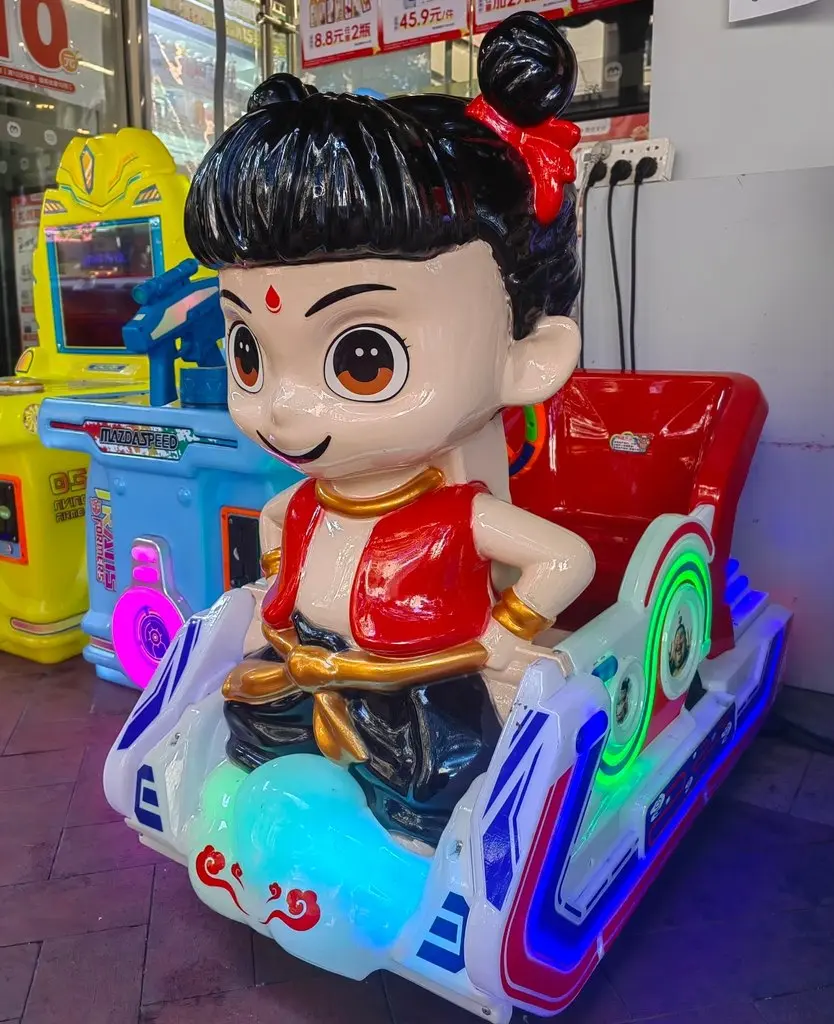
How to Choose Kiddie Ride Themes & Hardware Configurations
Vibrant cartoon themes constitute one major selling point for kiddie rides, yet theme selection should align with venue positioning rather than personal preference alone.
- Shopping‑mall public zones: Bright, popular cartoon themes suit impulse‑experience scenarios.
- Supermarket entrance: Simple classic styles with strong visual recognition deliver better performance.
- Waiting‑area scenarios: Low‑noise versions are preferred to avoid disturbing nearby visitors.
Beyond appearance, pay close attention to the quality of core wearing parts: coin or QR payment modules, drive motors, gearboxes, swing connection assemblies and audio players. Low‑grade thin shells and inferior motors trigger frequent breakdowns under prolonged continuous commercial‑grade operation.
Routine Maintenance & Uptime Management for Long‑Term Use
Unexpected downtime is the biggest pain point for kiddie‑ride operators. Frequently malfunctioning units not only ruin user experience, but also leave negative impressions on family visitors. Implementing a fixed inspection schedule helps prevent most sudden failures.
Daily Quick Check (completed by on‑site venue staff)
Verify normal response of the payment module; test audio, lighting and seat restraints; watch for abnormal noise or shaking during operation. Cut off power and suspend usage immediately if any anomaly occurs.
Weekly Inspection
Tighten loose bolts and fasteners; inspect wear on moving connection parts; verify proper operation of the emergency‑stop function.
Monthly Deep Inspection
Examine internal wiring and controller status; clear dust accumulated inside the machine shell; review spare‑part stock and confirm supply lead‑times for vulnerable components.
Spare‑Part Preparation Advice
Stock key wearing components including payment accessories, audio modules, motor carbon brushes and lighting assemblies. Clear spare‑part supply terms shall be specified in purchasing contracts, to avoid extended downtime while waiting for overseas‑sourced accessories.
Practical Advice for Multi‑Site Kiddie‑Ride Deployment
If you intend to place kiddie‑ride units across multiple venues, avoid blindly replicating the same solution for every location. Venue visitor demographics, space layout and management conditions vary significantly from site to site.
- Conduct a full‑site assessment for each location: measure usable area, confirm power‑socket positions and check fire‑escape constraints.
- Match ride quantity and theme style to the age profile of target visitors.
- Clarify on‑site management responsibilities within venue cooperation agreements: who performs daily visual checks, and who reports equipment faults.
- Standardize spare‑part management for multi‑site projects to boost fault‑response efficiency.
- Reserve space for future equipment replacement or theme‑style upgrades.
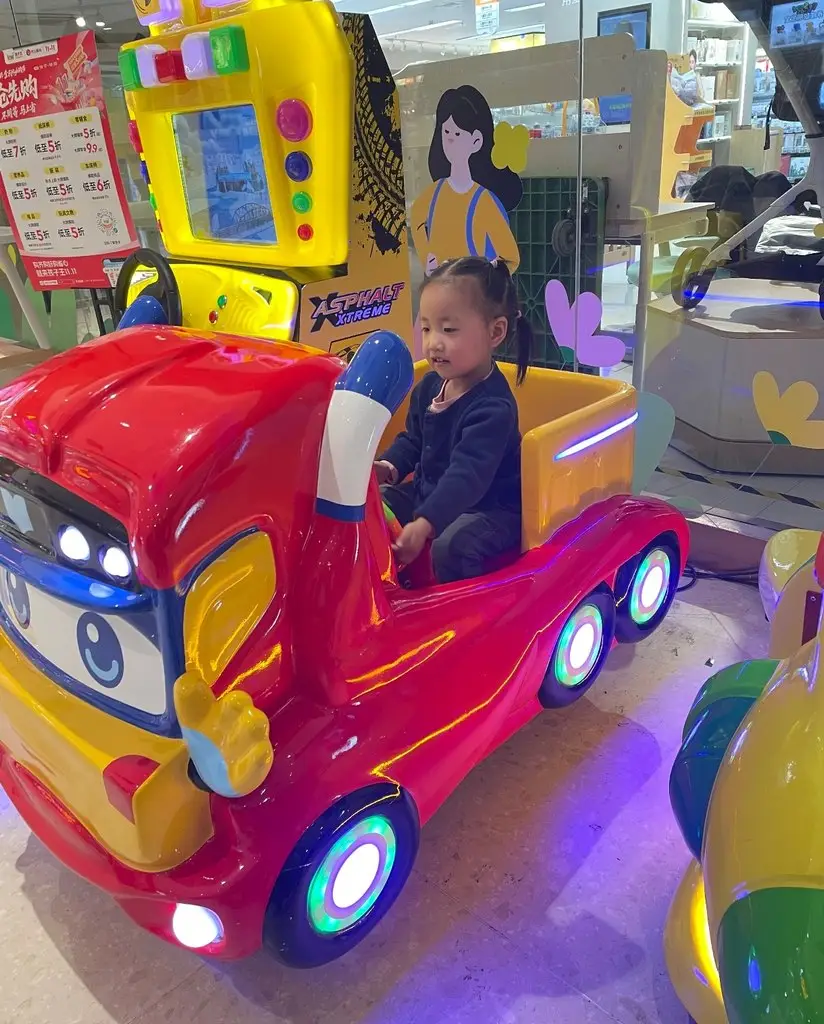
FAQ
How much space and power does a single kiddie ride need for installation?
A standard single kiddie ride requires 1.5‑2.5 square metres including safe boarding space. It operates on standard single‑phase power below 150W. Confirm socket placement and floor flatness before finalizing venue cooperation agreements.
What is the realistic service life for commercial‑grade kiddie rides?
Under regular inspection and maintenance, commercial kiddie rides can last 5‑7 years. Outer shells generally have a longer service life, while motors, payment modules and electronic components act as primary wear items. Replace units when component ageing causes recurring faults that are uneconomical to repair.
What key content should be covered in the purchase contract for kiddie rides?
Apart from product specifications, confirm four important points: target‑market safety‑certification documents, at least 12‑month warranty scope, clear spare‑part supply lead‑times, and pre‑shipment test requirements. Clarify responsibilities for commissioning guidance and after‑sales fault‑response turnaround times.


