
Early years settings now serve wider age spans and more varied needs than the furniture inside them was designed for. One room may host two-year-olds in the morning and six-year-olds after lunch, while purchasing still defaults to fixed-height tables bought in single age bands. The result fits the average child on the day it arrives and almost nobody twelve months later.
Height-adjustable study desks benefit early childhood development by keeping a child’s feet, forearms and eye line in the correct relationship as the body grows. Correct fit stabilises the trunk for fine motor work, removes the postural discomfort that adults often read as fidgeting, supports independent access to materials, and lets one room serve a wider range of ages and abilities without annual replacement.
This guide separates what the evidence supports from what suppliers claim, and sets out what settings should specify to capture the benefit.
Why Does Desk Fit Matter More in the Early Years Than in Later Schooling?
Between the ages of two and eight, children gain roughly 40 cm in stature, and the height spread inside a single room can exceed 20 cm at any one moment. A fixed-height desk is therefore correctly sized for a minority of the group for most of the year.
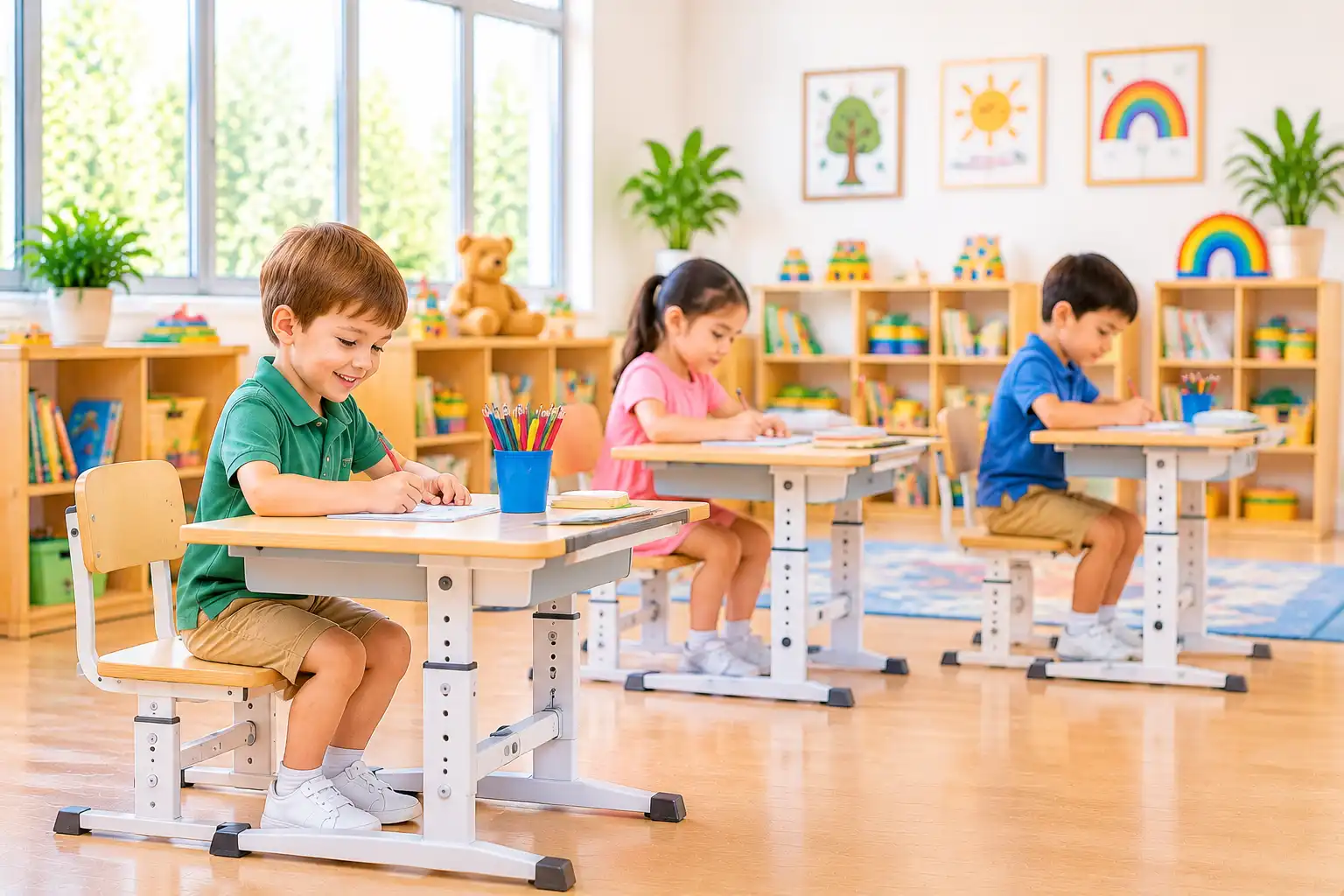
Growth across the early years is fast and uneven, so settings that group children by age rather than height always contain a tail working at a surface 5 to 10 cm too high. Three signals are visible without a tape measure: feet that dangle or hook around the chair legs, shoulders that rise towards the ears as the child reaches forward, and elbows below the desktop so the whole trunk leans in. A well specified range of height-adjustable classroom furniture lets a practitioner match the surface to the child in front of them, and re-match it mid-year without a purchase order.
The timing matters too. Postural habits formed between three and seven are the ones children carry into formal schooling, when seated work time lengthens sharply.
Which Developmental Domains Do Height-Adjustable Study Desks Actually Support?
Adjustable desks influence four distinct domains in early childhood: fine motor control and pre-writing, posture and core stability, attention and self-regulation, and independence in self-care. In each case the effect runs through the same mechanism, the physical relationship between the body and the work surface.
The four domains are separated below for clarity, though in practice they reinforce each other.
Fine Motor Control and Pre-Writing Skills
A controlled study of 30 six-year-olds compared a fixed desk layout with an adjustable one while children reproduced a graphic pattern on a tablet. Children at the adjustable desks produced more legible patterns, worked more slowly and made smaller spatial errors, pointing to steadier trunk support rather than greater effort (Gimenez et al., 2016).
Mark-making accuracy depends on fine control of the fingers, which depends on a stable shoulder girdle. Forearms resting on a surface that is too high load the shoulders, and the correction shows as heavy pencil pressure, variable line width and rushed drawing.
Posture, Core Stability and Spinal Development
The accepted benchmark is the 90-90-90 position: hips, knees and ankles at right angles, with both feet bearing weight. It preserves the inward curve of the lower back and keeps the head stacked over the shoulders. Feet that hang free rotate the pelvis backwards, flatten the lumbar curve and push the head forward, and the child holds that compensated shape for as long as the task lasts.
Adjustability makes the benchmark achievable rather than aspirational, and lets the desk drop low enough for a child working on a floor cushion.
Attention, Self-Regulation and Task Persistence
Much of what practitioners record as poor concentration at table activities is postural discomfort expressed through movement: shifting, kneeling on the chair, sliding forward, standing mid-task. None of it is fixed by reminding a child to sit still.
Adjustable desks add a second lever, because they let a child choose between sitting and standing for the same task. That choice is a regulation tool rather than a reward, and children allowed to make it usually return to the task without negotiation.
Independence, Confidence and Self-Help Skills
A surface at the correct height puts materials within reach, so a child can collect, use and return equipment without asking an adult, and each of those sequences is practice in planning and self-care. Self-service art areas show the difference first.
How Do Height-Adjustable Study Desks Make Early Years Settings More Inclusive?
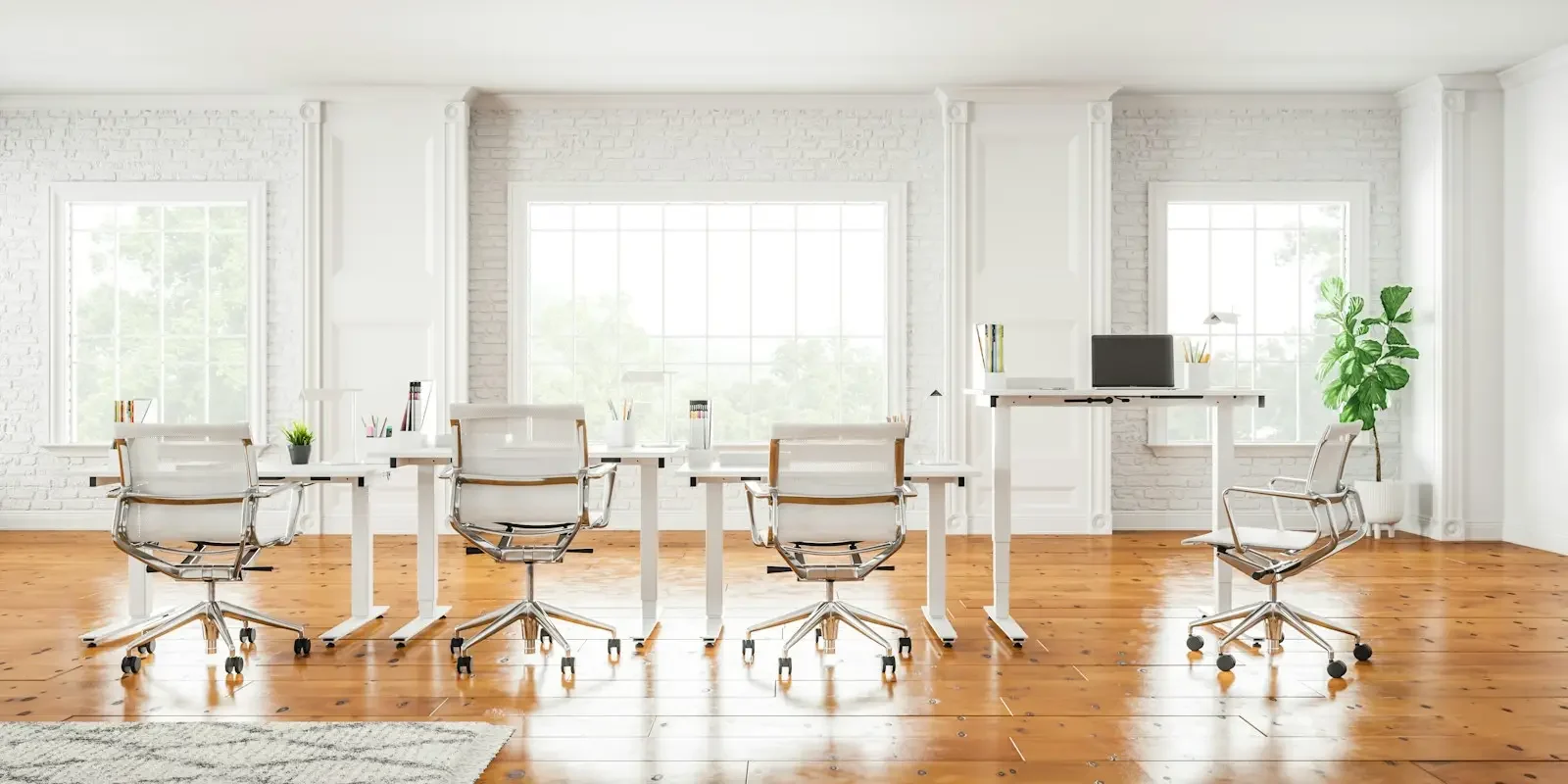
They turn a fixed piece of furniture into an adjustable resource, so one room can host mixed-age groups, children with postural or mobility support needs, and children using mobility aids without separating anyone or buying a specialist table for a single child.
Three scenarios drive most of the demand: the mixed-age room, where a two-year-old and a five-year-old share one zone and need surfaces roughly 15 cm apart; the child with a postural support need, for whom fit decides between participating and being positioned; and the child using a mobility aid, where height has to be paired with knee clearance.
Knee clearance is the detail that gets missed. Four-leg frames put structure exactly where a wheelchair or walker needs to go, while a cantilevered layout leaves the front edge open. Confirm frame geometry before comparing prices, because no amount of adjustability compensates for a frame a child cannot approach.
Do Children Really Concentrate Better When They Can Change Position?
The evidence supports reducing prolonged static restriction rather than claiming that standing raises attainment. Children who can alternate between sitting and standing show fewer posture-related interruptions, but the gain comes from the frequency of movement, not from standing as a posture in its own right.
World Health Organization guidance for under-fives is a useful anchor. For three and four-year-olds it recommends at least 180 minutes of physical activity a day, including 60 minutes of energetic play, and advises against restraining children for more than one hour at a time (WHO, 2019). A room where children sit at a table for 45 minutes is already working against that guidance, whatever the furniture.
The practical answer is rotation rather than conversion: keep focused table tasks to 20 to 30 minutes, then move the group into a movement zone before returning to a surface activity. Settings that pair adjustable desks with an active indoor area, such as a themed indoor play castle, find the rotation easier because the transition is a change of place rather than a change of instruction.
What Should Buyers Specify Before Ordering?
Five parameters decide whether an adjustable desk still does its job in three years: the minimum desk height, the adjustment range measured against your actual cohort, the size-mark pairing with chairs, the stability and pinch-point protection of the mechanism, and the cleanability of the surface.
European functional dimensions follow EN 1729-1, which assigns size marks by pupil stature rather than age. The bands relevant to early years provision are below.
| Size mark | Stature range (mm) | Seat height (mm) | Table height (mm) |
| 1 | 800 to 950 | 210 | 400 |
| 2 | 930 to 1160 | 260 | 460 |
| 3 | 1080 to 1210 | 310 | 530 |
| 4 | 1190 to 1420 | 350 | 590 |
| 5 | 1330 to 1590 | 380 | 640 |
The same split appears in play equipment standards, where EN 1176 pairs dimensional guidance with impact testing much as EN 1729 does. A comparison of the two EN 1176 playground safety standards frameworks is worth reading before drafting a tender clause.
What Adjustment Range Covers Ages Two to Eight?
The minimum height fails most often. Frames derived from adult sit-stand designs frequently bottom out at 60 cm or higher, above the seated elbow height of a three-year-old, so the desk is adjustable in name and unusable in practice. Work backwards from the youngest child: measure seated elbow height, subtract 2 to 3 cm, and treat that as the minimum.
Mechanism choice follows the setting, not the price list. Manual crank and gas-lift systems have fewer failure points and need no power routing, while motorised columns earn their cost where staff reset heights several times a day.
How Should Desk Heights Be Set and Reviewed Through the Year?
Set each desk from the child’s seated elbow height rather than from an age chart, and review it at fixed points: entry assessment, mid-year, after a visible growth spurt, and whenever a room changes cohort.
The measurement takes under a minute. Seat the child with feet flat, shoulders relaxed and forearms horizontal, mark the elbow height, then set the surface 2 to 3 cm below that line. Check soles fully supported, thighs horizontal, and the near edge within reach without leaning.
Review discipline matters more than the initial setting: record a height per desk, label it, and hand the review to a named practitioner.
| Review point | What to check |
| Entry assessment | Seated elbow height for every child, recorded per desk |
| Mid-year | Any child whose feet no longer reach the floor |
| After a growth spurt | Desk and chair re-paired, not desk alone |
| Room changeover | Range reset to the incoming cohort before first use |
What Happens When Desk and Chair Heights Are Set Independently?
A desk at the right height paired with a chair at the wrong height produces the same problem as buying both at the wrong size. If the chair is too high the feet lose support; if too low the knees rise and the trunk tips back. Order the pair together and confirm the ranges overlap.
What Is the Total Cost Case Compared With Fixed Furniture?
The purchase premium is usually recovered within two to four years, because one adjustable desk replaces two or three fixed sizes across the age range and can be re-tasked between rooms instead of being stored, sold or scrapped.
The comparison only holds if total cost is modelled honestly, including replacement labour and the storage outgrown stock consumes.
| Cost line | Fixed-height furniture | Height-adjustable furniture |
| Initial purchase | Lower unit price | Higher unit price, fewer units needed |
| Replacement cycle | Two to three purchases across ages two to eight | One purchase, adjusted in place |
| Storage and disposal | Outgrown stock held or written off | Minimal, since stock stays in use |
| Room reconfiguration | New order per cohort change | Reset by staff in minutes |
Durability decides whether that model survives a real classroom. Ask for cycle-test evidence on the mechanism, confirm that handles, glides and locking components are stocked as spares, and read the warranty for what it excludes. Factories that publish their manufacturing standards and test protocols are easier to hold to a specification than those that quote dimensions alone.
Which Specification and Operational Mistakes Undermine the Benefits?
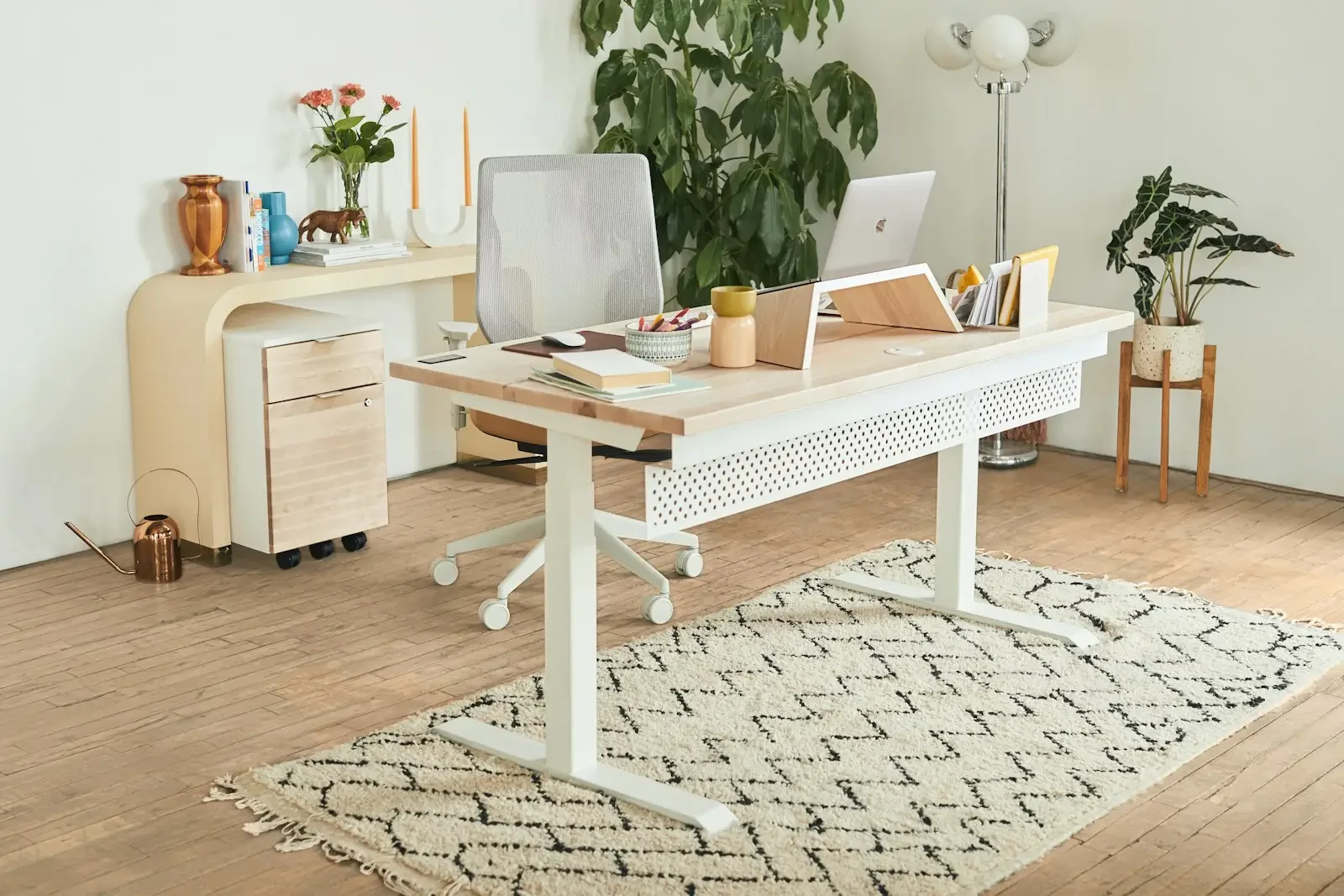
Most disappointment traces to commissioning rather than to product failure: desks are adjusted once at installation and never again, chairs and desks arrive in different size marks, or the specified minimum height already sits above the youngest children’s elbow line.
These four errors account for most cases where a setting reports that adjustable furniture made no difference.
| Mistake | Consequence | Correction |
| Adjusting once at installation | Desks drift out of fit within a term | Named reviewer and a dated height log |
| Desk and chair bought separately | Postural problem persists despite correct desk | Order matched pairs and check range overlap |
| Minimum height above infant elbow line | Youngest children still reach upwards | Test the minimum against the youngest cohort |
| No labelling or staff training | Heights reset by guesswork after cleaning | Colour-coded or numbered height marks |
Commissioning is the cheapest fix available: a 20-minute session showing practitioners how to measure elbow height pays back for the life of the furniture.
FAQ
Three questions come up once the specification is agreed, and each affects the order rather than the design.
How Many Height-Adjustable Study Desks Does an Early Years Room Actually Need?
Start with the number of simultaneous table places, then add one or two units at the extremes of the height range. A room serving a 20 cm spread rarely needs every desk adjustable if it also holds fixed stock in the two dominant size marks, because the adjustable units work the edges.
Do Adjustable Desks Replace the Need for Multiple Chair Sizes?
No. A desk can be lowered to suit a small child, but the chair still has to support the feet and hold the pelvis, so settings that invest only in desks usually buy adjustable chairs within a year. Pair adjustable desks with an organised stock of chairs in three size marks.
How Do Adjustment Mechanisms Hold Up to Daily Cleaning and Sanitising?
Sealed gas lifts and enclosed crank columns tolerate routine wiping, but exposed threaded rods and slotted columns collect debris and residue. Specify smooth, closed profiles, confirm which cleaning agents the manufacturer permits, and add mechanism inspection to the opening checklist.


