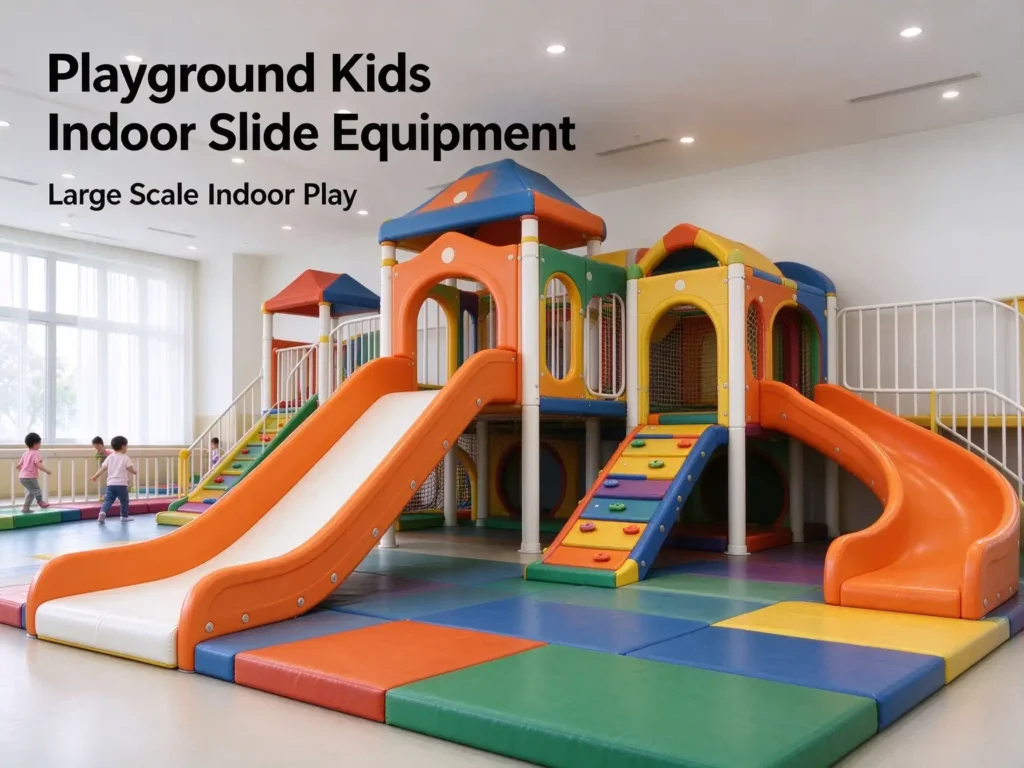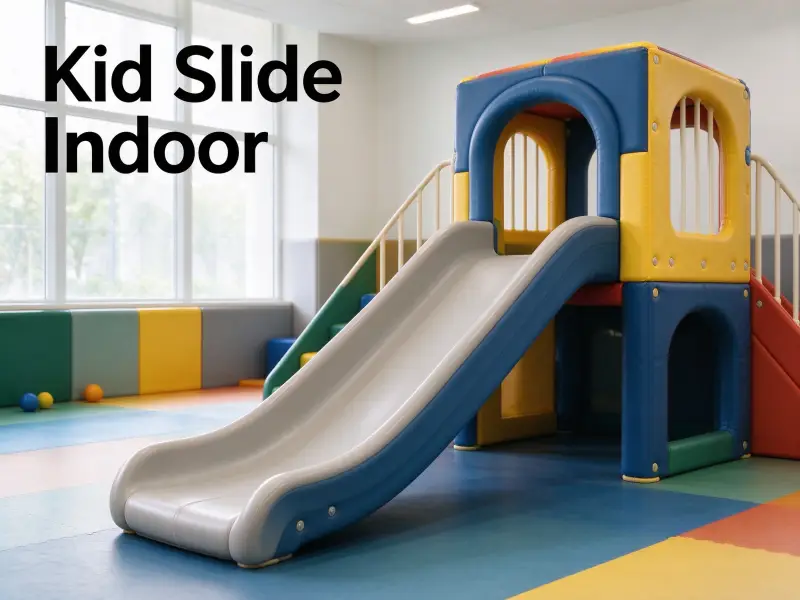
Every playground is a moving target. Surfacing compacts, fasteners back out, swing bearings wear, and a unit that passed in spring can develop a gap by autumn. For operators running schools, parks, childcare centers, and family entertainment venues, the practical question is not whether to run an inspection program but how tightly to run it, and the answer shifts with traffic, climate, equipment age, and what the manufacturer specifies.
There is no single mandated interval. Under the CPSC handbook, the frequency of thorough inspections depends on the type and age of the equipment, the amount of use, and the local climate, and frequently used playgrounds require more frequent checks.
In Europe, EN 1176-7 sets a three-tier minimum: a routine visual inspection at least weekly and daily where use is heavy or vandalism is likely, an operational inspection every one to three months, and an annual main inspection at intervals not exceeding 12 months. Most operators run all of these, adding a short pre-opening scan on high-traffic sites.
The sections below turn those tiers into a working schedule, show what to look at in each one, and cover the point where inspection should end in replacement rather than repair. The same logic applies to every piece of playground equipment on the site, from slides and climbers to swings and seesaws, because each component ages at its own rate and can hide wear that a general walk‑by might miss.

How often do playgrounds need to be inspected?
Most sites settle on the same shape: a short visual scan before opening each day, a functional check weekly to monthly, a deeper wear and surfacing review quarterly, and a full compliance audit every 12 months. High-use venues move every tier up a notch; lightly used neighborhood sites can sit at the minimum.
| Tier | Typical interval | Who runs it? | What it covers | Record produced |
|---|---|---|---|---|
| Pre-opening visual scan | Daily on high-use sites | On-site staff | Debris, broken glass, obvious damage, vandalism, standing water | Signed daily checklist |
| Routine visual inspection | Weekly minimum; daily where use is heavy | Operator or caretaker | Visible wear, loose hardware, displaced surfacing, user modifications | Dated log entry |
| Operational inspection | Every one to three months | Trained maintenance staff | Moving parts, fastener tightness, bearing wear, surfacing depth | Findings list with photos |
| Annual main inspection | Every 12 months maximum | Competent or certified inspector | Foundations, corrosion, rot, compliance with the current standard | Written report with risk ratings |
| After-event inspection | As triggered by storm, flood, fire, vandalism, or reported injury | Any trained staff | Whatever the event could have affected | Incident-linked report |
Daily or pre-opening visual checks
This scan exists to catch what changed overnight. The scope is close to the routine issue list in the CPSC handbook: broken glass and other trash, loose anchoring, missing end caps, displaced loose-fill surfacing, user modifications such as ropes tied to elevated parts, and vandalism.
Loose-fill deserves special attention. The handbook singles out high-use sites such as childcare centers and schools, because surfacing displaces fastest under swings and at slide exits. Marking the target depth on equipment posts turns a measurement job into a glance, and a rake passed through those two zones each morning prevents most of the seasonal thinning operators from discovering it too late. A written routine for the rest of the day belongs in your indoor playground daily operation maintenance guidelines.
Weekly to monthly operational checks
This tier asks whether equipment still behaves as designed. The handbook advises that detailed inspections give special attention to moving parts and other parts that can be expected to wear, which in practice means swing hangers and bearings, rotating platforms, spring riders, and track rides.
Work through fasteners and closures alongside the moving parts: caps and plugs present and undamaged, no bolt ends exposed past the nut face, S-hooks on swing chains fully closed, and no crush or shear points on exposed moving parts. These are the findings that rarely appear in a walk-by but show up quickly once someone puts a hand on each component.
Quarterly and seasonal reviews
Seasonal work covers what weather does slowly. Frost heave shifts footings and changes the gap between a platform and the surfacing below it. Standing water compacts loose-fill and accelerates decomposition. The handbook is explicit that critical height may be reduced in winter where the ground freezes and that loose-fill should never be maintained below 9 inches except for rubber mulch, where 6 inches is recommended.
Quarterly is also the sensible point to re-measure fall zones, check drainage, look for insect damage and wood splitting at ground contact, and review whether any repair carried out earlier in the year changed the safety level of the unit.
The annual main inspection
The annual review establishes the overall condition of equipment, foundations, and surfaces. EN 1176-7 describes it as covering the effects of weather, evidence of rotting or corrosion, and any change in safety resulting from repairs, modifications, or replaced components. It can require excavation or dismantling of certain parts, which is why it belongs on a separate calendar from everything else.
What the standards actually say about inspection intervals
Two bodies of guidance drive most programs: the CPSC handbook with ASTM F1487 in the United States and the EN 1176 series with its Part 7 inspection guidance internationally. Neither fixes a number of days. Both make frequency a function of use, and both defer to the manufacturer’s schedule where one exists.
The US approach: CPSC handbook and ASTM F1487
The public playground safety handbook states that the manufacturer’s maintenance instructions and recommended inspection schedules should be strictly followed and that where manufacturer recommendations are not available, a schedule should be developed based on actual or anticipated playground use. It adds the sentence most inspection policies are built on: for each piece of equipment, the frequency of thorough inspections will depend on the type and age of equipment, the amount of use, and the local climate.
Two details matter for anyone writing a policy. First, the handbook presents guidelines rather than a mandatory rule, while noting that some states and local jurisdictions, risk managers, or insurers may require compliance, so local requirements are worth checking.
Second, ASTM F1487 is scoped to users from the 5th percentile (2-year-old) through the 95th percentile (12-year-old) and specifically excludes home playground equipment, amusement rides, fitness equipment for users over 12, public use play equipment for children 6 to 24 months, and soft contained play equipment. Indoor soft play therefore falls outside that particular standard.
The international approach: EN 1176-7
Part 7 of the EN 1176 series sets out the inspection and maintenance schedule that most European and many international operators work to. It requires the owner or operator to establish an inspection schedule that takes local conditions and the manufacturer’s instructions into account, to keep a log, and to rectify serious defects without delay or secure the equipment against further use by closure or removal.
The three tiers are a routine visual inspection to identify obvious hazards from vandalism, use, or weather; an operational inspection every one to three months or per the manufacturer to check operation, wear, and stability; and an annual main inspection at intervals not exceeding 12 months.
Why no single interval fits every site
Two identical units can need different cadences. Daily visitor volume, the age group using them, the materials they are built from, coastal salt, freeze-thaw cycling, UV exposure, vandalism history, and the manufacturer’s own manual all pull the number in different directions. A site that treats interval as a fixed annual entry rather than a variable will either over-inspect a quiet corner or under-inspect the busiest unit on the property.
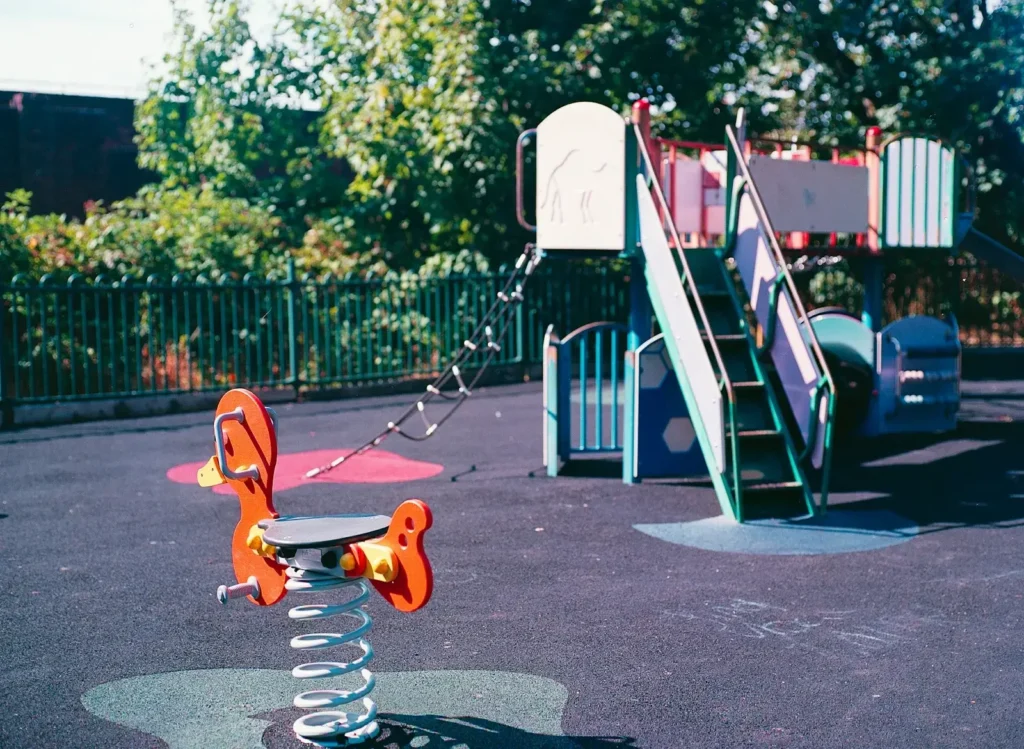
What are the safety guidelines for playground equipment?
The guidelines are performance-based rather than calendar-based: adequate surfacing under the fall zone, no openings that trap a head or catch clothing, no protrusions or sharp edges, sound structure and secure anchoring, and an age-appropriate layout with readable signage. An inspection is a structured pass through those areas.
| Area | What inspectors look for | Condition to meet |
|---|---|---|
| Protective surfacing | Depth, displacement, compaction, deterioration | Never below 9 inches of loose-fill in place, except rubber mulch at 6 inches. |
| Drainage | Standing water, especially under swings and at slide exits | Play area drains satisfactorily; standing water corrected |
| General hazards | Sharp points, corners, and edges; missing caps and plugs; protrusions; entanglement points | No sharp edges, no missing caps, no protrusions, no open S-hooks or protruding bolts |
| Hardware security | Loose fastening devices, worn connections | Fasteners tight; worn connections replaced |
| Moving parts | Swing hangers, rotating-platform bearings, track rides | Not worn; no crush or shear points on exposed moving parts |
| Durability | Rust, rot, cracks, and splinters at ground contact; anchoring | No rust, rot, cracks, or splinters; all equipment securely anchored |
| Upkeep | User modifications, litter, receptacles | Ropes and user modifications removed; site free of debris |
Minimum depths for non-impact-tested loose-fill, per the handbook’s Table 2, run as follows.
| Material | Installed depth | Depth when compressed | Protects to this critical height |
|---|---|---|---|
| Rubber mulch | 8 inches | 6 inches | 10 feet |
| Sand | 12 inches | 9 inches | 4 feet |
| Pea gravel | 12 inches | 9 inches | 5 feet |
| Wood mulch (non-CCA) | 12 inches | 9 inches | 7 feet |
| Wood chips | 12 inches | 9 inches | 10 feet |
Surfacing and fall zones
Depth is the single most mishandled variable on most sites, because loose-fill looks right long after it has stopped being right. The handbook notes that materials compress through use and weathering and must be maintained at the stated depth and recommends marking equipment supports with a minimum fill level to make that checkable. Wear mats under swings and at slide exits to reduce displacement and pay for themselves in raking time.
Entrapment, protrusion, and entanglement
Openings and projections are geometry, not wear, which is why they belong in every level of inspection rather than only the annual one. Inspectors should be looking for missing caps and plugs, bolt ends that have worked loose past the nut face, and open S-hooks on swing chains. The handbook’s testing appendix describes how to determine whether a projection counts as a protrusion and how to test entrapment with gauges, which is worth having on site rather than in a folder.
Structural integrity and hardware
Rust, rot, cracking, and splintering concentrate at ground contact, which is exactly where a walk-by misses them. Probe timber at the ground line, look closely at welds and connection plates, and confirm that anchoring has not loosened. Any unit that leans, flexes, or rocks has a footing problem until proven otherwise.
Age-appropriate design and signage
Inspection should also confirm the site still matches the age group posted on the sign. A unit designed for school-age children that has been installed in a toddler area, or a layout changed by a repair, creates a risk that no amount of hardware tightening fixes. Signage should remain legible and state the intended age range and who to contact about damage.
How often should each type of equipment be inspected?
Frequency follows risk, not category. Anything with a bearing, a moving platform, or a surface children hit at speed sits on the shortest cycle. Static elements can run on the site’s baseline cadence.
Moving and rotating units
Playground equipment that spins carries the highest inspection load, because the failure mode is gradual bearing and geometry change rather than a visible break. The handbook’s section on merry-go-rounds and other spinning equipment sets out what inspectors are checking against: such equipment should not be used on playgrounds intended for toddlers, the standing or sitting surface should sit no higher than 14 inches above the protective surface for preschool use and 18 inches for school-age use, and children need a secure means of holding on.
For platforms flush to the surfacing, no gap greater than 5/16 inch should be measurable in any direction. The undercarriage should be free of protrusions and of any accessible shearing or crushing mechanism, the rotating platform should have no sharp edges, and the equipment should have no up-and-down oscillatory motion.
Where the radius exceeds 20 inches, the platform should be continuous and approximately circular; the difference between minimum and maximum radii should not exceed 2.0 inches; no component, including handgrips, should extend beyond the platform perimeter; and the clearance beneath a rigid platform should be greater than 9 inches or less than 3.5 inches where the smaller gap introduces no crushing or shearing point. Powered and mechanical variants in this group are covered under electric amusement rides, where the duty cycle is higher still.
Swings, slides, and climbers
Swings concentrate wear in hangers, chains, and S-hooks, so they warrant hands-on checks at every operational visit, with chain wear tracked against a documented limit rather than judged by eye. Slides need the bed checked for cracks and rough spots and the exit zone checked for the surfacing displacement that their traffic guarantees. Climbers need rungs, handgrips, and rope tension verified.
Logging each unit with its playground equipment names in an asset register sounds administrative until the first warranty claim or incident report, at which point it becomes the difference between a two-minute lookup and a site-wide search.
Indoor soft play, trampolines, and ball pits
Indoor venues are the exception to the US standard mapping, since soft contained play equipment is outside the scope of ASTM F1487, and the handbook excludes indoor soft contained play equipment from its definition of public playground equipment. Indoor operators generally build their program from the EN 1176 series, the manufacturer’s manual, and local venue rules, and the pattern that results is familiar: a daily opening scan, weekly functional checks, and a periodic structural review.
What is different indoors is what you wear. Foam compresses, vinyl seams tear, nets lose tension, ball pit contents degrade, and trampoline beds and springs have their own replacement cycle. Playground equipment for kids in a mall or family entertainment center also compresses far more traffic into fewer hours than an outdoor park, which pushes the daily scan from optional to essential. Background on material behavior across both settings is in indoor and outdoor playground equipment.

How often does playground equipment need to be replaced?
There is no expiry date and no standard replacement interval. Replacement is triggered by condition, not by the calendar, and the defensible position is that inspection findings and the manufacturer’s component schedule decide it.
| Component | Band commonly quoted by suppliers | Replace when |
|---|---|---|
| Galvanized steel frame | 10 to 15 years | Corrosion at the ground line, cracked welds, deformation |
| Soft foam modules and padding | 3 to 5 years | Compression, torn covers, contamination that cannot be cleaned |
| Nets, ropes, and webbing | 3 to 6 years | Fraying, tension loss, stiffening |
| Trampoline beds and springs | Per manufacturer cycle | Stretched springs, torn bed, flattened padding |
| Swing chains, hangers, and bearings | Wear-based | Measurable wear, open S-hooks, roughness, or play in the hanger |
| Loose-fill surfacing | Topped up continuously | Depth below the handbook minimum for the material |
Treat those bands as a budgeting starting point only. They are supplier estimates for commercial equipment under regular use and maintenance, not values set by any standard. The manual for your specific unit overrides a generic band, and inspection findings override both.
Service life versus inspection outcome
A frame that passes its annual main inspection at year 15 has not expired. A three-year-old net that has lost tension has. Replacement decisions read better when they are written as a finding with a photograph and a date than as a line in a capital plan, and that framing is also what an insurer or an auditor will ask for.
Retirement triggers that override the calendar
Some findings end the service life of a unit regardless of age: corrosion or rot in a load-bearing member or at the foundation, a crack in a structural weld, entrapment geometry that cannot be corrected without redesign, a component that is no longer obtainable, a change in the applicable standard that the unit cannot be brought up to, or a cluster of incidents pointing at the same piece of equipment. Exposed structures age faster on this measure than covered ones, which is why outdoor playground equipment usually carries the shortest realistic service band on a mixed site.
Who should carry out each level of inspection?
Match competence to consequence. A caretaker can sign off a visual scan. A trained technician should sign off moving parts and fasteners. A competent or registered inspector should sign off on the annual review of any equipment with moving parts, a significant fall height, slides, stairs, or guard rails.
Competence guidance tied to EN 1176-7 draws a practical line: a low-risk site with no moving parts and minimal fall height can be assessed by a staff member given adequate information about the equipment and their responsibilities, while anything with moving parts, a fall height of 600 mm or more, slides, stairs, or guard rails needs a registered inspector. Independent eyes also catch the normalization of drift that on-site teams develop over years.
Most playground equipment companies publish a maintenance manual and a parts list per unit. Ask for both at purchase and file them, because they are the documents any inspector will defer to, and because inspection schedules built on them are easier to defend than schedules invented later.
How to document inspections and close out findings
An undocumented inspection is close to worthless. The handbook advises retaining records of all maintenance inspections and repairs, including the manufacturer’s instructions and any checklists used, with the person performing the inspection signing and dating the form. It also advises keeping a record of any reported accident or injury, which helps identify hazards and dangerous design features.
What every record should contain
A usable record names the site and the specific unit, the date and time, the inspector and their role, and the weather. It lists findings by area with a severity rating, the action taken, the date the action was closed, and photographs. It also carries the date of the next scheduled inspection for that tier. Digital logs make the recurrence analysis easy: if the same swing hanger appears three times, the problem is the component or the specification, not the maintenance team.
Turning findings into repairs
Sort every finding into one of three dispositions and write the disposition down. Critical findings mean the equipment comes out of service immediately, with barriers or tags, because an entrapment gap or a structural failure risk does not wait for a maintenance window. Serious findings get a repair within days with increased supervision in the meantime. Minor findings go into the next scheduled maintenance window. EN 1176-7 is blunt about the critical end: rectify serious defects without delay, and where that is not possible, secure the equipment against continued use by closure or removal.
Frequently asked questions
Who sets the required inspection interval in my area?
Start with the state or local jurisdiction and then with your insurer. The CPSC handbook presents guidelines rather than a mandatory rule, but it notes that some jurisdictions and some insurers require compliance with the handbook or with the ASTM voluntary standards. Where a local requirement exists, it becomes your floor, not your target.
Can one person carry out every level of inspection?
They can physically, but it weakens the program. The annual main inspection works best when performed by someone who did not sign off the weekly checks, because familiarity with a site tends to hide slow change. Where that is not possible, rotate inspectors between sites or bring in a manufacturer technician for the annual visit.
What should happen immediately after a storm or a reported injury?
Run an unscheduled inspection of the affected area before reopening, and record it as event-linked rather than routine. Flooding, wind, fire, and vandalism can change footing level, surfacing depth, and structural alignment overnight, and a reported injury usually identifies the exact component worth re-checking first.