
A school board or city commission in Florida almost never buys a play structure the way a household does. The purchase sits inside a procurement code, a capital budget and a public meeting agenda, and the equipment is only one line of a package that also carries surfacing, shade, demolition and installation. Buyers who assume a fresh competitive solicitation is the only lawful route routinely lose two quarters to paperwork before a single post is set, which is why the outdoor playground equipment conversation in this state starts with procurement rather than with product.
Florida board approved contract playground equipment means play structures, safety surfacing and installation services purchased through a contract that a public board has already awarded after a competitive solicitation, either through a cooperative purchasing program or by riding another agency’s award, so the buying district can place an order without running its own bid, provided the original contract allows additional public entities to use it and the purchase is to the district’s economic advantage.
Three routes carry nearly all of these orders, and each one leaves a different paper trail behind it.
What Does a Board Approved Contract Mean for Playground Equipment?
A board approved contract is one whose award was recorded in the minutes of a public board meeting after a documented competitive process, and the phrase matters for two separate reasons: it is the audit trail a district must be able to produce years later, and it is usually the legal precondition that lets another agency buy from the same supplier without soliciting again.
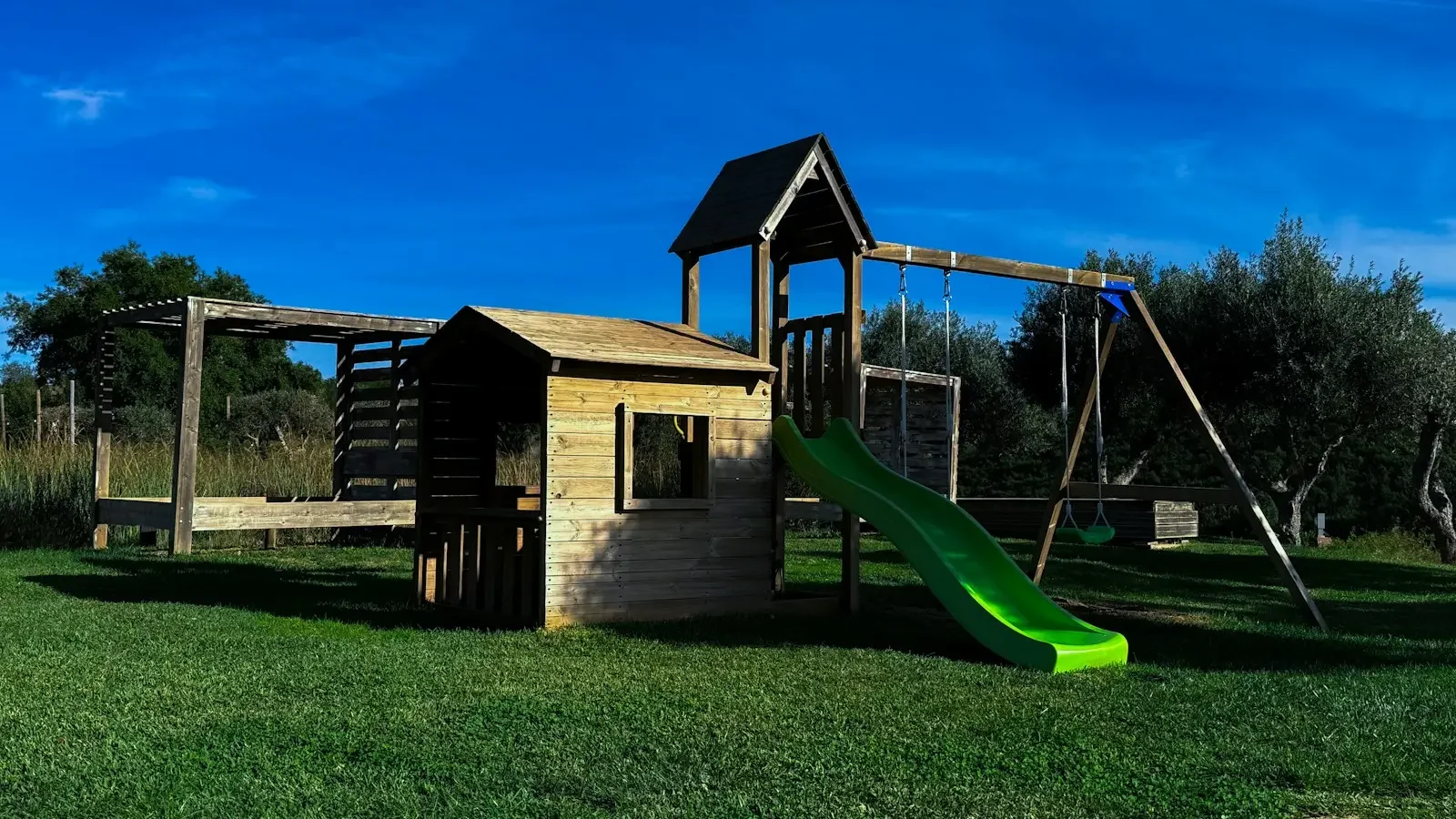
The two questions are often confused. The first asks whether the awarding body completed a competitive solicitation and adopted the award on the record, which is why the award letter and agenda matter as much as the contract. The second asks whether the contract extends its terms to other public entities. A contract can be perfectly board approved and still be unusable by a neighboring city, because the extension clause was never written into the solicitation and cannot be added later.
Three Approval Paths Side by Side
Each path satisfies the competition requirement at a different level and leaves a different set of approvals to secure.
| Path | Who Already Competed It | What Your Board Must Approve |
| Cooperative contract | The cooperative, on behalf of all member agencies | Participation and the purchase order |
| State term contract | Florida Department of Management Services | Use of the state contract and the purchase order |
| Piggyback (riding) | Another district, city or county | A written determination plus a rider or participating addendum |
None of the three removes the obligation to act at the buying agency. Board policy decides which route the purchasing agent may use, and a district with a cooperative purchasing chapter will require membership, pricing and economic justification documented in the file.
Which Contracts Florida Districts Actually Buy From
In practice three families of contracts supply almost all public playground equipment in the state: the Florida Buy state program, the national cooperatives, and individual district awards that other agencies ride under an extension clause.
The three do not expire together, and a quote for playground equipment built on an expired contract is worthless however competitive the discount looks.
Florida Buy and the AEPA 025-H Playground Award
Florida Buy is the statewide cooperative operated by the Panhandle Area Educational Consortium with the Heartland and North East Florida Educational Consortia. Section 1010.04 of the Florida Statutes directs districts toward state term contracts or cooperative programs managed through regional consortium service organizations, and section 1001.451(3) supplies the authority. Playgrounds are solicited nationally through the Association of Educational Purchasing Agencies and awarded locally through the Washington County School District, where contracts 25-116 and 25-117 run from 24 February 2025 to 28 February 2029 under the 025-H award recommended for approval in November 2024.
What the National Cooperatives Cover
National programs compete playground equipment categories on a fixed cycle and publish maturity dates, which makes them easy to verify but easy to misjudge on a long project. Sourcewell’s current playground cycle matures on 17 December 2029, separates play and splash equipment from outdoor fitness, and includes installation, site work, surfacing and safety audits. BuyBoard’s national cooperative was created under Maryland and Rhode Island statutes, is administered by the Texas Association of School Boards, awards through a nine-member board and charges members nothing. NASPO ValuePoint, the state-led program of the National Association of State Procurement Officials, carries a parks and recreation equipment and installation portfolio, and Equalis Group and OMNIA Partners fill the same role where local policy names them.
| Contract Vehicle | Typical Playground Scope | Term or Maturity |
| Florida Buy (AEPA 025-H) | Equipment, surfacing, installation, repair | Contracts 25-116 and 25-117, to 28 February 2029 |
| Sourcewell | Playgrounds, shade, splash play, site work, safety audits | Awards maturing 17 December 2029 |
| BuyBoard National | Playground and park equipment for members nationwide | Rolling awards, no lead agency |
| NASPO ValuePoint | Parks and recreation equipment and installation | State-led portfolio, per-award terms |

How Piggybacking Another Florida Award Works
Piggybacking lets a Florida public entity buy at or below the prices of a contract another governmental body already awarded, and for district school boards the operative rule is State Board of Education Rule 6A-1.012(6), which permits purchases from contracts awarded by other city or county agencies, district school boards, community colleges, federal agencies, agencies of any state, or state university cooperative bids, when the awarded supplier allows the same terms, conditions and prices and the purchase is to the district’s economic advantage.
Two conditions account for most failed attempts. The economic advantage finding has to be written down rather than assumed, and the extension has to be permitted by the original solicitation. Cities operate under their own codes and some approve these purchases by resolution citing the authorizing sections, so a city file and a district file can look quite different.
The Four Documents Every Piggyback File Needs
Four documents carry the file for any playground equipment order, and an incomplete one is the most common reason a purchase order stalls.
- Written consent to piggyback from the supplier and from the agency that awarded the contract.
- A complete executed copy of the original contract, including every renewal document.
- The original solicitation with all addenda, advertisements, evaluation records and the award document.
- A rider or participating addendum recording the price basis, freight terms and expiry date relied on.
Decisions That Show the Pattern
Public records make the method concrete, and the amounts are modest enough that no agency needs a special exemption.
- Hernando County approved USD 253,372.95 in May 2025 to buy and install equipment at Pine Island Park under Volusia County Schools contract MTS-906BC, which expired that July with no renewals left.
- The Town of Fort Myers Beach adopted a piggyback resolution for playground equipment under Manatee County School District contract 21-0053-MR.
- North Lauderdale assembled one park package from three vehicles at once: playground through a national cooperative, fitness and shade through a district award, restroom through Sourcewell contract 052725-CXT.
What a Florida Solicitation Actually Requires
A current district invitation to bid is the most useful template available, because its terms are simultaneously what a supplier must be able to meet and what a buying agency inherits when it piggybacks.
The School Board of Osceola County issued SDOC-27-017-B-ML for playground equipment, surfacing, installation and repair, structured as three-year contracts with one optional two-year renewal. Bids were evaluated on a minimum fixed percentage discount from each bidder’s current catalog rather than on a lump sum, specifications set requirements for rubber mulch and pour-in-place surfacing, and installation certification was tied to a recognized playground safety inspector credential. Bids were due on 8 September 2026, and the approval letter dated 6 October 2026 listed thirteen responsive and responsible vendors.
| Solicitation Term | What It Means in Practice |
| Fixed percentage discount off catalog | Pricing tracks the catalog, so the discount rate matters more than any single lump sum |
| Three-year term with one optional two-year renewal | One board action covers a window, and later projects order without a new vote |
| Specified rubber mulch and pour-in-place systems | Surfacing is defined by material and depth, not left to the installer’s judgment |
| Installer certification requirement | The crew on site must hold a recognized playground safety inspector credential |
The Compliance Layer: Standards, Accessibility and Certification
Two technical frameworks and one civil-rights standard decide whether a board approved purchase survives inspection: ASTM F1487 for public use playground equipment, the CPSC safety handbook agencies cite alongside it, and the 2010 ADA Standards for play areas.
ASTM F1487 and EN 1176 both set use zones, entrances, guardrails, slide exits and the critical fall height that determines surfacing depth, but Florida specifications reference the ASTM edition. The CPSC public playground safety handbook is the plain-language companion agencies quote when they write inspection procedures. The 2010 ADA Standards for play areas add accessible routes, ground-level play components, transfer systems and accessible surfacing, and a ramp alone does not satisfy them. Districts increasingly require installers to hold a Certified Playground Safety Inspector credential, a requirement written into bid documents rather than general conditions.
What Accessibility Adds to the Specification
An all-inclusive scope is where accessibility stops being a drawing note and starts driving the budget. Okaloosa County approved a USD 468,321.95 purchase order on 7 October 2025 for structures, safety surfacing, sail shades, benches and installation at Meigs Park in Niceville, a joint county and city project under a January 2024 interlocal agreement supported by a USD 1.25 million state grant. The play area alone was sized at 6,180 square feet, and the package bundled shade and seating because an accessible route is only useful if it reaches something usable.
Budget, Lead Time and the Approval Calendar
A board approved price is not a project price: the contract discount applies to the playground equipment, while surfacing, demolition, drainage, accessible routes, freight and installation sit partly or entirely outside it, and the interval between approval and first use is measured in months rather than weeks.
Project schedules in Florida commonly assume lead times of 90 to 150 days, with a full park renovation of this scope running about 180 days and the play area closed for 90 to 120 days once materials arrive. That arithmetic decides when the board item appears. Verifying the expiry date, obtaining written consent, writing the economic advantage determination, placing the item on an agenda and issuing the purchase order can consume more calendar time than the installation, and a lead contract that expires before the install date forces either an early order or a different vehicle. Detailed playground equipment cost comparisons usually show equipment as the largest single line, surfacing close behind it, and site work able to match both where drainage or grade is poor.
Supplier Documentation Checklist Before You Quote
A quote for playground equipment that cannot be tied to a live contract number is not usable by a public buyer, whatever the price, because the purchasing file has to demonstrate that competition already occurred.

A supplier preparing a response for a district or municipality should assemble the following before the first meeting, since each item answers a question the buyer is obliged to ask.
- The contract number, awarding agency and expiry date being relied on.
- The current price list with the applicable discount shown against each line.
- Written consent extending the contract to the buying agency, signed by the supplier and the awarding agency.
- The name of the installer and the certification held by the crew.
- Surfacing test documentation supporting the critical fall height of each play area.
- Warranty terms stated separately for structures, components and surfacing.
- A post-installation inspection report and the recurring playground equipment inspection frequency the site will need.
FAQ
Three questions come up repeatedly once a buyer has a contract number in hand and a date on the calendar.
Do you have to be a cooperative member to buy off a board approved contract?
For national cooperatives, yes. Sourcewell, BuyBoard and NASPO ValuePoint all require the agency to register before an order can be placed, and membership is free at most of them. Piggybacking a district award depends instead on the extension clause in the original solicitation and on local policy, not on membership.
Can a charter school or nonprofit use a district’s playground contract?
Sometimes, and the answer is written in the contract rather than in the buyer’s assumptions. Many extension clauses name school districts, cities, counties and other governmental entities, whereas nonprofits are handled through separate subscriber agreements. A charter school should confirm eligibility in writing before budgeting.
What happens if the lead contract expires before installation?
The order must be placed while the contract is live, since a purchase order issued after expiry has no competitive basis. Where a project spans fiscal years, buyers order early and store materials or move the scope to a contract with a later maturity date, which is why the expiry column deserves as much attention as the discount.


