Commercial indoor playground equipment is one of the largest single line items in any family entertainment project, and it is the one buyers most often get wrong on the first quote. Two operators can hand the same floor plan to two suppliers and receive numbers that differ by three or four times, because price follows floor area, play levels, customization, and certification far more than it follows the number of slides. This guide sets out what commercial indoor playground equipment costs in 2026, where the money actually goes, and which add-ons turn a $40,000 equipment order into a $120,000 opening budget.
Equipment for a small to mid-sized commercial venue generally runs from about $8,000 to $70,000, while a large family entertainment center can reach $150,000 to $500,000 or more. Safety flooring, freight, customs, and installation add at least another 30 percent on top, so a complete turnkey build usually lands between $25 and $40 per square foot on a small site and $15 to $25 per square foot at scale, rising above $85 per square foot once interactive technology and multi-level structures are included.
The sections below break that range down by venue size and equipment type, then walk through the start-up costs and budget controls that decide whether the project stays on plan.
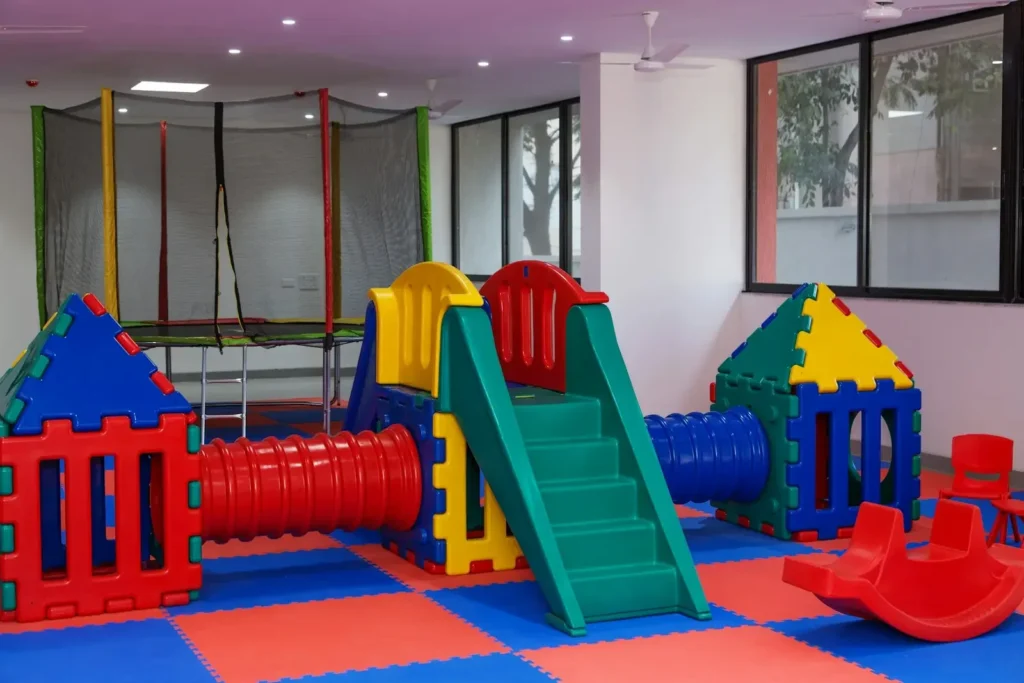
How much does a commercial indoor playground cost?
Commercial indoor playground cost is driven by floor area first and specification second. Cost tables published by playground manufacturers in 2026 put a 100 to 300 square meter build at roughly $15,000 to $80,000 in equipment, a 300 to 1,000 square meter venue at $80,000 to $400,000, and a large indoor adventure park above 1,000 square meters at $400,000 to $2 million or more, all before shipping, flooring, and site work.
Cost by venue size
The table below separates equipment cost from the full project budget, because the gap between the two columns is where most first-time budgets fail. Figures are the ranges published in 2026 buyer guides from commercial playground manufacturers.
| Floor area | Typical venue type | Equipment cost | Full project budget | Budget per sq ft |
|---|---|---|---|---|
| Under 2,000 sq ft | Café, hotel kids’ zone, preschool | $8,000 to $25,000 | $50,000 to $150,000 | $25 to $40 |
| 2,000 to 5,000 sq ft | Neighborhood FEC, community center | $30,000 to $70,000 | $150,000 to $400,000 | $20 to $35 |
| 5,000 to 10,000 sq ft | Mall playground, mid-sized FEC | $70,000 to $150,000 | $300,000 to $700,000 | $18 to $30 |
| Over 10,000 sq ft | Destination FEC, trampoline park | $150,000 to $500,000+ | $500,000 to $1,000,000+ | $15 to $25 |
Larger sites cost more in total and less per square foot. A 930-square-meter venue shares its towers, staircases, decks, and netting across more play value than four separate 230-square-meter units, and one container and one installation crew cover the whole build. That is why the per-square-foot figure falls from around $40 at the small end to $15 at the large end.
What else sits inside a project budget
Equipment is usually between 30 and 50 percent of the money you actually spend. The rest goes to the building and to the work around the structure.
| Cost category | Share of project budget |
|---|---|
| Play equipment and attractions | 30 to 50 percent |
| Renovation, HVAC, electrical, and lighting | 20 to 25 percent |
| Shipping, customs, and installation | 15 to 20 percent |
| Safety flooring and surfacing | 10 to 15 percent |
| Design and engineering | 3 to 5 percent |
| Permits and insurance | 2 to 5 percent |
Commercial-grade and home-grade equipment are not priced the same
Buyers comparing quotes often find residential listings for indoor playground equipment for home use that cost a fraction of a commercial quotation. The difference is structural rather than cosmetic. Commercial frames use steel at roughly 1.5 to 2.0 mm gauge, whereas residential frames use about 0.8 mm, plus higher-density impact foam, fire-retardant vinyl coverings, and tested safety surfacing, and they are engineered for 200 to 1,000 visitors a day. A home unit and a commercial toddler zone of the same footprint can sit in the same price band, but only one of them will survive a Saturday of 500 children.
How much does each type of indoor playground equipment cost
Equipment type sets the price band more than any other single decision. Soft play structures are the lowest-cost format of indoor playground equipment for kids aged 2 to 12, while trampoline parks, ninja courses, and interactive technology carry the highest investment per square meter.
| Equipment type | Cost range | Space needed | Age group |
|---|---|---|---|
| Soft play structure | $20,000 to $80,000 | 1,000 to 5,000 sq ft | 2 to 12 |
| Trampoline park | $50,000 to $150,000 | 3,000 to 10,000 sq ft | 6 to 18+ |
| Ninja and rope course | $40,000 to $120,000 | 2,000 to 8,000 sq ft | 8 to 18+ |
| Toddler zone | $10,000 to $30,000 | 500 to 1,500 sq ft | 1 to 3 |
| Interactive technology | $15,000 to $60,000 | 500 to 2,000 sq ft | 3 to 14 |
| Role play and pretend play | $10,000 to $40,000 | 800 to 2,000 sq ft | 2 to 8 |
Soft play equipment: the lowest entry point
Soft play equipment skips the tall steel frames and complex netting, which is why it costs less per square meter than any other format. Multi-level structures are quoted by area rather than by unit: a two-level structure typically runs $100 to $150 per square meter and a three-level structure $220 to $280 per square meter, because every extra level adds decks, support steel, and safety detailing.
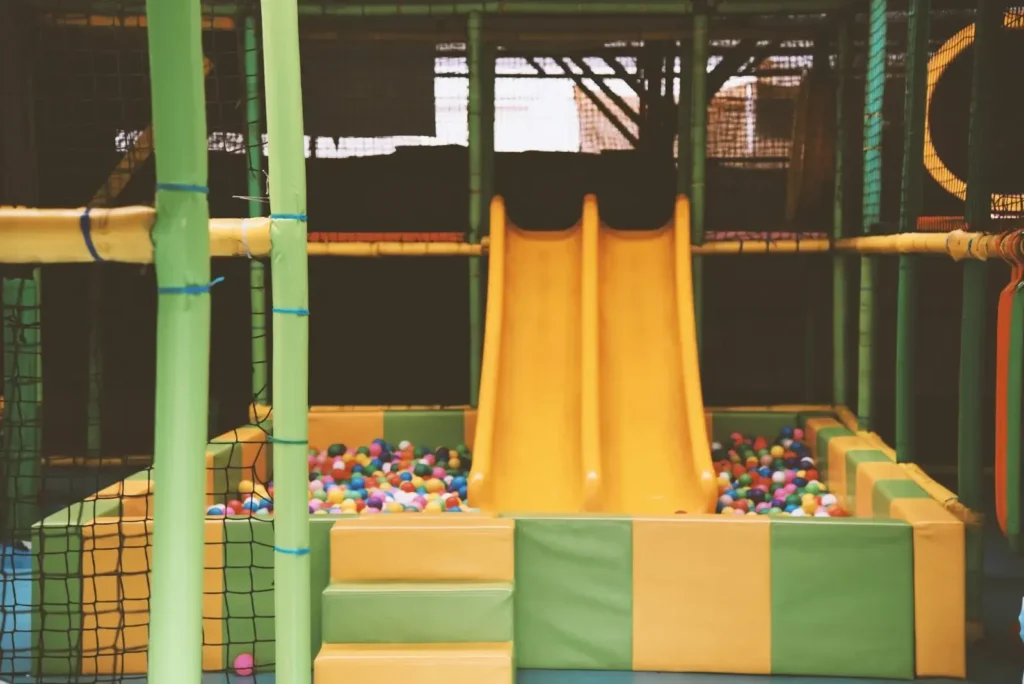
A typical soft play band at the entry level covers ball pits, foam ramps, soft steps, and low slides. A standalone set for a mall corner, restaurant, or daycare generally landed between $5,000 and $30,000 through 2026, with ball pits, sensory panels, and foam shapes priced as modular add-ons, and a dedicated toddler soft play area of 400 to 600 sq ft commonly came in at $10,000 to $25,000.
Buyers sourcing overseas usually compare three routes: soft play equipment wholesale direct from a factory, a turnkey package that brings soft play builders to site, and local assembly using shipped kits with soft play flooring supplied alongside the structure. When a soft play area for sale is advertised at a headline per-square-meter price, check whether flooring, delivery, engineering drawings, and assembly support are inside that number, because the cheapest advertised rate is often the one that excludes the most.
How much does a commercial playground set cost?
A commercial playground set is a combination of modules rather than a single product, so no fixed price applies. Suppliers quote either per square meter of finished play area or as a package of modules, and the same nominal set can move by 40 percent or more depending on theme, deck count, slide types, and whether the design is taken from a standard range or drawn from scratch.
As a reference point, supplier listings through 2026 put individual commercial play structures at roughly $34,000 to $69,000 on an FOB basis, with custom-themed systems at the top of that band and standard soft play or trampoline modules at the bottom. Those are ex-works figures and exclude freight, duties, and installation, which is the next thing to add.
What drives indoor playground equipment cost
Seven variables move indoor playground equipment cost more than anything else: usable floor area, degree of customization, number of play levels, the safety standard you must certify to, material grade, whether you buy factory-direct or through a distributor, and how difficult the site is to install into.
- Floor area and layout. Area is the first cost driver and the hardest to change later. Layout matters too, because an inefficient arrangement wastes the most expensive square feet in the building.
- Customization. A standard modular structure and a fully bespoke themed build of the same size are different products. Combining modular structures with a custom theme on the visible surfaces commonly cuts costs by 30 to 50 percent against a fully bespoke design.
- Number of play levels. Two-level and three-level structures add steel, decks, and netting, but they also pack more play value into each square meter, so multi-level designs usually deliver a lower cost per usable play position than single-level equivalents.
- Safety standards and certification. Commercial play equipment is governed by frameworks such as ASTM F1487 in the United States and EN 1176 in Europe, and the CPSC Public Playground Safety Handbook sets out the fall-height and surfacing principles against which inspectable indoor installations are measured. Certification is not a marketing line. Equipment that fails inspection is the most expensive kind, because you pay for it twice.
- Material grade and durability. Commercial-grade components cost more upfront and less across a decade. Divide the price by service life, and the durable option is usually the cheaper one.
- Buying route. Factory-direct pricing typically runs 20 to 40 percent below distributor or retail channels for the same specification, largely because no intermediary margin sits between the plant and your site.
- Installation and logistics. Professional installation usually adds 15 to 25 percent of the equipment price. Shipping a 40-foot container of play structures costs roughly $3,000 to $15,000 depending on destination and how tightly the product packs.
How much does it cost to start an indoor playground business?
Starting a business costs more than buying equipment. A published 2026 build-out for a 3,000-square-foot FEC addition, covering custom structures, interactive technology, safety flooring, ocean freight, and certified installation, was budgeted at $345,000 to $715,000, and that figure sits before rent, staffing, marketing, and working capital.
| Cost item | Low | High |
|---|---|---|
| Custom structural equipment (steel, foam, and plastics) | $180,000 | $300,000 |
| Interactive technology (RFID, LED) | $35,000 | $95,000 |
| Safety flooring | $45,000 | $110,000 |
| Ocean freight and port charges | $25,000 | $70,000 |
| Certified installation, labor, and travel | $60,000 | $140,000 |
| Total capital cost | $345,000 | $715,000 |
Two rules keep the rest of the budget honest. The first is the landed-cost rule: take any equipment quotation and add at least 30 percent for ocean freight, customs, and installation before comparing it with anything else. That gives you the number you actually transfer, and it still excludes flooring, HVAC, rent, and fit-out. Distant ports, multi-level installations, and compressed timelines push the add-on past 30 percent.
The second rule concerns contingency and reserves. Site preparation items such as HVAC, electrical, and structural work routinely overshoot early estimates, so a 10 to 15 percent contingency line belongs in the budget from day one, alongside design and engineering at 3 to 5 percent, permits and insurance at 2 to 5 percent, and an operating reserve covering three to six months of running costs.
It is also worth setting aside 3 to 5 percent of the equipment budget for spare parts at the time of the first order. Foam tubing, vinyl covers, netting sections, and fasteners bought with the container cost a fraction of what they cost later as express air freight, and they are what keep a busy play floor open during maintenance.
None of that means a project must start at $345,000. Phased openings work: equip the core soft play and toddler zones first, open, generate cash, then add the higher-investment attractions in a second phase. That sequence lowers initial capital considerably and lets real visitor data, rather than a forecast, decide what goes in next.
How do you keep indoor playground equipment costs under control?
Five decisions do most of the work: buy factory-direct, phase the build, pair standard modules with a themed finish, pay for durability at the start, and order spares with the first container.
- Buy from the manufacturer, not the middleman. This is the single largest lever, worth 20 to 40 percent on identical specifications, provided the supplier can show certification documents, structural drawings, and a track record of international installations.
- Phase the build. Opening with the core zones and adding attractions later can cut initial capital by 30 to 40 percent without changing the final venue.
- Use standard modules with a custom theme. Structural standardization with themed finishes gives most of the visual impact at a fraction of bespoke pricing.
- Pay for durability early. Commercial-grade equipment rated for ten years or more is cheaper per year of service than equipment replaced every three years.
- Buy spares with the first order. A modest spares allowance removes the most expensive kind of downtime, which is a closed attraction in peak season.
As an indoor playground equipment manufacturer with its own production base, JQK builds soft play structures, themed naughty castles, trampoline parks, and multi-level playground complexes to client floor plans and works from real dimensions rather than a catalogue. Quotations cover design, production, and loading as one package, and a free 3D layout shows how a specific floor area and budget translate into play zones before any deposit is paid. Buyers who want a price band tied to their own site rather than a generic range can send a floor plan, a sketch, or even measurements to the JQK team through our contact us page and get a layout and an itemized quotation back.
Frequently asked questions
How long does it take from order to opening day?
Allow three phases. Design and confirmation usually take one to three weeks, production of a custom structure commonly runs 30 to 60 days, and installation on site takes 7 to 15 working days for a mid-sized venue and three to four weeks for a large or heavily themed project. Ocean freight adds transit time on top of production, so the safe planning assumption for an imported commercial project is roughly three to five months from deposit to opening.
Is used indoor playground equipment worth buying?
Occasionally, but the discount is usually smaller than it looks. Used structures carry unknown load history, discontinued spare parts, and no certification trail, which creates a problem at the first safety inspection. The categories where buying used works are simple, modular items with widely available parts. For primary play structures, the money saved upfront is regularly spent on replacement parts, reinforced fixings, and inspection work within the first two years.
What should the supplier’s quotation include so no costs appear later?
Check for five things: structural drawings and a load plan for your specific building, the safety standard the equipment is certified against, the flooring specification with impact ratings, shipping terms stated as FOB, CIF, or delivered, and what installation support is included, whether that is supervision, drawings, or a full crew. Ask separately about spare parts, operator training, and the warranty period. A quotation that answers all five is comparable with another. A quotation that answers only the equipment price is not.