Commercial playground projects rarely start with a single number. Operators, schools, and property developers usually begin with a budget range and then work backward to the playground equipment, surfacing, and site work that fit inside it. The price gap between a small community play structure and a full indoor family entertainment center can be tenfold or more, and that spread confuses first-time buyers more than any other part of the process.
Most commercial playground equipment packages land between $5,000 for a compact outdoor structure and $150,000 or more for a large indoor or themed installation, with site preparation, shipping, and installation adding another 20 to 40 percent on top. The final figure depends on size, materials, certification level, and how much of the surrounding space you need to build out.
The sections below break down real-world price ranges by equipment type, from compact outdoor playground equipment to full indoor centers, and show what it takes to open an indoor playground business of your own.

What actually drives the price of commercial playground equipment
Three factors move the number most: the size of the play structure, the materials used, and the safety certification the playground equipment must carry. A basic post-and-deck system for a daycare courtyard costs a fraction of a multi-level indoor play castle with towers, slides, and interactive panels.
Size and play capacity
Footprint is the easiest lever. A structure built for 15 children uses less steel, less decking, and fewer components than one rated for 80. Manufacturers price by the play value they engineer in, so every extra slide, climber, and platform adds to the cost. Smaller sites with limited foot traffic can often meet their needs with a compact module, while parks serving whole neighborhoods need the larger footprint that raises the budget.
Materials and finish
Commercial units are built from galvanized steel frames, rotomolded plastic, and high-density polyethylene decks that survive years of weather and heavy use. Budget residential sets use thinner plastics and untreated wood that degrade fast. The upgrade to commercial-grade materials accounts for a large share of the price difference and also allows the playground equipment to carry a multi-year warranty.
Safety standards and certification
In the United States, public playgrounds must meet ASTM F1487 and the CPSC public playground safety handbook, and many buyers also require IPEMA certification. Meeting those standards means engineered fall zones, compliant guardrails, and documented testing. That paperwork and the manufacturing discipline behind it are part of the price, not an optional extra.
How much does a commercial playground cost by type
A quick reference by category helps: outdoor structures run $5,000 to $40,000, while indoor themed parks reach $80,000 to $250,000, depending on scale. The table below shows typical delivered-and-installed ranges for common commercial configurations.
| Equipment type | Typical use case | Price range (equipment only) | Installed total |
| Small outdoor play structure | Daycare, HOA, small lot | $5,000 to $15,000 | $8,000 to $22,000 |
| Medium outdoor play structure | Public park, school | $15,000 to $40,000 | $25,000 to $60,000 |
| Large outdoor play structure | Regional park | $40,000 to $90,000 | $60,000 to $130,000 |
| Indoor soft play module | Family venue, restaurant | $20,000 to $60,000 | $30,000 to $85,000 |
| Full indoor playground | FEC, trampoline park | $80,000 to $250,000+ | $120,000 to $400,000+ |
These numbers cover the playground equipment and a standard install. They do not include land, major grading, fencing, or themed architecture, which we cover later.

How much does a park playground cost
A public park playground usually costs $25,000 to $130,000 all in, with most municipal projects settling near the middle of that range. The wide band exists because park committees differ on how much accessibility, shade, and custom theming they want.
When a city or school district asks how much a park playground costs, the honest answer is that the playground equipment is only part of it. Pouring a compliant safety surface such as poured-in-place rubber can run $15 to $35 per square foot, and a 2,500-square-foot pad alone reaches $37,000 to $87,000. Add accessible ramps, transfer platforms, and a wheelchair-friendly route, and the budget climbs further, but so does the number of children who can actually use the space.
Park buyers also face longer lead times. Custom color palettes and themed panels extend production by several weeks, and shipping a large structure across the country adds freight that a local small-lot buyer never sees.
How much does it cost to have a playground built
Having a playground built rather than installing it yourself typically adds 20 to 40 percent for labor, surfacing, and site prep, but it protects the warranty and the safety certification. Most commercial sales include professional installation for exactly this reason.
The line items outside the playground equipment invoice usually look like this:
- Site preparation: grading, drainage, and a stable base. This can cost between $3,000 and $20,000, depending on the ground’s condition.
- Safety surfacing: engineered wood fiber is the low-cost option at $3 to $8 per square foot, while poured-in-place rubber sits at $15 to $35 per square foot.
- Delivery and freight: $1,500 to $10,000 for a full structure, more for remote sites.
- Installation labor: $5,000 to $25,000 for a standard build, higher for multi-level indoor frames.
- Inspection and certification: $500 to $2,000 for a third-party safety audit.
Buyers also forget the softer costs that sit outside the playground equipment invoice. Building permits, utility connections, fencing, and liability insurance vary by city but commonly add $2,000 to $10,000 before the first child arrives. If you are still scoping the project, the question of how much a playground costs to build is best answered with a full line-item budget rather than a single equipment number, because the build wraps equipment, ground, and approvals into one commitment.
When someone asks how much it costs to have a playground built, the safest planning figure is the playground equipment quote plus 30 percent, then a separate line for surfacing since that is the item buyers most often forget.
Why are commercial playgrounds so expensive
Commercial playgrounds cost more because they are engineered for decades of daily public use, certified for child safety, and built from materials that resist vandalism and weather. The price reflects durability and liability protection, not markup for its own sake.
Durability and warranty
A residential swing set is built to survive a few summers in a private yard. A commercial structure faces hundreds of children every week, direct sun, freezing winters, and the occasional deliberate misuse. The steel is thicker, the joints are welded and bolted to spec, and the plastics are UV-stabilized. That engineering is what supports a 10- to 15-year structural warranty, which a residential product simply does not offer.
Liability and compliance
Operators of public or paid-admission play spaces carry real liability. If a guardrail height or fall zone fails to meet code, the operator is exposed. Commercial playground equipment is designed and documented to meet ASTM and CPSC standards, and IPEMA-certified products give insurers and inspectors a recognized benchmark. Buyers are effectively paying for a defensible safety record.
Design and customization
Themed environments, custom color schemes, and branded play panels require design labor and bespoke tooling. A generic catalog module is cheaper than a fully themed castle, but many operators choose theming because it drives repeat visits and justifies admission or membership fees. Adding motorized attractions such as electric amusement rides extends the appeal to older children and widens your revenue window. The customization is an investment in the business, not just a cost.

How much would it cost to start an indoor playground business
Opening an indoor playground business typically requires $100,000 to $500,000 in startup capital, with the play equipment itself representing roughly 30 to 50 percent of that spend. The rest goes to the lease, build-out, staffing, and marketing.
| Startup cost area | Small venue (under 3,000 sq ft) | Mid-size venue (3,000 to 8,000 sq ft) | Large FEC (8,000+ sq ft) |
| Play equipment | $30,000 to $80,000 | $80,000 to $180,000 | $180,000 to $400,000+ |
| Lease deposit and build-out | $20,000 to $60,000 | $60,000 to $150,000 | $150,000 to $300,000 |
| Safety surfacing and flooring | $8,000 to $20,000 | $20,000 to $50,000 | $50,000 to $120,000 |
| Staffing and training (first 3 months) | $15,000 to $30,000 | $30,000 to $70,000 | $70,000 to $150,000 |
| Marketing and licensing | $5,000 to $15,000 | $15,000 to $40,000 | $40,000 to $80,000 |
For operators weighing how much it would cost to start an indoor playground business, the equipment is the most controllable line. For many first-time owners, the trampoline park model is a proven entry point because it combines high-throughput play with a compact footprint. Working with a manufacturer that offers one-stop design, production, and shipment lets you consolidate vendors and often lowers the total compared with sourcing pieces separately.
Common playground equipment names and what they cost
Knowing the standard equipment names helps you read a quote and compare suppliers, because the same component is priced very differently across catalogs. Below are the items most commercial buyers ask about, with rough per-unit costs.
- Slides: straight, spiral, and tube slides range from $400 to $4,000 depending on height and material.
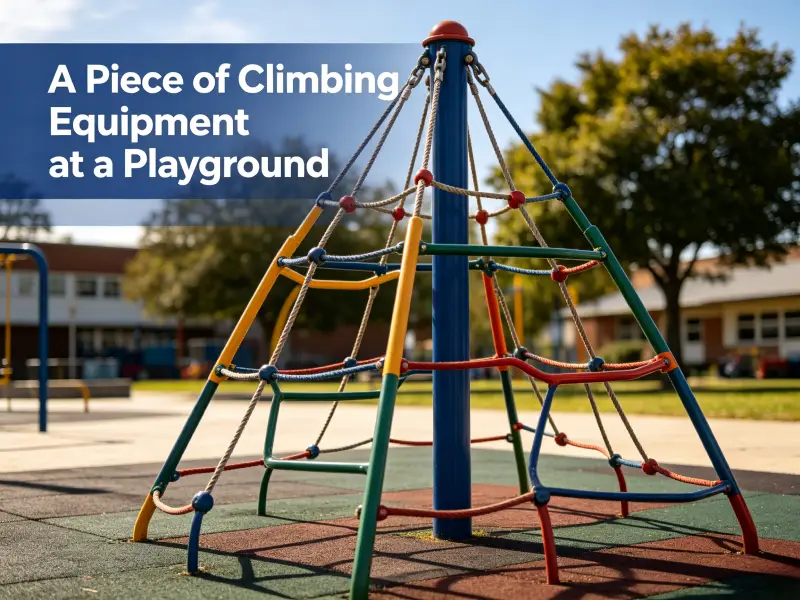
- Climbers and nets: rope climbers and net towers run $1,000 to $6,000.
- Swing bays: commercial swing frames with belt or bucket seats cost $1,500 to $5,000.
- Spring riders: small animal or vehicle rockers priced $150 to $600 each.
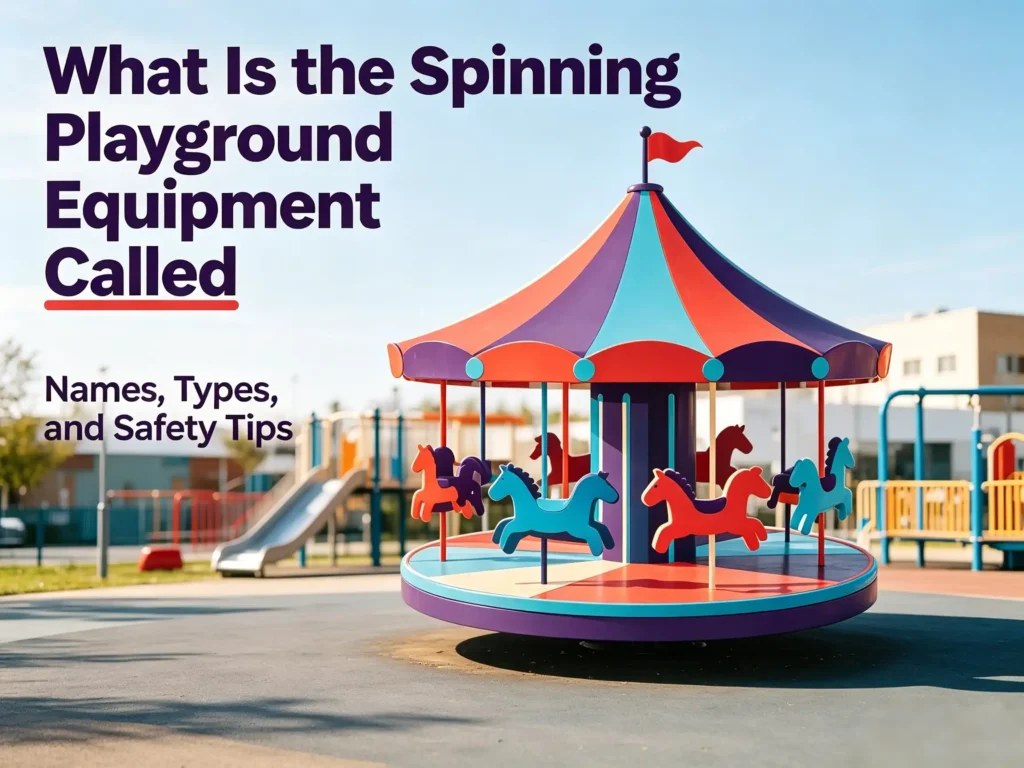
- Merry-go-rounds and playground equipment that spins: commercial spinners and roundabouts cost $800 to $3,500 and remain a top draw for older children.
- See-saws and balance beams: $300 to $1,200.
- Soft play blocks and foam shapes: playground equipment for kids in the toddler zone runs $20 to $120 per piece.
- Interactive panels: musical and sensory panels priced $200 to $900.
Understanding these playground equipment names lets you tell whether a quote bundles them or lists them separately, which is the fastest way to spot where a low headline price hides add-ons.
What recurring costs come after the playground opens
The purchase price is not the end of the spend: most operators budget 5 to 10 percent of the original equipment cost each year for maintenance, surfacing refresh, and inspections. Planning for these lines before you open keeps the play space safe and avoids a surprise capital bill a few years in.
Maintenance and parts
Moving parts wear first. Swing chains, bearings in spinners, and the hardware on climbing nets need periodic inspection and replacement. A modest annual maintenance contract or an in-house checklist covering bolts, surfaces, and rust spots typically runs $1,000 to $5,000 for a small site and more for a large indoor frame with many components.
Surfacing refresh
Loose-fill options such as engineered wood fiber need topping up every year as they compact and displace, usually $1,500 to $6,000 depending on the area. Poured-in-place rubber lasts longer but eventually cracks and needs sectional repair, which can reach $10,000 to $30,000 at the end of its life.
Inspections and insurance
Many operators schedule a professional safety audit every one to two years at $500 to $2,000 per visit, and insurers may require proof of compliance to keep premiums steady. Treating these as fixed annual costs, rather than optional extras, is the difference between a playground that stays open and one that gets flagged and shut.
Choosing playground equipment companies and protecting your budget
The right supplier does more than ship steel: it engineers to your site, certifies to standard, and supports you after delivery, which is where long-term value is won or lost. Not all playground equipment companies operate at the same level, and the cheapest catalog price is rarely the cheapest total cost.
When you evaluate suppliers, ask for the certification paperwork up front, confirm the warranty terms in writing, and request a layout that respects your fall zones. A manufacturer that designs the structure around your footprint saves you from costly site changes later. For operators building a themed or branded space, review real completed projects first so you know the finish quality matches the render.
Our team designs and builds commercial play structures at factory-direct pricing, with custom theming, IPEMA-aligned production, and full shipment support for both outdoor and indoor venues. You can review completed installations in our product case gallery, then reach out for a tailored quote and a layout drawn to your site. Because we manufacture in-house, you get direct pricing without a reseller margin, documented compliance for inspectors and insurers, and ongoing support that covers spare parts and future expansion as your visitor numbers grow.
FAQ
Is commercial playground equipment worth the higher price over residential sets?
For any space open to the public, yes. Commercial units carry the certifications, warranties, and durability that residential products lack, and they keep you compliant with safety law. The higher upfront cost avoids frequent replacement and reduces liability exposure.
How long does commercial playground equipment last?
A well-built commercial structure typically serves 10 to 15 years with routine maintenance, and steel frames often outlast that. While soft play foam and surfacing wear out more quickly and require periodic replacement, the core frame is designed for a long service life.
Can I finance a commercial playground project?
Many suppliers and some municipalities offer leasing or phased payment options, and outdoor projects sometimes qualify for grants or community funding. Financing the equipment separately from the install and surfacing usually gives you the clearest view of each cost.