The indoor play market has grown steadily over the last ten years. Family entertainment centers, daycare facilities, restaurants, churches, and even retail stores now build play zones to pull families in and keep them longer. Anyone planning one of these spaces eventually faces the same question: what will the equipment actually cost, and where does that number come from?
Most operators should plan on spending between USD 5,000 and USD 80,000 for a finished indoor playground, with tiny home or small indoor playground equipment starting close to USD 800 and large commercial parks running past USD 300,000. The final figure depends on the floor area, the type of playground equipment you choose, the quality of the materials, and whether you buy directly from a factory or through a middleman.
The sections below break down each cost driver, show concrete price ranges, and point out where your budget actually goes.

What drives the price of indoor playground equipment
The cost of a playground is never one number. It is the sum of several moving parts, and small changes in any one of them can shift the total by thousands of dollars.
Four things decide most of your budget: the size of the room, the equipment types you include, the materials and safety standards, and how much custom design you ask for.
New equipment carries a warranty and meets current safety standards, which is relevant for any space open to the public. A second-hand market does exist, mostly for smaller pieces and ride-ons, but used indoor gear is difficult to certify and often needs re-upholstery before it is safe to open. For a commercial center, buying new from a certified source is the safer choice, even if the price seems higher at first.
Floor area and layout
Space is the biggest lever. Most suppliers price indoor playgrounds by the square foot of play surface, and that rate usually falls between USD 50 and USD 150 per square foot, including design, build, and installation. A 300 square foot toddler corner costs a fraction of a 5,000 square foot multi-level play structure, even when the per-foot rate is the same.
Open rectangular rooms are cheaper to fit out than awkward shapes with columns and low ceilings. If you can choose the space, pick a box with a clear height above 12 feet. That single decision often saves more than any discount on the equipment itself.
Equipment type and density
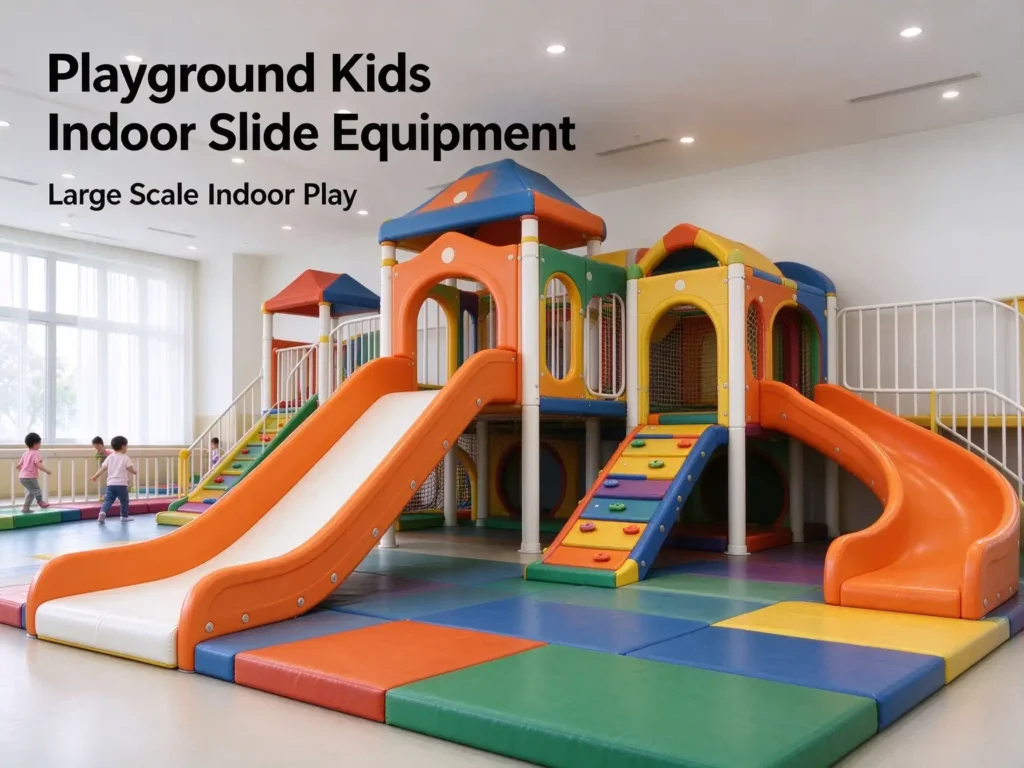
A room filled with one big climbing frame costs less to source than the same room filled with ten distinct activity stations. High-ticket items include multi-level play structures, trampoline courts, and motorized rides. Lower-cost items include soft play blocks, ball pits, and wall panels. The mix you choose determines both the equipment price and the installation labor.
Materials and compliance
Indoor playground gear is built from steel frames, plywood or foam cores, PVC leather, and netting. The grade of each material changes the price and the lifespan. Certified materials that meet ASTM and CPSC safety standards cost more up front but reduce injury risk and insurance claims. You can read the baseline expectations from the U.S. Consumer Product Safety Commission playground guidelines.
Customization
A standard catalog design is the cheapest path. A fully themed build with custom characters, lighting, and branded colors costs more because it needs engineering drawings and bespoke fabrication. Custom work is where a direct manufacturer makes its money, since a reseller just passes those costs on.
How much does a small indoor playground cost
A small setup is the most common entry point for new operators, and the range is wide because “small” means different things to different buyers.
A small indoor playground typically costs USD 800 to USD 20,000, depending on whether you mean a home soft-play kit or a 200 to 500 square foot commercial room with a climbing frame and a few stations.
If you are testing the waters with a compact footprint, mini castles and compact naughty-castle modules are built for exactly this size class. They show what fits in a tight room without the cost of a full multi-level structure.
Home and micro setups
A basic soft-play set for a home, clinic, or small cafe runs USD 800 to USD 3,000. These are foam blocks, a small slide, a ball pit, and maybe a tiny climbing panel. They ship in boxes and need no install crew.
Small commercial rooms
A 200 to 500 square foot paid-entry or customer-facing play area runs from USD 5,000 to USD 20,000. This tier usually includes a single-level play structure, a soft obstacle course, seating nearby, and safety matting. At this size you start needing professional installation and a layout that meets local codes.
What you get at each level
| Setup size | Typical cost | What is included |
| Home / Micro | USD 800 – USD 3,000 | Foam blocks, slide, ball pit, small panel |
| Small commercial | USD 5,000 – USD 20,000 | Play structure, obstacle course, matting, install |
| Compact themed | USD 15,000 – USD 30,000 | Custom colors, lighting, branded elements |

Commercial indoor playground equipment price ranges
Once you move past the small tier, you are buying a business asset, not a play corner. The numbers scale with square footage and the number of attractions.
Commercial indoor playground equipment for a 500 to 2,000 square foot center usually costs USD 20,000 to USD 80,000, while larger 2,000 to 10,000 square foot parks reach USD 80,000 to USD 300,000 or more.
Commercial indoor playground equipment spans the full range from compact family-center builds to large themed parks. The Dream Paradise series, for example, is built for operators who want a complete themed environment rather than a single structure.
Price by center size
| Center size | Equipment cost | Common features |
| 500 – 1,000 sq ft | USD 20,000 – USD 45,000 | Multi-level frame, slides, soft play, small ride |
| 1,000 – 2,000 sq ft | USD 45,000 – USD 80,000 | Trampoline section, themed zones, motorized ride |
| 2,000 – 5,000 sq ft | USD 80,000 – USD 180,000 | Multiple attractions, party rooms, custom theme |
| 5,000+ sq ft | USD 180,000 – USD 300,000+ | Full park, FEC layout, branded fit-out |
Why commercial costs climb
Commercial spaces need padded floors rated for falls, fire-retardant materials, and structures rated for high daily traffic. They also need redundancy: if one station closes for repair, the rest of the floor should still run. That engineering is part of the price. Trampoline courts in particular add cost because the beds, frames, and enclosures must be replaced on a maintenance cycle.
Where to buy indoor playground equipment wholesale
Buying wholesale changes the math more than most first-time buyers expect. The channel you choose sets your unit price, your lead time, and your after-sales support.
The cheapest reliable path is to buy direct from a manufacturer, where wholesale pricing removes the reseller margin and can cut equipment costs by 20% to 40% versus retail channels.
Manufacturer vs distributor
A distributor buys from a factory, adds a markup, and resells. You get convenience and local support, but you pay for both. A manufacturer sells at the source and handles design, production, and shipping themselves. For a project over USD 10,000, the manufacturer route almost always wins on price.
What to check before you order
- Confirm the supplier holds the safety certifications your market requires, such as CE, ASTM, or TUV.
- Ask for references from operators who opened a similar-sized park.
- Get a written lead time and a clear install or supervision plan.
- Check whether spare parts are stocked and how long replacements take.
Not all playground equipment companies run their own factories. Many are trading companies that place orders with a workshop they have never visited, which makes lead times and quality harder to control. The companies are worth a second look; they design in-house, hold certifications, and can show you a plant rather than just a catalog. A short video call of the production floor tells you more than a polished brochure.
This is where working with a direct producer such as JQK helps. JQK builds indoor playground equipment in its own factory, so pricing stays at the source, and the design team works from your floor plan rather than a generic template. Their ranges cover compact mini castles, themed naughty-castle series, trampoline parks, and motorized rides, which means one supplier can fill most of a center’s equipment list. For indoor playground equipment wholesale, buying direct also shortens the chain between your order and the production line, and it keeps a single team accountable from the first drawing to the final install.
Common playground equipment names and what they cost
Knowing the names helps you read quotes and compare suppliers without getting lost in jargon. The list below covers the items most often quoted for indoor spaces.
A basic indoor playground mixes structures, soft play, and at least one feature attraction, and the named items below range from about USD 150 for a wall panel to USD 15,000 for a seated motorized ride.
Structures and soft play
- Naughty castle (indoor play frame): USD 3,000–USD 60,000 depending on size and levels.
- Soft play modules: USD 150 – USD 1,200 per piece.
- Ball pit: USD 300 – USD 2,000 with balls and enclosure.
- Climbing wall (indoor): USD 800 – USD 5,000.
Motion and rides
Playground equipment that spins, like a carousel, is a classic paid-attraction anchor. A 16-seat European-style carousel sits in the USD 8,000 to USD 15,000 range because of the motor, seating, and decorative work. Smaller 6 to 8 seat versions start near USD 2,000. Trackless sightseeing trains and other motorized rides fall in a similar band and draw older kids who have outgrown the soft play.
Slides and panels
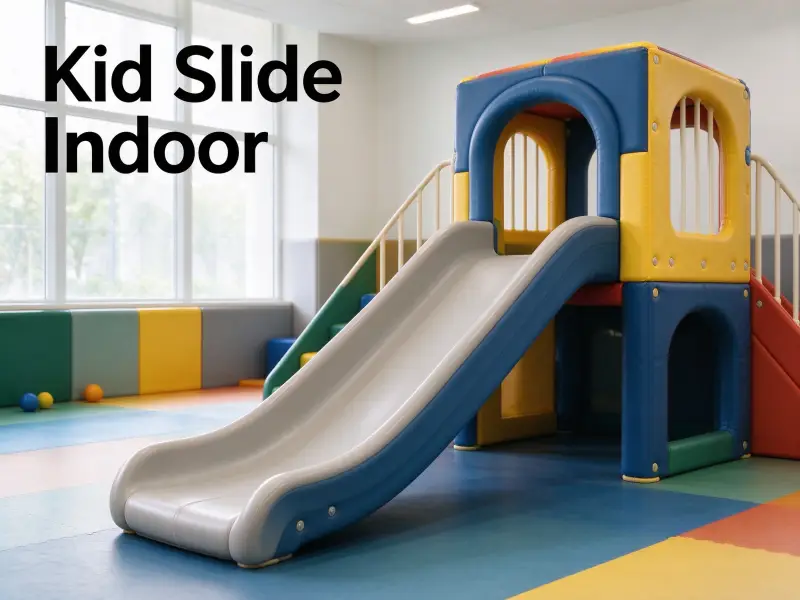
- Wave or spiral slide: USD 400 – USD 3,000.
- Interactive wall panel: USD 150 – USD 800.
- Donut or tube slide (multi-level): USD 1,000 – USD 4,000.
Kids-focused pieces
Playground equipment for kids in the toddler and early-childhood range leans toward padded, low-risk pieces. The Lovely Park series is built around that age group, with gentle climbs, themed characters, and enclosed play that parents can supervise from a seat nearby. These pieces are cheaper per unit than big structures, but you usually buy several, so the line item adds up.
| Equipment name | Typical price | Best for |
| Naughty castle frame | USD 3,000 – USD 60,000 | All ages, center anchor |
| Soft play module | USD 150 – USD 1,200 | Toddlers, zoning |
| Carousel (spinning ride) | USD 2,000 – USD 15,000 | Photo opportunity, revenue |
| Ball pit | USD 300 – USD 2,000 | Toddlers, low cost |
| Climbing wall | USD 800 – USD 5,000 | Older kids, challenge |

How much would it cost to set up an indoor playground
Equipment is only part of the build. A finished, open-for-business playground carries soft costs that catch first-time operators off guard.
Setting up a full indoor playground costs 30% to 60% more than the equipment alone once you add flooring, fit-out, permits, and working capital on top of the USD 5,000 to USD 300,000 equipment range.
Equipment
This is the line we have covered: structures, soft play, rides, and panels. For most centers it is 50% to 65% of the total project.
Fit-out and site work
Safety flooring, lighting, HVAC adjustments, painting, and seating make up the next big block. Expect USD 10 to USD 40 per square foot for flooring and finish alone. A 2,000-square-foot center can spend USD 20,000 to USD 80,000 here before a single toy is installed.
Soft costs
Permits, insurance, staff training, and a launch marketing push add another USD 5,000 to USD 30,000 for a small center and more for a large one. Build these into the plan from day one so the doors actually open. Staffing is the recurring cost most often left out of the equipment budget: a 2,000-square-foot center usually needs two to four attendants per shift, and that payroll runs every month whether the floor is full or not.
Ways to lower your indoor playground equipment budget
You do not have to cut safety to save money. Most savings come from smarter buying and tighter scope.
The fastest savings come from buying direct, phasing the build, and choosing a smaller number of high-use pieces over a large spread of single-purpose items.
- Buy from the factory. Removing the distributor margin is the single biggest lever, often 20% to 40% on the equipment line.
- Phase the opening. Open with the core structure and add rides or themed zones in phase two once revenue starts.
- Standardize where you can. Custom colors cost less than custom shapes; stock modules cost less than bespoke fabrication.
- Focus on throughput. A few pieces that many kids use at once beat a wall of niche items that sit empty.
JQK supports this approach by quoting from a standard catalog that can later be extended with custom-themed additions, so an operator can open lean and grow the floor without swapping suppliers.
Used and refurbished pieces can trim the budget on non-structural items like ball pits, panels, and seating, but avoid second-hand motorized rides and load-bearing frames unless you can verify their full service history. The few thousand saved is rarely worth a failed inspection or an injury claim. The biggest savings still come from scope discipline: open with what earns revenue and add the rest once the doors are busy.
Why a direct manufacturer makes the budget easier
Buying from a single factory lowers your total cost and removes the finger-pointing that happens when design, build, and service sit with different vendors.
Sourcing everything through one factory simplifies more than price. It shortens lead times, keeps certification paperwork in one place, and gives you a single point of contact for design, production, shipping, and after-sales parts.
JQK’s own advantages line up with what a cost-conscious operator needs: factory-direct pricing with no reseller markup, a design team that works from your actual floor plan, certified materials built to ASTM and CE expectations, and a product range that covers mini castles, themed series, trampoline parks, and motorized rides under one roof. If you are scoping a project and want a number tuned to your room rather than a generic range, the practical next step is to send your layout to the JQK team for a quote and get a line-by-line breakdown before you commit.
Frequently asked questions
What is the cheapest indoor playground equipment to start with?
The lowest-cost entry is a home or cafe soft-play kit at USD 800 to USD 3,000, made of foam blocks, a small slide, and a ball pit. For a paid commercial space, a basic 200-square-foot structure with soft play starts around USD 5,000. These options need no special install and let you test demand before a larger build.
How long does indoor playground equipment last?
Well-built indoor equipment lasts 5 to 10 years with regular maintenance. Steel frames and structures outlast soft foam and netting, which wear from daily use and need periodic replacement. Motorized rides need the shortest service cycle, with moving parts inspected monthly. Choosing certified materials and a supplier that stocks spare parts extends the usable life.
Do I need certified playground equipment for a commercial indoor park?
In most markets, yes. Commercial spaces open to the public are expected to meet local safety codes, and insurers often require proof of compliance with standards such as ASTM or EN1176. Certified equipment reduces injury risk and protects you legally. Always confirm the exact requirements with your local authority before ordering, since rules differ by region and by the age group you serve.