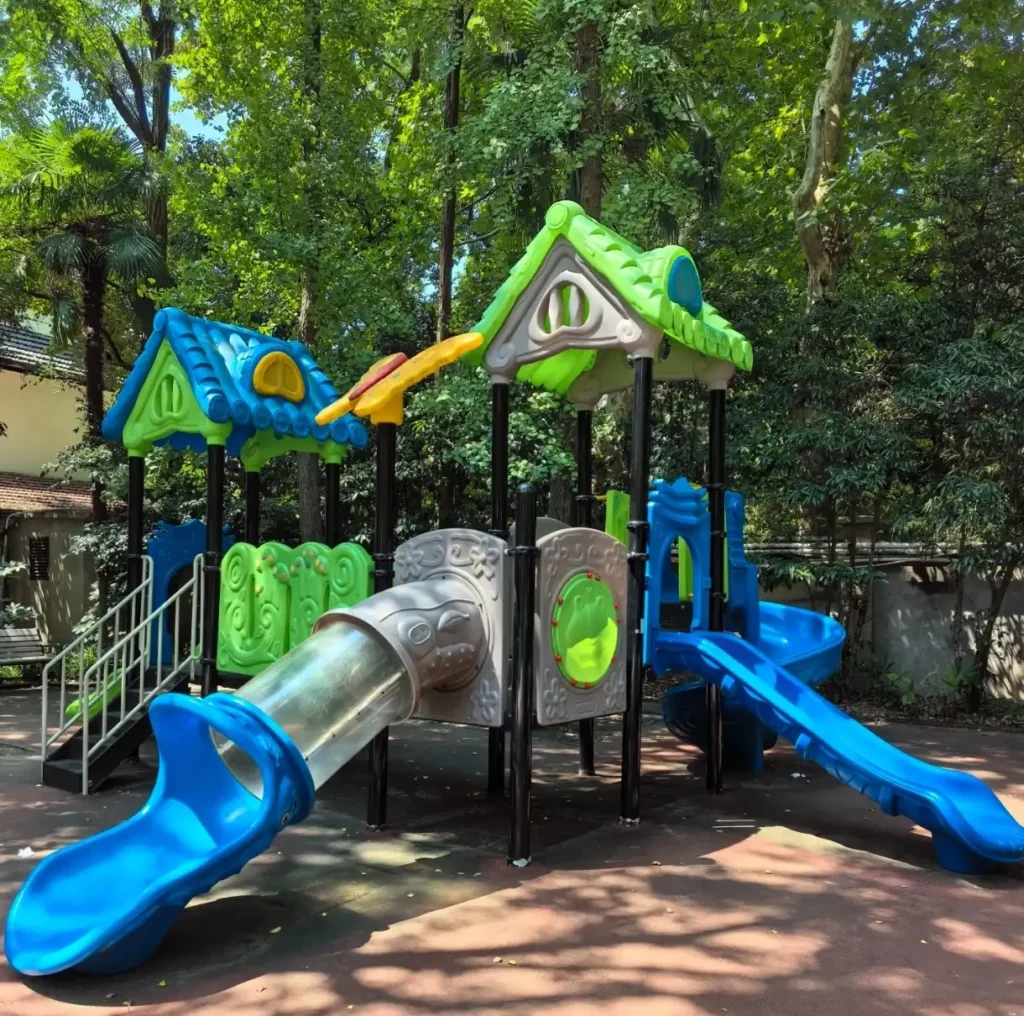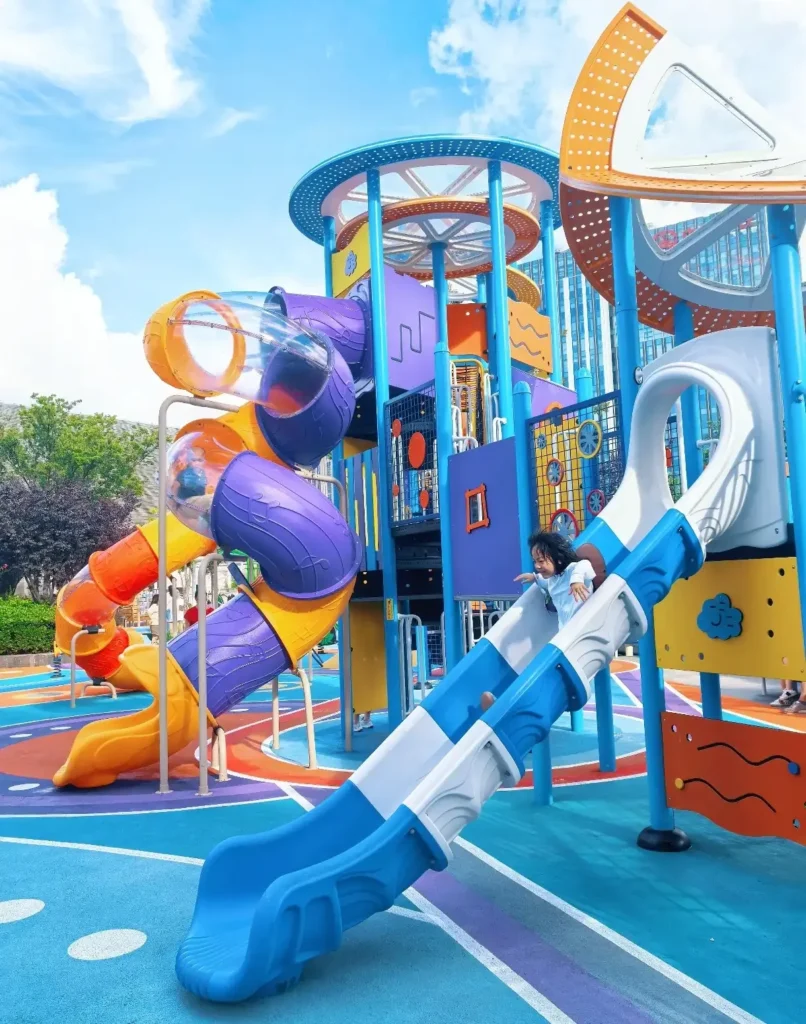
Outdoor combined slides have long stood as the centrepiece of public children’s playgrounds all over the world. What was once viewed as a simple downhill sliding facility has gradually evolved into a multi‑functional piece of play equipment that merges physical exercise, social communication, sensory stimulation and imaginative role‑play. Driven by urban renewal, rising investment in public child‑friendly spaces, and updated international playground safety codes, manufacturers and design studios keep re‑examining how slides serve kids of different ages and abilities.
Today’s market no longer judges playground slides purely by visual appeal. Venue operators, municipal planners and kindergarten managers pay equal attention to theme immersion, material durability, inclusive accessibility, long‑term maintenance cost and compliance with global safety standards. This article digs deep into major design evolutions, material breakthroughs, inclusive‑play concepts, existing industry bottlenecks and real‑world application observations of modern outdoor kids slides. It offers industry‑wide insights for playground designers, equipment producers and venue decision‑makers.
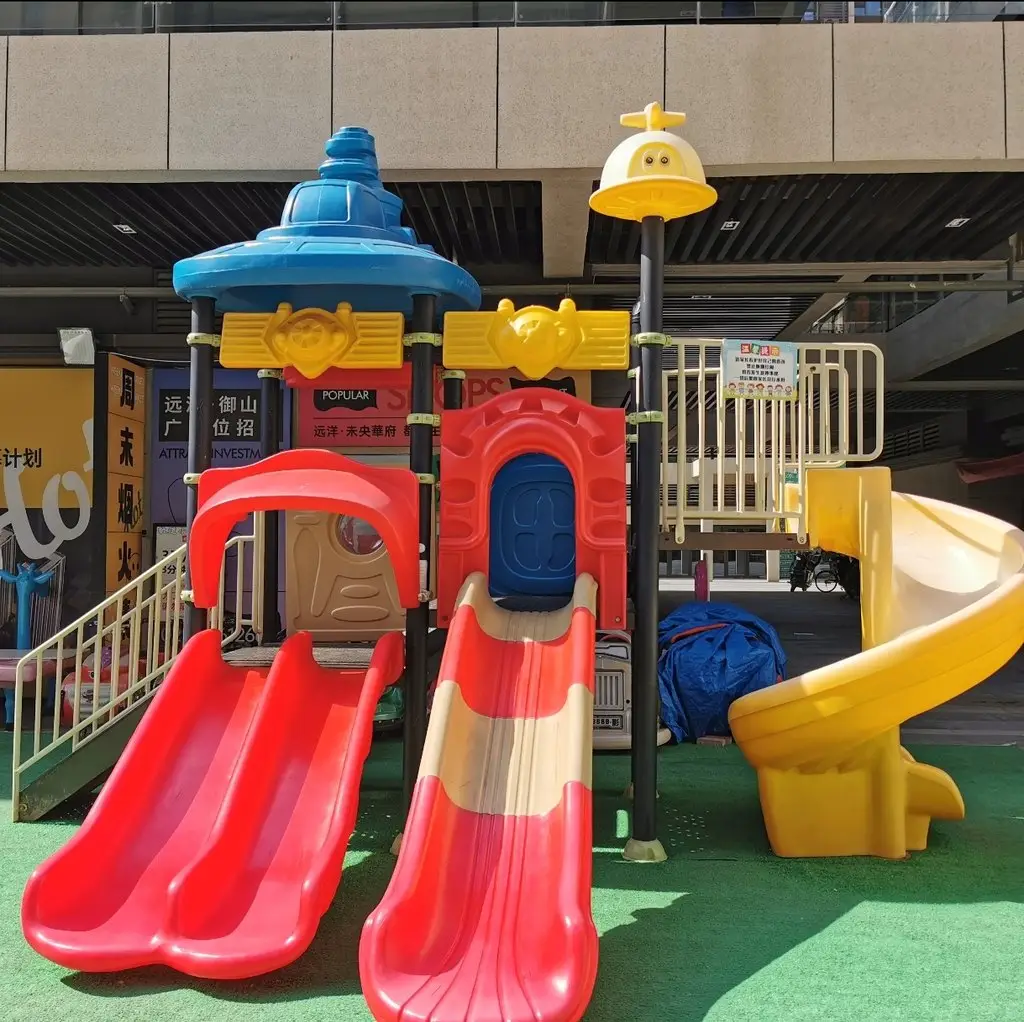
The Rise of Immersive Themed Play Experiences
Early‑generation outdoor slides were mostly function‑oriented, with plain‑colored towers and straight slide lanes. Design priority focused on structural stability rather than play storytelling. Over the past years, themed immersive design has become one of the most noticeable industry shifts. Designers wrap slide structures around complete narrative scenarios, turning a simple sliding activity into small‑scale adventure journeys for children.
Narrative‑driven theme modelling
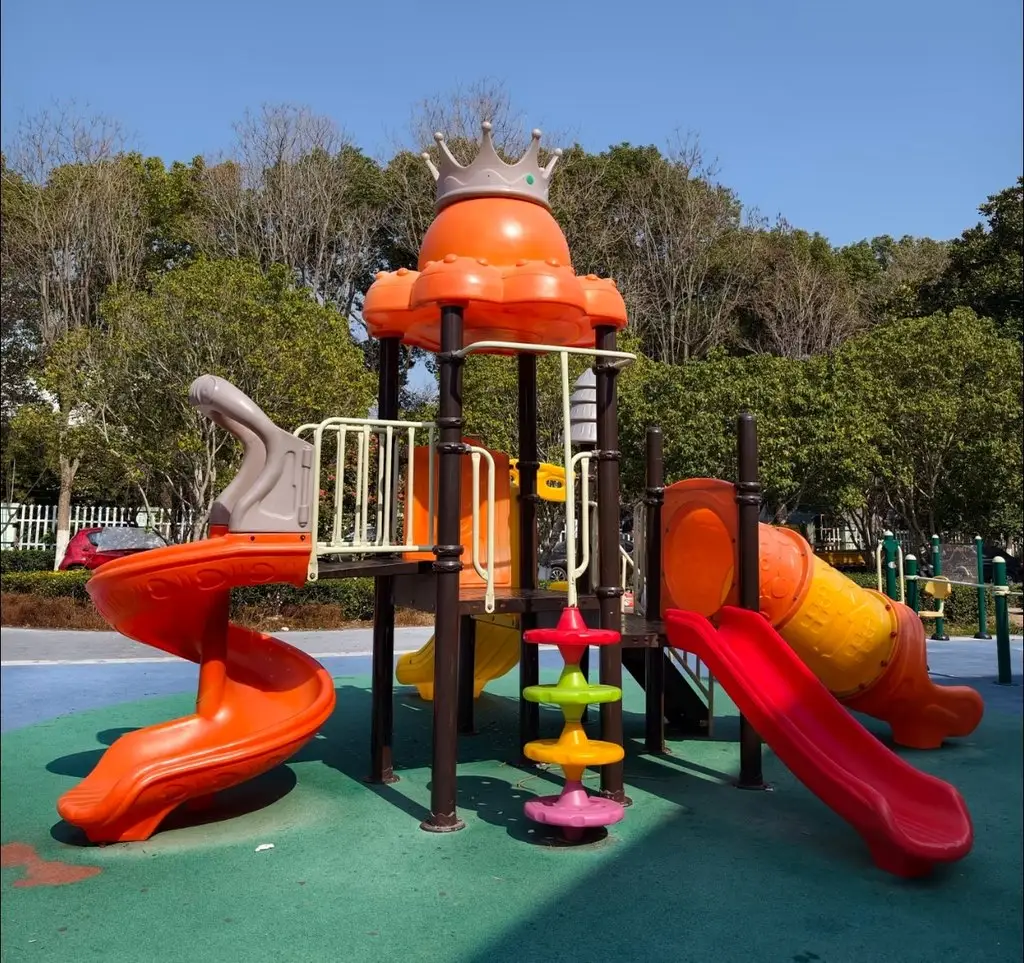
Ocean‑world, tropical‑jungle, space‑exploration, dinosaur‑adventure and castle‑kingdom themes are among the most popular theme directions for commercial projects. Instead of sticking isolated stickers onto standard towers, manufacturers reshape roof ornaments, side baffles, tunnel sections and decorative panels to fit one unified story. A whale‑themed slide, for instance, integrates whale‑shaped top canopy, wave‑pattern carved side plates and marine‑style colour matching across the whole unit. Every visual element reinforces the ocean‑adventure atmosphere, making the playground itself an interesting scene rather than cold pieces of equipment.
Extended play value beyond sliding
Modern themed slide systems deliver far more fun than just going downhill. Game panels, peek‑through observation windows, small crawl‑in tunnels and simulated rock‑climbing surfaces are embedded into play towers. While queuing for their turn to slide, children can touch, observe and interact with these built‑in components. These waiting‑zone activities effectively reduce the risk of pushing and shoving, extend average play duration and encourage peer‑to‑peer role‑playing. Kids can create their own game plots, communicate with partners and exercise creative thinking without extra standalone play apparatus.
Theme customization for site characteristics
Standard off‑the‑shelf themed models cannot satisfy all project requirements. More B‑end clients request site‑specific customization: scenic spots hope slides to match local cultural features; kindergartens prefer soft, warm‑toned animal themes; municipal community parks lean toward nature‑inspired styles that blend well with surrounding plants and landscape. Advanced modular production workflows make such customization economically feasible, without bringing excessive cost increases for medium‑and‑large‑size orders.
Material Upgrades & Safety Engineering Progress
Attractive theme effects can never take precedence over structural safety. Statistics from playground safety audits indicate that a considerable share of outdoor‑play‑related injuries links back to material aging, improper structural parameters or neglected detail processing. In response, the playground industry keeps promoting iterative upgrades on raw‑material formulas and engineering specifications, guided by standards such as EN 1176 and ASTM F1487.
High‑performance weather‑resistant plastic components
Traditional low‑cost recycled plastic will turn brittle, fade heavily or even develop hidden cracks after 1‑2 years under strong ultraviolet radiation and drastic temperature shifts. Qualified commercial‑grade outdoor slides adopt LLDPE or HDPE rotational‑molded materials added with UV‑stabiliser and anti‑aging agents. Such modified plastic can endure long‑term sun exposure, rain and alternating hot‑and‑cold weather conditions, slowing colour fading and material embrittlement. All exposed edges, openings and transition joints receive full rounded‑corner treatment to eliminate cutting, pinching and bump hazards. Even inner tunnel surfaces keep a smooth, burr‑free finish.
Reinforced metal support against complex climates
Hot‑dip galvanized round steel pipes remain mainstream for load‑bearing support posts. Frame welding, rust removal and multi‑layer outdoor anti‑corrosive coating form a complete anti‑rust treatment process. For coastal venues with heavy salt‑spray erosion or regions suffering long rainy seasons, manufacturers will apply enhanced surface treatment to slow steel corrosion. All connection joints use 304 stainless‑steel anti‑theft lock bolts. These special‑structured fasteners resist rust seizure and prevent children from unscrewing hardware pieces during play. Beyond frame rust prevention, engineers also calculate local wind‑load and snow‑load indexes for high‑latitude or coastal projects to avoid structural stress risks under extreme weather conditions.
Human‑centered slide‑path parameter optimisation
International playground standards give clear limits for slide gradient, side baffle height, platform guardrail height and exit run‑out length. Too‑steep slopes lead to excessive sliding speed; overly‑gentle slopes cause children to get stuck halfway down. Elevated platform guardrail height is set according to target‑user age bracket. The exit section flattens gradually to gently decelerate kids before they leave the slide surface. These invisible engineering parameters decide whether sliding feels smooth and safe, far more critical than outer appearance.
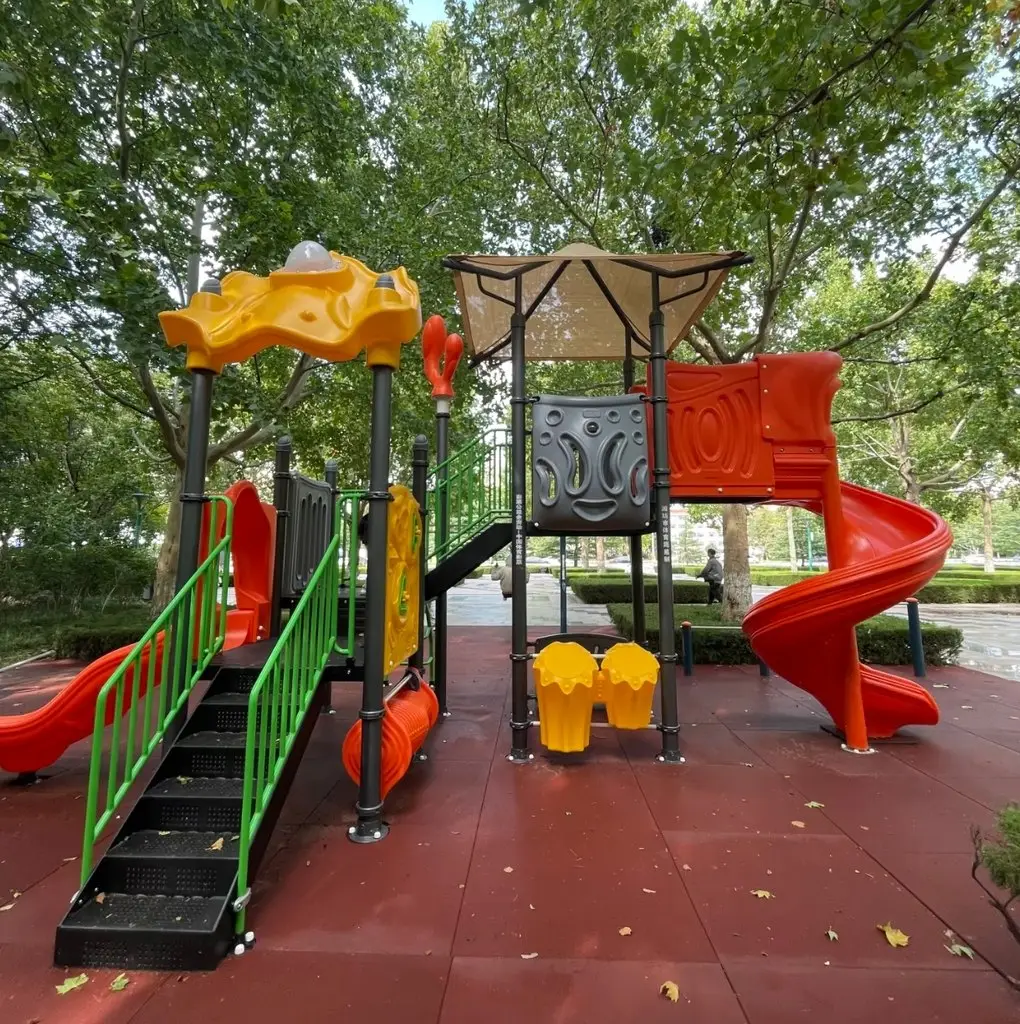
Modular Design Drives Scenario Diversification & Inclusive Play
Modular assembly architecture has reshaped the whole production, transportation, installation and post‑operation logic for outdoor slide equipment. Meanwhile, inclusive‑play concepts gain wider acceptance; more slide projects consider children with different physical conditions and varying age groups at the initial design phase.
Flexible combination and iterative renovation
Each functional unit including slide lanes, climbing stair sections, theme towers and interactive panels is manufactured as independent, standardized modules. Factories reorganise these modules to produce dozens of different configurations without opening brand‑new molds. For venue operators, the biggest advantage lies in expandability. When business grows or site planning updates, they can add swing sets, climbing attachments or partially replace theme panels, instead of removing the entire playground complex. This greatly cuts reconstruction investment and shortens site‑closure time for renovation. Standard‑sized modules also optimise overseas container loading efficiency for export orders. Every shipment is accompanied by bilingual installation manuals and ground‑layout drawings to guide field assembly work.
Multi‑age compatible mixed‑use solutions
Many public playgrounds welcome toddlers, preschoolers and school‑age kids at the same time. Single‑height slides cannot cover such wide age span. Modern modular slide systems solve this problem by setting multi‑level platforms matched with low‑height toddler‑friendly wide slides and relatively higher wave‑shaped slides for older children. Different sliding lanes separate play flows, preventing older kids from bumping into younger ones. Wide‑entry slide openings and gentle gradients are specially reserved for 3‑5‑year‑old groups.
Growing focus on inclusive accessibility
Forward‑thinking playground projects start adding accessibility‑oriented details. Wide transfer‑friendly ramps replace part of steep climbing ladders; lowered interactive panels allow children of different mobility levels to join group play. Though fully inclusive slide solutions are still relatively niche in the market, more designers regard accessibility as an essential consideration rather than an optional extra feature for new public‑venue projects.
Main Industry Challenges Facing Slide Manufacturers & Operators
While market demand keeps expanding, the outdoor slide sector still confronts several persistent real‑world obstacles. These pain points exist across raw‑material supply, production, export compliance and post‑site‑operation stages.
- Balance between rich theme modelling and structural mechanical performance. Over‑complicated sculpted decorative shapes may create thin‑wall positions on plastic parts. If mold flow design is not optimized, these thin sections become vulnerable stress points prone to cracking under outdoor temperature changes. Design teams have to balance artistic creativity and mechanical strength during prototype verification.
- Climate‑oriented product differentiation pressure. A single unified product formula cannot suit every region across the globe. Coastal sites require strengthened anti‑salt‑spray processing; high‑sunlight tropical zones need higher‑dose UV stabiliser inside plastic raw material; cold‑snowy areas demand material that stays ductile under sub‑zero temperature. Many small factories skip climate‑targeted adjustments and supply identical goods worldwide, bringing potential early‑failure risks for end‑users.
- Low‑cost non‑certified counterfeit products disturbing market order. Some knock‑off producers copy popular theme appearances but adopt recycled thin plastic and simplified anti‑rust treatment. Such counterfeit items often lack complete third‑party safety certification. Although they carry attractive low price tags, hidden safety hazards will emerge after short‑term outdoor use, creating liability risks for venue operators.
- Insufficient attention to supporting safety surfacing. Slide safety does not only depend on the play structure itself. Impact‑attenuating ground surfacing within slide run‑out zones is equally vital. Quite a few project purchasers focus all budgets on slide hardware while cutting investment in shock‑absorbing flooring. Hard concrete landing areas will raise injury severity greatly once children fall down, even if the slide unit meets all equipment standards.
FAQ
What core differences separate a themed commercial slide from ordinary functional‑only slides?
A: Qualified themed slides build complete play narratives through integrated modelling and embedded interactive elements, not merely sticking decorative decals onto standard towers. They enrich imaginative role‑play besides basic sliding fun. Meanwhile, all theme‑shaped components must strictly follow the same mechanical‑strength and rounded‑corner safety requirements as regular commercial playground equipment. Good theme design never compromises safety performance.
Can modular slide modules from different factories be cross‑matched on‑site?
A: Not recommended. Modular expandability only functions under a manufacturer’s unified interface and dimensional standards. Different manufacturers develop their own hole‑position, connection‑pipe and locking‑structure specifications. Mixing parts from multiple suppliers may cause assembly gaps, unstable joints or hidden structural risks. For long‑term expandability, operators should stick to accessories and spare parts from the original equipment supplier.
How should venue operators maintain outdoor themed slides to extend service life?
A: Stick to quarterly routine inspection cycles. Check whether locking screws become loose, examine plastic surfaces for tiny cracks, observe steel frame for early‑stage rust spots, and clear debris accumulated inside slide run‑out zones. Clean plastic surfaces with neutral cleaning agents; avoid strong, corrosive chemicals that accelerate material aging. In high‑salt‑spray coastal regions, increase inspection frequency to every two months. Timely minor repairs can effectively prevent large‑scale component damage.
Are themed playground slides suitable for high‑altitude cold‑winter regions?
A: Yes, yet special material configuration is required. Ask manufacturers to select low‑temperature‑resistant plastic formula and enhanced anti‑freeze‑thaw surface coating for steel frames. Standard‑formula plastic will turn brittle in prolonged sub‑zero environment and is not fit for cold‑zone deployment. Confirm relevant material test reports before placing formal orders.