Rent in a family entertainment center arrives on the first of the month whether anyone walks in or not. Equipment depreciates at the same pace in a busy mall and a quiet one. That’s why FEC owners keep circling one question: which rides pay for themselves, and which ones only look good in a brochure. Most answers were written for large theme parks, where a coaster can carry an entire gate.
An FEC has a different constraint. The floor is measured in hundreds of square meters, the guests are families with young children, and the income comes from repeat visits rather than once-a-year tourists. The asset list is familiar: a carousel, a sightseeing train, a bank of electric amusement rides by the entrance.
The rides that make the most money in an FEC are rarely the most expensive ones. They’re the assets that earn the most per square meter per operating hour and give families a reason to come back: carousels, trackless sightseeing trains, kiddie electric rides, trampoline parks, and soft play. Each does a different job in the venue, and the ones that stay profitable are matched to the traffic the venue already has.
Here’s how to judge each category on numbers rather than on how it looks at a trade show.
What makes an FEC ride profitable
A ride’s profit comes down to how many paying riders it moves per hour, how much floor space it takes to do it, and how little labor and downtime it needs. Purchase price matters, but it ranks below those three, because a cheap ride with low throughput and heavy staffing loses money every month it operates.
Two FEC rides can cost the same and earn very differently. A 12-seat carousel running a four-minute cycle with a two-minute turnaround fits roughly ten cycles into an hour, which at a realistic 70 percent occupancy means about 84 riders. A kiddie ride with a five-minute cycle and one child per unit may move 20. The carousel wins on volume, the kiddie ride wins on floor space, and neither is automatically better. Profitability in an FEC is a ratio, not a property of the equipment.
The four numbers to model before you sign a purchase order
- Riders per hour. Seats per cycle × cycles per hour × realistic occupancy. Use 60 to 75 percent on weekends and 25 to 40 percent on weekdays. Suppliers quote peak capacity, which isn’t what you bank.
- Ticket price. Take it from venues within a short drive of your site. Local household income sets it.
- Effective operating hours. Open hours minus downtime, cleaning, and changeover. A ride needing a mechanic twice a month has fewer productive hours than its schedule suggests.
- Labor per session. One attendant per two or three small rides works. One per ride doesn’t, unless the ticket price absorbs it.
The working formula is unglamorous:
- Hourly revenue = riders per hour × ticket price
- Monthly revenue = hourly revenue × effective operating hours per month
- Monthly contribution = monthly revenue − labor, energy, maintenance, and consumables
Revenue per square meter is the number that pays rent
Rent, not equipment, is usually the largest fixed cost in an FEC, which makes revenue per square meter the metric that decides whether a ride belongs on your floor. A ride occupying 60 square meters has to justify that footprint against soft play, a party room, or simply more café seating. When two options deliver similar hourly revenue, the smaller one wins, and it leaves room for a queue, which protects peak throughput.
| Metric | How to calculate it | Why it decides profit |
|---|---|---|
| Riders per hour | riders per cycle × cycles per hour × occupancy | caps peak income |
| Ticket price | local market benchmark | sets the income ceiling |
| Effective operating hours | open hours × uptime | downtime is a silent cost |
| Footprint | ride area plus queue, clearance, and access | rent is charged per square meter |
| Labor intensity | attendants × wage × hours | small rides with two staff rarely pay |
| Repeat factor | share of guests who ride twice in a visit | separates novelties from earners |
Five ride types that carry an FEC’s revenue
Carousels, trackless sightseeing trains, kiddie electric rides, trampoline parks, and soft play cover the five jobs an FEC needs done: anchor the family visit, move people through the building, capture impulse spend, sell time by the hour, and host birthdays. A venue that runs three of these well usually outperforms one that runs six of them badly.
Carousels: the family anchor
A carousel is the one ride a grandparent, a four-year-old, and a parent will all board, which is why it works as an anchor rather than a side attraction. Capacity tiers from six to twenty-four seats let an operator match the ride to the floor: a compact unit suits a mall corridor, a larger one can anchor a food and beverage zone and double as decoration. Two operational notes matter more than styling. Keep cycle times short enough to move the Saturday queue, and put the platform where guests can see it from the entrance, because a carousel visible before the ticket desk sells the visit itself.
Trackless sightseeing trains: footfall and dwell time
A trackless train does what no other FEC ride does: it moves guests through the property instead of parking them in one spot. A ten-minute loop past the café, the party rooms, and the retail shelf raises the odds that a family spends beyond the ticket. Trains run indoors and outdoors, need one driver, and can be re-routed as the venue changes. The design question is the route, not the vehicle: sharp turns, narrow corridors, and door thresholds all cut speed and add boarding staff.
Kiddie electric rides: the highest turnover per square meter
Short cycles, low ticket prices, and a footprint small enough for a corridor make kiddie electric rides the fastest cycling revenue in most venues. A three-to-five-minute session keeps the queue turning, and because boarding is simple, dead time between sessions is short. The economics work through unit count rather than unit price: five cars each running several sessions an hour will usually out-earn one larger attraction in the same corner. Charging discipline matters too. A fleet sitting on chargers during the busiest two hours is a fleet losing money.
Trampoline parks: session pricing and repeat visits
Trampoline parks sell time rather than rides, which changes the math. A one-hour session lets a venue sell the same square meter several times a day, and the format holds children past the age where a carousel still works. The costs sit in supervision and maintenance: springs, pads, and netting wear on a schedule you can plan for, and staffing ratios have to hold on the busiest day of the year rather than the average one. A commercial trampoline park designed with clear sightlines from a single desk cuts the number of staff needed to watch the floor.
Soft play and indoor playgrounds: the birthday-party engine
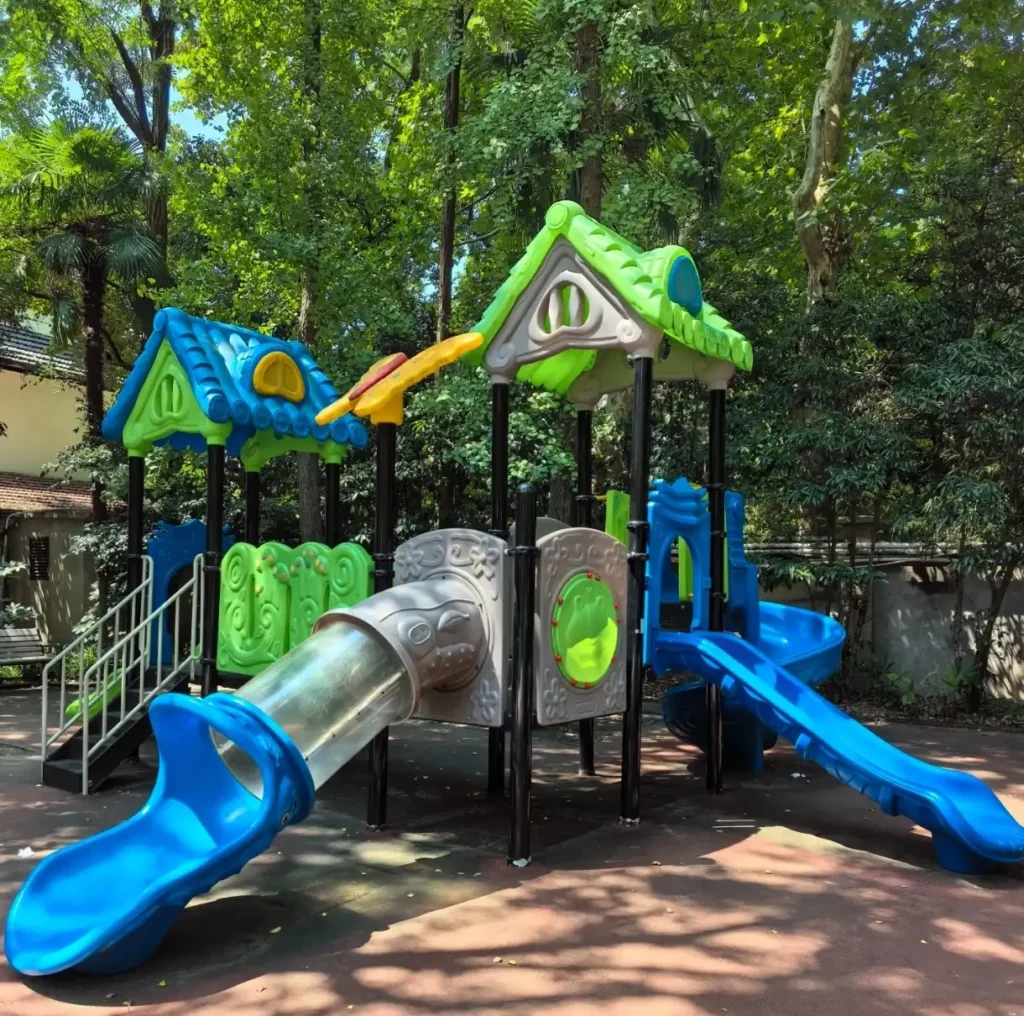
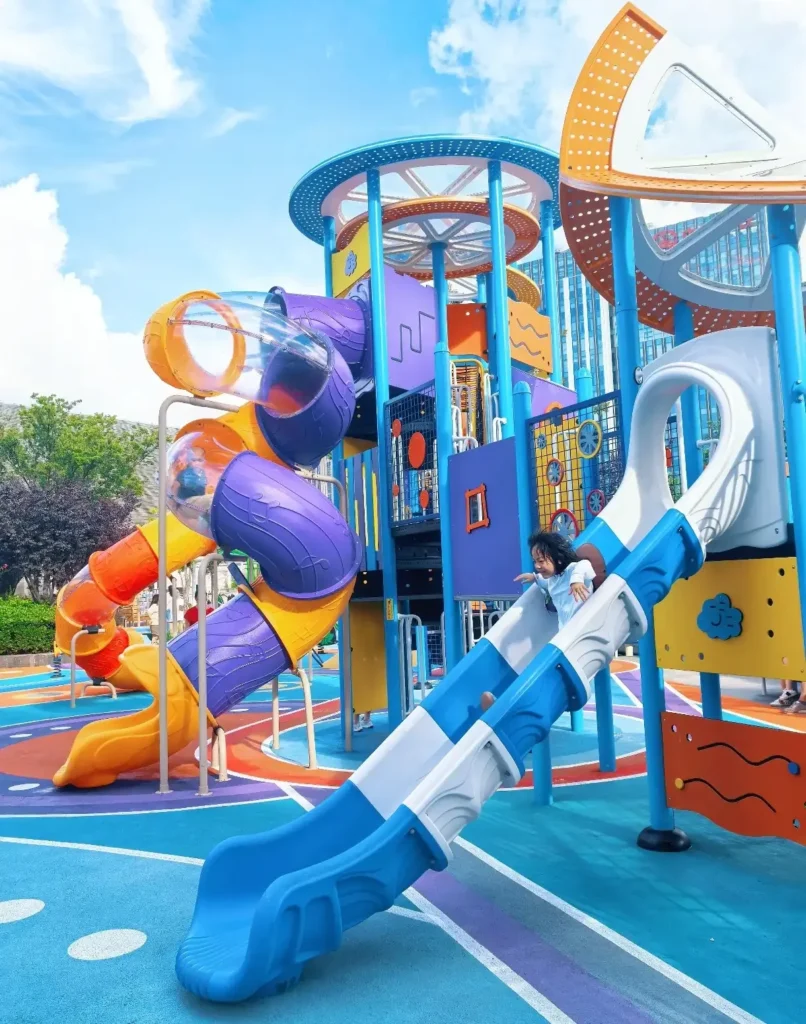
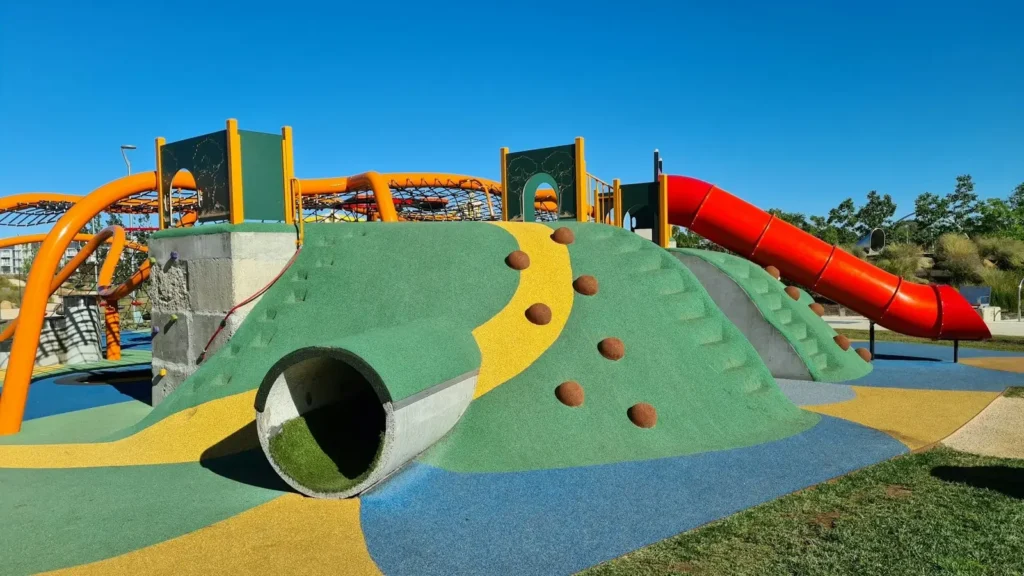
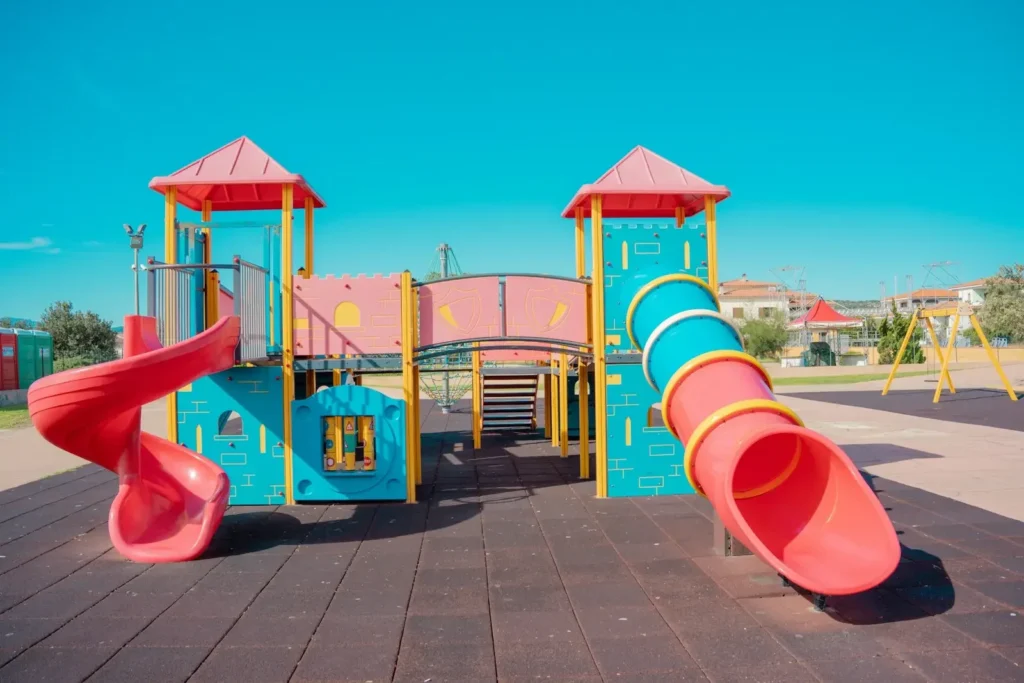
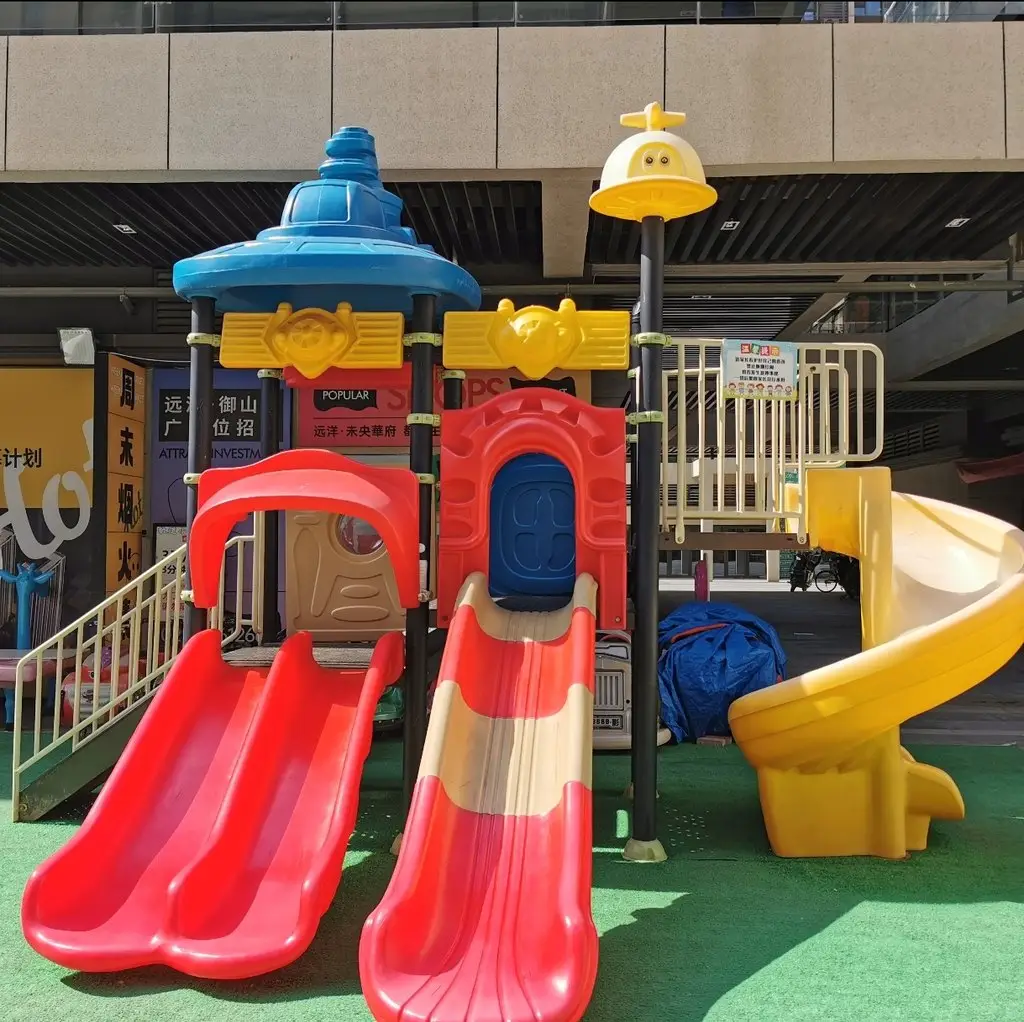
Soft play earns less per visit than a trampoline session and more per booking. Birthday parties bundle admission, food, a host, and a private room into one invoice larger than any ride ticket, and they fill weekday afternoons that would otherwise stay empty. Slides, ball pits, and climbing structures also hold families longer than a ride does, which is what turns a fifteen-minute stop into a two-hour spend. Age separation is the design constraint: toddler zones and structures for older children need physical distance, or the older group drives the younger one out.
Comparing the main ride categories side by side
The categories differ less in earning potential than in the job they do, so compare role and operating load rather than price. A venue needs one anchor, one dwell driver, and one impulse earner before it needs a second anchor.
Buying commercial amusement park rides for an FEC is a zoning decision before it’s a shopping decision. Put two impulse earners in the same corner and they split the same queue.
| Category | Typical footprint | Traffic driver | Revenue model | Labor | Role in venue |
|---|---|---|---|---|---|
| Carousel | compact to medium | visibility, all-ages appeal | per ride | one attendant | anchor and landmark |
| Trackless train | route length, not area | motion, route coverage | per ride | one driver | dwell and circulation |
| Kiddie electric rides | very small per unit | impulse, queue turnover | per short session | shared attendant | impulse earner |
| Trampoline park | large | active play, older children | timed session | supervision ratio | time-based earner |
| Soft play | medium to large | birthdays, younger children | admission plus party packages | hosts and cleaners | dwell and booking engine |
How to model payback before you buy
There’s no universal payback period, and any supplier who quotes one without your numbers is guessing. Payback is a division problem: total installed cost divided by annual contribution after labor, energy, and maintenance. The variables are yours to supply, and the answer changes with your city, your ticket price, and your opening hours.
Total installed cost includes more than the invoice: freight, customs, floor preparation, electrical work, installation labor, spare parts, and staff training. Operators routinely budget for the equipment and forget the rest, which is how a project drifts past its planned budget before opening day.
| Input you need | Why it changes the result |
|---|---|
| Opening hours and days per year | sets the revenue ceiling |
| Weekend and weekday attendance split | drives realistic occupancy |
| Local ticket price and typical discounting | defines income per rider |
| Staffing plan per shift | the largest controllable cost |
| Energy consumption and local tariff | small per hour, large per year |
| Maintenance budget and spare-parts lead time | protects uptime |
Run the division twice, once at weekday occupancy and once at weekend occupancy. If the ride only pays back under weekend assumptions, it isn’t a profitable ride. It’s a profitable Saturday.
Which theme parks are the most profitable?
The most profitable parks in the world are the ones with the highest attendance and the widest spread of non-ticket income. Scale sets the ceiling, but spending per guest decides the margin, and the parks leading on both keep investing in attractions families can ride together.
The Themed Entertainment Association’s Global Experience Index is the industry’s closest thing to audited attendance figures. In its most recent published edition, covering the 2024 calendar year and released in October 2025, the top 25 theme parks worldwide drew almost 246 million visits, up 2.4 percent, with growth concentrated in China’s branded parks while mature markets in the US, Japan, and western Europe stayed flat (TEA Global Experience Index). Attendance tells you who has scale. It doesn’t tell you who keeps the money, which is why the operators with the strongest spending per guest sit at the top of the profit list.
What a small venue can copy from them
- Non-ticket income as a planned line. Food, retail, and parties are designed into the floor plan rather than squeezed into leftover corners.
- A repeat mechanism. Annual passes and memberships turn a one-off visit into a habit, which makes weekday revenue predictable.
- A refresh rhythm. Attractions are updated on a schedule so returning guests find something new. A venue that hasn’t changed anything in five years is asking families to pay again for the same afternoon.
Five ways operators lose money on a profitable ride
Most FEC losses don’t come from buying the wrong ride. They come from running a good ride badly: capacity that doesn’t match traffic, a ticket structure that caps spending, and maintenance deferred until it becomes a closure.
- Sizing for the busiest day only. A ride built for peak Saturday sits half-empty the rest of the week. Size for a normal Saturday and manage peaks with timed sessions.
- Choosing on purchase price. A cheaper unit with a weak supply of spare parts costs more over three years than a durable one, because downtime on a Saturday is revenue you never recover.
- One price for everything. Bundles, off-peak pricing, and party packages raise revenue per guest without raising the price of any single ride.
- Ignoring the route through the venue. If guests can’t see the second attraction from the first, they leave after one ride. Sightlines are revenue.
- No maintenance calendar. Cleaning, fastener checks, and component inspection on a schedule cost far less than an unplanned closure during school holidays.
Choosing equipment that fits your floor plan
The right supplier conversation starts with your floor plan, ceiling height, power supply, and expected traffic, not with a catalog. A configuration that fits the venue and the local price point will out-earn a bigger, more impressive set of rides the site can’t support.
JQK builds across the categories above: carousels from compact six-seat units up to large multi-seat models, trackless sightseeing trains with custom themes and routes, kiddie electric rides for corridors and plazas, trampoline park series, indoor play structures, and outdoor playground equipment. As a kids’ electric rides supplier and builder of carousels and trains, JQK keeps customization on theme, color, capacity, and layout, which matters when a ride has to fit an existing column grid or a fixed ceiling height.
If you’re planning a venue, send the floor plan, the ceiling height, the ticket price you expect to charge, and your weekend traffic estimate. That’s enough to recommend a configuration and run the payback division with your numbers instead of ours. Talk to the JQK team before the layout is final. Moving a ride on paper costs nothing. Moving it after installation costs a season.
FAQ
How much floor space does a profitable FEC ride need?
It depends on the category, but a useful starting range for a small venue is 40 to 80 square meters for a carousel with its queue and clearance, 15 to 30 square meters per kiddie electric ride cluster, and a route width of at least three meters for a trackless train. Trampoline parks and soft play are a different scale, usually 200 square meters or more to justify the staffing.
Does every ride need a dedicated attendant?
No, and the ones that do should be priced accordingly. Carousels and kiddie electric ride clusters can share an attendant when they sit close together and stay visible from one point. Trackless trains need a driver for safety and boarding control, and trampoline parks need supervision ratios that hold at peak.
How often should an FEC refresh its rides?
Most operators plan a visible change every two to three years and a full category review every five. A refresh doesn’t always mean replacement. Re-theming, adding a unit to an existing cluster, or moving to a timed session format can reset interest at a fraction of the cost of a new attraction.