Indoor play has moved from a nice extra to a core draw for family entertainment centers, shopping malls, and childcare facilities. Operators see steady foot traffic and repeat visits, and parents value a safe, climate-controlled space where kids can burn energy. The hard part is not deciding to build one; it is figuring out where the actual equipment comes from and who to trust with the order. A well-run play zone also earns back its cost faster than most leisure investments, because the ticket is small but the visit frequency is high.
You can buy indoor playground equipment from four main sources: direct manufacturers, B2B sourcing platforms, local distributors, and industry trade shows. For most commercial projects, the best balance of price, quality, and support comes from buying straight from a factory supplier that designs, builds, and installs the equipment itself.
The sections below break down each buying channel, what the equipment costs at different scales, the types of units you can specify, and how to vet a supplier before you sign.

Where to buy indoor playground equipment
Most commercial buyers source from direct manufacturers or B2B platforms, with local dealers and trade shows playing a secondary role depending on budget, timeline, and location.
Buying channels are not equal. Each has trade-offs in price, lead time, customization, and after-sales care, and the right mix depends on how large and how custom your project is.
Buying direct from a manufacturer
A direct manufacturer handles design, production, and often installation under one roof. You skip the markup that distributors add, and you get direct answers on materials, lead times, and certifications. The downside is that you take on more of the project management, and minimum order expectations can be higher for a fully custom build.
For a commercial indoor playground, going direct usually means lower cost per square meter and far more control over the theme, color, and layout. It also shortens the feedback loop when you request changes during the design phase, because the people who build the unit are the people you are talking to.
B2B sourcing platforms
Platforms such as Alibaba and Made-in-China list thousands of suppliers in one place. They make comparison easy and offer trade-assurance programs that protect first-time buyers. The risk is variation in quality, since listings range from genuine factories to trading companies reselling someone else’s product.
Use these platforms to build a shortlist, then verify each supplier with factory videos, certification files, and references from past export clients. A live video walk of the production floor tells you more than a polished product photo, and it separates real manufacturers from middlemen. Order a small sample or a single unit before committing to a full container, and use staged payment terms so you keep leverage until the goods pass inspection. Many reliable factories accept a deposit with the balance paid against a pre-shipment video, which protects you without freezing your whole budget.
Local distributors and dealers
Local dealers offer fast delivery and on-site service, which matters for smaller venues or quick replacements. Prices run higher because the dealer carries inventory and overhead. For a large themed playground, that markup can erase the convenience.
Trade shows and industry expos
Shows let you touch materials, test rides, and meet several suppliers in a single day. They are strong for relationship-building and for seeing new product lines before they hit the market. The catch is that you still negotiate and order after the event, so shows are a research step more than a purchase channel. If you attend one, book supplier meetings before you fly and bring your floor plan, since the best factories schedule limited on-site slots during busy show weeks.
How much does indoor playground equipment cost
A compact soft-play corner can start around 5,000**, while a full themed indoor playground typically lands between **50,000 and $200,000 or more, driven by size, customization, and the mix of play units.
Cost is the question every buyer asks first, and the honest answer is that it depends on footprint and finish. A few factors move the number more than any others.
What drives the price
Size is the largest driver. Materials come next: galvanized steel frames, high-density foam, and flame-retardant PVC cost more than thin substitutes but last years longer under daily use. Custom theming, such as a branded castle or space station design, adds design and tooling cost. Finally, shipping and installation can be 10 to 25 percent of the total for an overseas order. Do not forget import duties, customs clearance, and local permits, since these can add another 5 to 15 percent depending on your country and the declared value. Building them into the budget early avoids a painful surprise at the port. Most operators recover the investment within 12 to 24 months once the venue reaches steady occupancy, so the per-square-meter rate matters less than throughput and repeat rate.
Cost by project scale
| Project type | Typical area | Estimated cost range |
| Soft-play corner | 50 to 100 sqm | 5,000 to 20,000 |
| Standard indoor playground | 100 to 300 sqm | 20,000 to 80,000 |
| Themed family entertainment center | 300 to 800 sqm | 80,000 to 200,000 |
| Large custom trampoline and ride park | 800+ sqm | $200,000+ |
Request written quotes that separate equipment, freight, and installation so you can compare suppliers on the same basis instead of mixing line items.

Types of playground equipment you can buy
The main categories are soft-play structures, slides, trampolines, carousels, and electric motion rides, and most venues combine several to serve different age groups and play styles.
Knowing the common playground equipment names helps you brief a supplier and plan zones. Below are the workhorses of a typical indoor venue.
Soft play and naughty castles
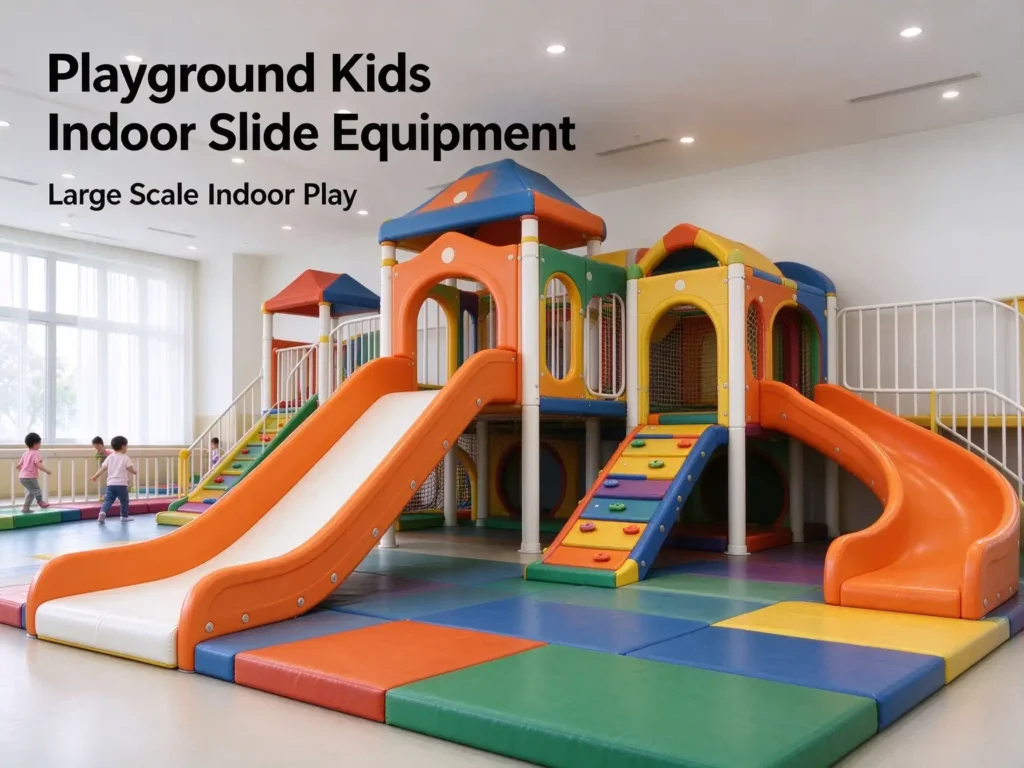
Soft-play frames use padded foam and netting to create climbable, crawlable structures with low fall risk. Naughty castles are the larger themed versions with ball pits, tunnels, and climbing walls. These anchor the toddler and early-school-age areas.
Slides and climbing structures
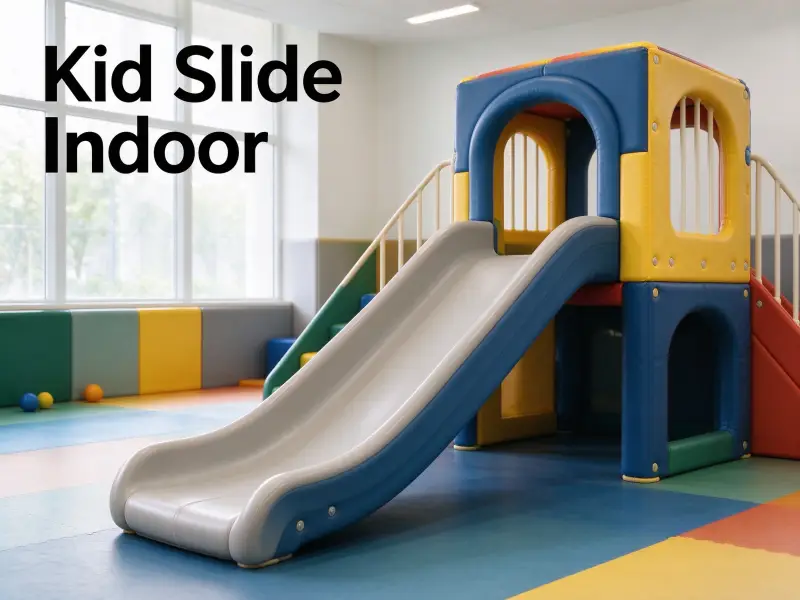
Slides range from straight foam slides for small kids to multi-lane spiral slides. Climbing structures build upper-body strength and keep older children engaged. Both are low-maintenance and high-traffic, which makes them a safe default for any floor plan.
Trampolines and bounce zones
Dodgeball courts, foam pits, and freestyle jump areas sit in this group. Trampoline zones generate strong repeat revenue but need strict staffing and padding rules to stay safe.
Electric rides and spinning units
Powered units such as carousels, trackless trains, and rotating rides bring motion that younger kids love. These fall under electric amusement rides and are covered in more detail below.
Playground equipment that spins
Spinning equipment, including carousels, rotating rides, and trackless trains, adds motion and a strong visual pull that drives repeat visits and longer dwell time.
Motion units are often the most photographed part of a venue, which makes them a marketing asset as much as a play feature. They also carry the most moving parts, so specification and maintenance matter more than with static structures.
Carousels remain the classic choice, available in sizes from compact six-seat units to large double-eave models for flagship sites. Trackless trains move guests around the floor and work well in mixed-age venues. Rotating rides such as teacup-style units deliver the spin kids ask for by name.
For any spinning unit, confirm the motor rating, emergency stop, and load limit before purchase. Ask the supplier for the maintenance schedule and spare parts list, since a ride down for repairs is lost revenue. Factor padded surroundings and a clear staff protocol into the layout from the start.
Playground equipment for kids: safety and age groups
Plan separate age-appropriate zones and meet recognized safety standards such as ASTM and CPSC guidelines to keep young users safe and limit operator liability.
Safety is not a feature you add at the end; it shapes the layout from the first sketch. Toddlers need low platforms, soft edges, and enclosed areas so they cannot wander. School-age children handle taller climbs, faster slides, and lightly-motioned rides.
Materials should be non-toxic, flame-retardant, and easy to sanitize. Padding thickness under play structures should match the maximum fall height. The U.S. Consumer Product Safety Commission publishes public playground safety guidance that many operators use as a baseline (CPSC). ASTM International sets consensus standards such as ASTM F1487 for commercial playground equipment (ASTM).
Build sightlines so staff can watch every zone from a central point. Good visibility reduces incidents more than any single piece of equipment, and it reassures parents who decide whether to return. Pair the layout with a short staff training routine covering daily inspections, incident response, and cleaning, since consistent operation protects both children and your license.

How to choose the best indoor playground supplier
Choose a supplier on manufacturing capability, custom design, certifications, and after-sales support, not on the lowest headline price alone.
A cheap quote that arrives late or fails inspection costs more than a fair quote that ships on time and passes. Use the criteria below to shortlist.
Certifications and compliance
Ask for test reports and certification marks relevant to your market, such as CE for Europe or ASTM compliance for the U.S. A serious supplier keeps these on file and sends them without hesitation.
Custom design and production capability
Review past projects and request a 3D layout based on your floor plan. A supplier that only sells fixed kits limits your differentiation. A supplier that designs for your space helps you build a venue that competitors cannot copy. Ask to see the design software and the revision process, because a supplier that limits changes will struggle with the custom theme that sets your venue apart.
After-sales and installation support
Confirm what happens after delivery: remote guidance, on-site crews, spare-parts availability, and warranty terms. Installation quality decides how long the equipment stays safe and attractive, so treat it as part of the product, not an add-on.
Playground equipment companies and manufacturers
Playground equipment companies span local fabricators and export manufacturers, and buying from a source factory usually lowers cost while tightening quality control.
The industry has two broad tiers. Local fabricators serve nearby clients with fast turnaround and easy service. Export manufacturers run larger factories, support custom-themed builds, and ship container loads worldwide. The right tier depends on your scale and how custom the project is.
When you evaluate playground equipment companies, look past the brochure. Request factory footage, speak to reference clients in your region, and confirm the supplier holds the certifications your market requires. A manufacturer with in-house design and research can adapt a concept to your budget instead of pushing a standard catalog item, which is what separates a generic play area from one people travel for.
Why buy direct from a manufacturer
Buying direct from the factory delivers lower prices, custom designs, and direct technical support, which together improve both margin and the final guest experience.
Working with a source manufacturer removes the distributor layer and puts you in touch with the people who actually build the equipment. That direct line shortens lead times, clarifies specs, and makes change orders straightforward.
A manufacturer with its own design and production, such as Jinqikai (JQK), a dedicated indoor-play factory, can match a theme to your brand and your budget. You get material choices explained in plain terms, a realistic production timeline, and a clear installation plan. For operators opening a first venue, that guidance is as valuable as the price saving because it prevents the small specification errors that turn into expensive rework. It also gives you a single accountable partner as you expand, so a second or third location reuses the same drawings, materials, and support instead of starting the supplier search over.
If you are comparing options for your project, the most useful next step is a direct conversation with a top indoor playground supplier who can review your floor plan and propose a layout. Share your space dimensions, target age groups, and budget range, and ask for a written quote that separates equipment, freight, and installation. A short call now prevents costly surprises later.
Frequently asked questions
Is it cheaper to buy indoor playground equipment directly from a manufacturer?
Usually, yes. Cutting out distributors and trading companies removes their markup, so factory pricing is typically lower for the same specification. The saving is largest on custom or large-scale builds, where a distributor would otherwise add a meaningful percentage on top of production cost.
What certifications should indoor playground equipment have?
It depends on the market. In the U.S., look for ASTM compliance and alignment with CPSC safety guidance. In Europe, CE marking is the baseline. Ask each supplier for current test reports rather than a generic certificate image, and confirm the marks apply to the exact products you are ordering.
How long does it take to manufacture and install an indoor playground?
A standard build often takes four to eight weeks of production plus shipping, with installation adding one to three weeks depending on size and crew. Custom themed projects run longer because design and prototyping take time. Confirm the timeline in writing and build it into your opening date.