Public parks, schools, and family entertainment centers all need the same thing: reliable play structures that hold up to daily use. Buying them is rarely as simple as picking a cart and checking out. Buyers have to weigh safety certifications, lead times, installation, and the difference between a catalog reseller and a factory that builds the units. This guide walks through where purchases actually happen and what to check before you sign.
You can buy playground equipment from three main sources: a direct manufacturer, a regional distributor, or a general online marketplace. Direct manufacturers, including suppliers of outdoor playground equipment, give you the lowest price and the most control over custom designs, while distributors and marketplaces add convenience and faster shipping for standard pieces. For most commercial projects, the manufacturer route is the better long-term deal.
Below we break down each buying channel, the parts you will actually order, and how to avoid the common mistakes that push a project over budget.

What types of playground equipment should you buy first?
Start with the core structures that see the most use: slides, climbers, swings, and spinning rides. Add soft-play and themed pieces once the main footprint is planned and your budget is set.
Most buyers overestimate how many separate items they need and underestimate the space each one takes. A good first order covers a few high-traffic staples rather than one of everything.
Structure-based pieces versus free-standing pieces
Structure-based equipment connects into a single frame. Think of a multi-deck system with a slide built into one side and a climbing wall on another. These units dominate commercial sites because they pack several activities into one footprint and one safety surfacing zone.
Free-standing pieces sit on their own. A single outdoor playground equipment item like a standalone swing bay or a carousel does not need a surrounding deck. You can add them later without redesigning the whole layout. For a first purchase, one combined structure plus two or three free-standing items is a common, workable mix.
Match the piece to the age group
Toddlers need low platforms, short slides, and soft edges. Older children want height, speed, and challenge. Buying for the wrong age band is the fastest way to end up with equipment that sits unused or fails an inspection.
| Age band | Good first picks | What to avoid |
| 6 to 23 months | Low soft-play blocks, crawl tunnels | Anything above 32 inches |
| 2 to 5 years | Short slides, gentle climbers | Fast spinners, tall decks |
| 5 to 12 years | Towers, rope climbers, swings | Baby swings, enclosed tot spots |
Where can you buy playground equipment for a commercial project?
For a commercial project, buy from a direct manufacturer or a certified distributor, not a consumer marketplace. Manufacturers handle custom sizing, bulk pricing, and the paperwork that schools and parks departments require.
Consumer sites are built for one backyard set shipped to a home. They rarely carry commercial-grade steel, IPEMA-rated surfacing, or the insurance documentation a city will ask for. If your buyer is a school, a church, a resort, or a municipal park, stay in the B2B supply chain.
Working with a direct manufacturer
A direct manufacturer builds the units in its own facility and sells to you without a middle layer. The upsides are price, lead-time control, and customization. You can change colors, add a logo panel, or resize a deck to fit an awkward lot.
The trade-off is that you manage more of the process. You may need to arrange freight and installation separately. For teams that have done a project before or that work with a contractor, this is usually the cheaper and more flexible path.
Using regional distributors
Distributors stock a few brands and resell them with local support. They are useful when you need a fast turnaround or want one vendor to handle delivery and install. You pay a margin for that convenience.
Pick a distributor that carries real commercial lines and can show you the safety certs for each product. If they cannot produce documentation, treat that as a red flag regardless of the discount.
Where can I find cheap commercial playground equipment?
You find cheap commercial playground equipment by buying factory-direct, ordering in bulk, and timing your purchase for the off-season. “Cheap” should mean lower cost per unit, not lower build quality or missing safety certs.
A low sticker price means nothing if the structure fails inspection or needs replacement in two years. The goal is to cut the middle layers, not the standards.
- Factory-direct pricing removes the distributor margin, often 20 to 40 percent of the final cost.
- Bulk orders of multiple units or a full site spread the engineering and shipping cost across more pieces.
- Off-season ordering, typically late fall through winter in the northern hemisphere, lets you catch slower production slots at lower rates.
- Refurbished units from reputable suppliers can work for low-traffic indoor corners, but confirm the parts are still supported before you commit.
The cheapest path that still meets code is almost always a direct manufacturer with a standard design you tweak slightly, rather than a fully bespoke build.

Where can I buy a kids’ outdoor playset?
You can buy a kids’ outdoor playset from a manufacturer’s catalog, a specialty playground dealer, or a big-box retailer. For anything meant for public use, choose a dealer or manufacturer that sells commercial-grade sets, not residential kits.
Residential playsets from general retailers are built for one family and one backyard. They use lighter lumber and hardware and skip the load ratings a park needs. They are fine for home but wrong for a camp or a childcare center.
What a proper outdoor set includes:
A real outdoor set bundles the frame, the slide, the climber, and the anchors. Some suppliers sell the slide and the tower separately, which hides the true cost. Ask for a complete delivered price that includes ground anchors and any required surfacing.
Indoor and hybrid options
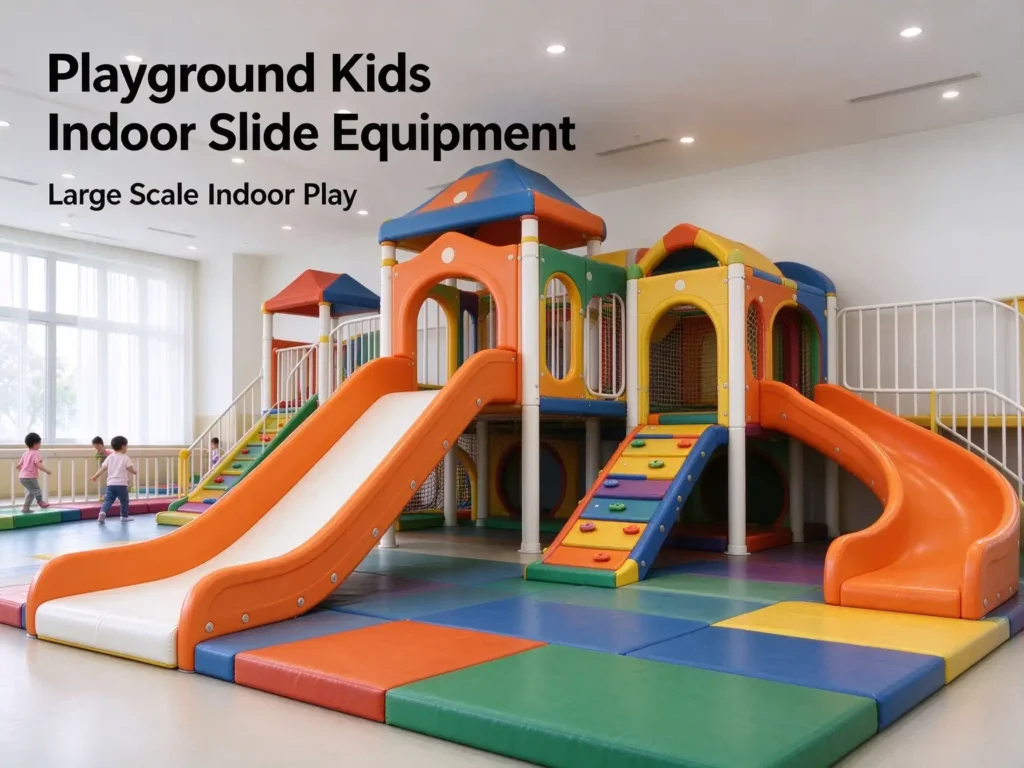
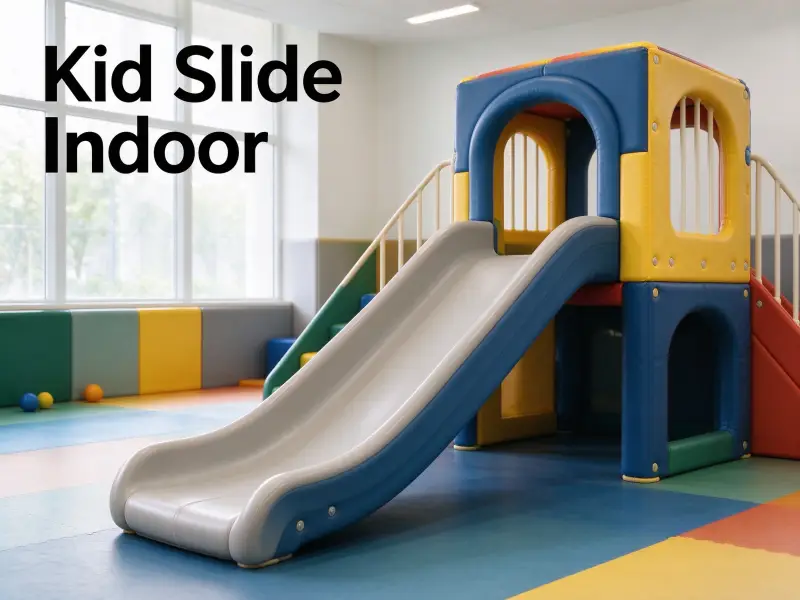
Not every playset lives outside. Many operators run an indoor footprint and add outdoor pieces seasonally. If you plan both, look at suppliers that cover trampoline park structures and outdoor frames under one roof so your warranty and support stay in one place.
Which playground equipment companies are worth working with?
The companies worth working with have their own production, publish safety certifications, and show finished projects you can visit. Avoid firms that only relabel another factory’s units and cannot explain how their builds meet local codes.
A supplier’s real test is whether they will still answer the phone a year after delivery. That is where established manufacturers separate from pop-up resellers.
Signs of a capable supplier
- They own or directly run the production line, not just a website.
- They provide IPEMA, ASTM, or EN 1176 documentation without being pushed.
- They share reference sites, ideally within driving distance.
- They quote freight, surfacing, and install as line items instead of a single vague number.
Why JQK is a practical choice
JQK builds its own lines and ships to commercial buyers worldwide. The catalog covers outdoor structures, indoor soft-play, and powered rides, so a single purchase order can cover a whole site. Custom colors, themes, and sizing are handled at the factory, which keeps the per-unit cost down on larger orders.
For buyers comparing shops, the practical edge is support after the sale. JQK issues the certification papers up front and helps with layout planning, which shortens the gap between the signed contract and open gate. If your project needs a tailored quote, the team can scope it from a site drawing.
What playground equipment names should buyers know?
Buyers should know the basic names: slide, swing, climber, spinner, seesaw, spring rider, carousel, and soft-play panel. Knowing the terms helps you read a quote and confirm you are getting the piece you pictured.
Suppliers use shorthand that can hide what you are actually ordering. Learn the names so the spec sheet makes sense.
| Common name | What it is | Typical use |
| Slide | Inclined chute for sliding down | Every age band, indoor or out |
| Swing | Seat on pivoting chains or bars | Open yards, 2 to 12 years |
| Climber | Ropes, walls, or nets to scale | Core of most towers |
| Spinner | Pivot seat that rotates | Higher-energy play |
| Seesaw | Balanced plank on a pivot | Pairs and small groups |
| Spring rider | Seat on a buried spring | Toddler corners |
| Carousel | Rotating seated platform | Powered or manual, all ages |
| Soft-play panel | Padded activity wall | Indoor toddler zones |
When a quote lists “activity module” or “motion unit,” ask for the plain name. You should be able to picture the exact piece from the words on the page.
What playground equipment for kids is safest?
The safest equipment for kids meets a recognized standard such as ASTM or EN 1176, uses impact-absorbing surfacing, and matches the age band it is built for. Safety comes from the standard plus the install, not from the price tag.
No structure is safe on its own. The surfacing under it and the way it is anchored decide most of the real risk.
Surfacing matters as much as the structure
Loose fill like engineered wood fiber, or unitary surfaces like poured rubber, cuts fall injuries. Bare concrete or packed dirt under a climber is a failure waiting to happen. Budget the surfacing as part of the equipment cost, not an afterthought.
Maintenance keeps it safe
Bolts loosen, coatings chip, and surfacing settles. A monthly walk-through catches small problems before they become claims. Ask your supplier for the maintenance schedule for each piece, and keep the log. Inspectors and insurers will want to see it.

Which playground equipment that spins works best outdoors?
The spinning equipment that works best outdoors is a low, enclosed carousel or a seated spinner with a fixed pivot and a soft edge. Powered carousels handle volume; manual spinners cost less and need no power.
Spinners draw crowds, but they also draw the most supervision. Outdoor models need rust-resistant frames and a base that stays put on the surfacing.
Carousels for throughput
A 16-seat custom carousel carries a steady stream of riders with one operator and no climbing risk. It suits fairs, malls, and park corners where you want a calm, repeatable ride. Because it is a defined product with known dimensions, it is easy to slot into a layout and budget.
Manual spinners for active play
Standing and seated spinners give older kids the fast rotation they want. They need a flat, level pad and clear space around them so a fallen rider is not in another piece’s fall zone. Use them in clusters away from quiet toddler areas.
How do you compare quotes before you buy?
Compare quotes by lining up the same scope: delivered price, surfacing, install, certifications, and lead time. A cheaper quote that omits surfacing or freight is not cheaper; it is just incomplete.
Buyers lose money when they compare only the big number. Build a simple table and fill every cell before you decide.
| Line item | What to verify before you compare |
| Equipment | Same model and spec across all quotes, not a stripped version of the unit |
| Freight | Dock-to-dock, including liftgate and curbside delivery |
| Surfacing | Quoted separately, and states the material (poured rubber, wood fiber) |
| Install | Certified crew included, or you supply your own at a known cost |
| Certs included | IPEMA, ASTM, or EN 1176 papers in the price, not billed extra |
| Lead time | A firm date in weeks, not “spring” or “when ready” |
Once every row holds the supplier’s actual answer instead of a single headline number, the real difference shows up. A quote that looks high on equipment often drops once freight and install are in, while a cheap headline can hide certs or a long lead time that stalls your opening. Fill the table with real quotes, and the right supplier becomes obvious. Ked expensive at the top often lands lower once freight and install are in.
Why choose a custom manufacturer for your project?
Choose a custom manufacturer when your site is unusual, your brand needs a theme, or your volume justifies factory pricing. Custom does not mean slow or risky if the supplier runs its own line and shows you proofs before production.
Off-the-shelf works for a standard rectangular lot. It falls apart when you have a sloped yard, a tight indoor room, or a mascot you want built into the structure. That is where a manufacturer earns its margin back.
Control over the footprint
A custom build lets you shape the structure to the land instead of reshaping the land to the structure. Steps, decks, and ramps move to fit. For indoor sites with low ceilings or columns, this control is the difference between a working layout and a rejected plan.
One supplier, one warranty
Mixing brands means mixing support lines when something breaks. Buying the structure, the rides, and the soft-play from one manufacturer puts a single team on the hook. JQK covers outdoor frames, electric amusement rides, and indoor lines together, which keeps procurement and warranty in one place.
If you are scoping a site and want numbers before you commit, reach out through our contact page and send the drawings. A short call usually clears up more than a week of email quotes.
FAQ
Is it cheaper to import playground equipment from a factory overseas?
It can be, but only after you add freight, duties, surfacing, and installation to the factory price. Many buyers find the landed cost close to a regional supplier once shipping and compliance paperwork are included. The real savings show up on large or custom orders where the per-unit margin drops.
How long does a commercial playground order take from quote to install?
A standard catalog order typically runs six to twelve weeks, including production and freight. Custom or themed builds add design and proofing time, often pushing to twelve to twenty weeks. Order in the off-season if your opening date is flexible, since production slots fill up in spring.
Do I need a certified installer, or can my crew do it?
Surfacing and anchor settings affect safety and your insurance, so many buyers use a certified installer for at least those steps. Some structures are designed for qualified local crews with the supplier’s manual. Check your local code and your insurer’s requirements before deciding, since an improper install can void the warranty.