
Twelve is the age where most playground catalogs stop being useful. A 12-year-old stands around 58 to 62 inches, weighs 80 to 120 pounds, and reads “too easy” as an insult. Yet the equipment that sells best is sized for a five-year-old, and the equipment that would actually hold a tween is usually described in structural language nobody explains. That gap is a real problem for anyone specifying outdoor playground equipment, whether they are replacing an aging structure in a neighborhood park, fitting out a middle-grade school yard, sizing a camp activity zone, or laying out a backyard that will still be used at fourteen.
The best outdoor play equipment for a 12-year-old is not one product but a mix: an overhead traverse for upper-body work, a climbing net or tower with more than one route, a tall slide with a genuine turn, a spinner or swing bay that rewards group timing, and a hard-surfaced area for games the children organize themselves. Anything without height, speed, or a skill to master will be used twice and abandoned.
What separates those categories from the rest comes down to two things worth understanding before any specification is written: how a 12-year-old’s body and social world actually work, and where the safety standards stop.
What Makes Outdoor Play Equipment Work for a 12 Year Old?
Equipment works at twelve when it offers a visible skill ladder, carries real height or speed under control, and gives a group something to organize itself around. Scale alone does not hold a tween; progression does. A structure that a child can complete on the first attempt has already failed.
Three changes land at once between eight and twelve, and each maps to a different equipment requirement.
| Change between eight and twelve | What it asks of the equipment |
| Grip strength and grip endurance rise sharply | Overhead routes, ring treks, pull-up style elements |
| Tolerance for easy success collapses | Multiple routes, graduated difficulty, height to grow into |
| Play becomes social and rule-bound | Open decks, spinners, game areas, seating inside sightlines |
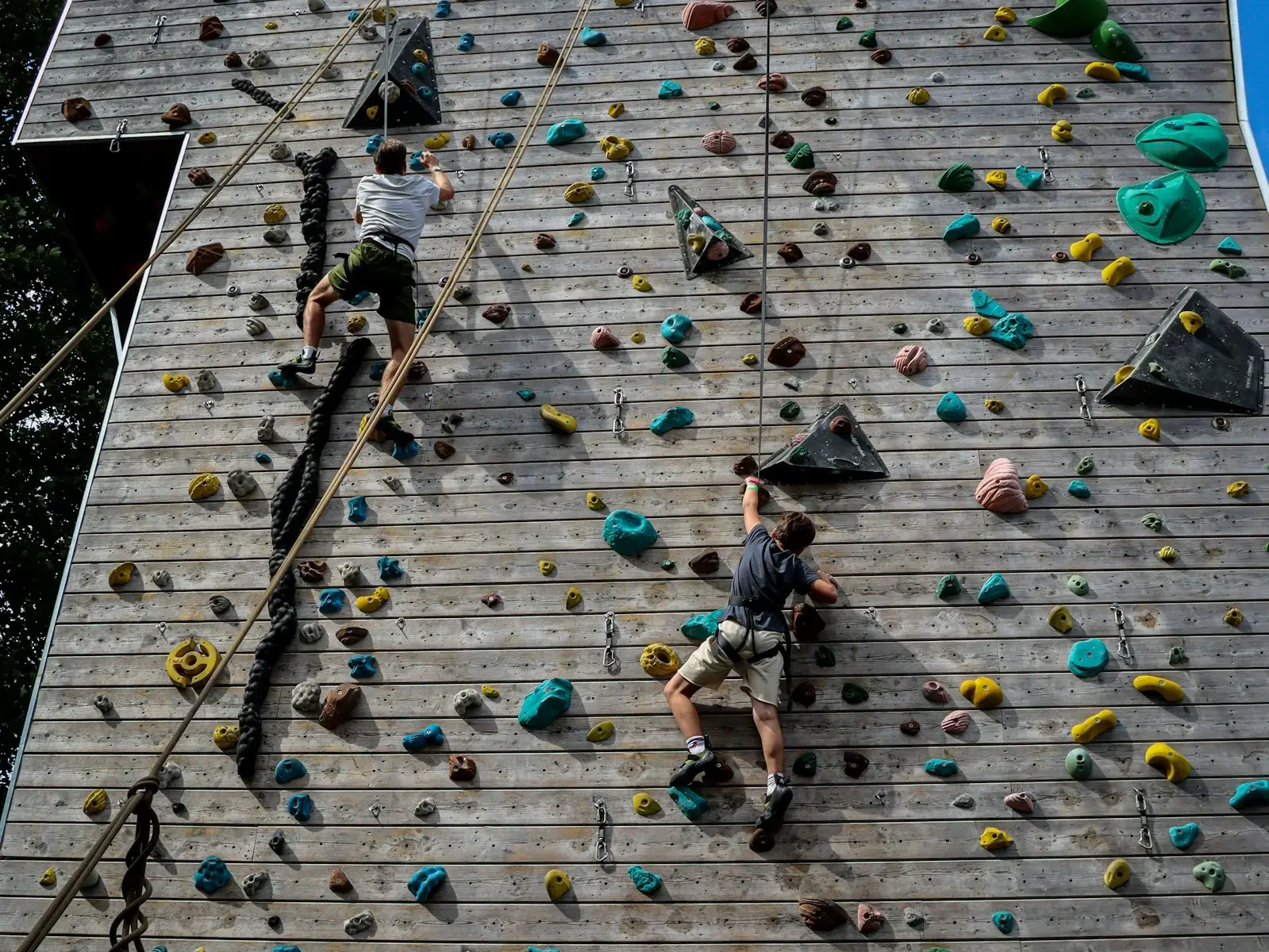
The physiology is not a marketing claim. CDC guidance for children and adolescents calls for 60 minutes or more of moderate-to-vigorous activity daily for ages 6 to 17, including muscle-strengthening activity at least three days a week and bone-strengthening activity on the same cadence. Climbing, hanging, and traversing are named examples of muscle-strengthening work. A play space built only from platforms, panels, and short slides delivers almost none of it, which is why a well-designed tween zone looks less like a playground and more like a low climbing gym with a social floor.
Where 12 Sits Inside Playground Safety Standards
Twelve is not the middle of the playground standards, it is the ceiling. ASTM F1487-25 covers the 5th percentile 2-year-old through the 95th percentile 12-year-old and expressly excludes fitness equipment intended for users over 12, so a tall, heavy 12-year-old is already at the edge of the envelope the equipment was designed and tested for.
The CPSC Public Playground Safety Handbook, revised in July 2025, defines school-age as 5 through 12 years and sets the dimensional ceiling for the hardest elements in the school-age band. The differences between bands are substantial and easy to get wrong when a structure is adapted for older children.
| Element | Preschool (2-5) | School-age (5-12) |
| Horizontal ladder, max height | 60 in | 84 in |
| Horizontal ladder, max rung spacing | 12 in | 15 in |
| Overhead rings, max height | 60 in | 84 in |
Europe draws the same boundary differently. EN 1176 governs children’s play equipment, while EN 16630 governs permanently installed outdoor fitness equipment for users from 14 years or 1400 mm in height, with its own safety zone and structural requirements. The two are not interchangeable, and a station cannot be certified under one and sold as the other. For projects that cross jurisdictions, the comparison of ASTM F1487 and EN 1176 is the practical starting point, because the user ranges, test methods, and fall height assumptions differ.
The procurement consequence is simple: every specification and tender document for a tween zone should name the intended user group and the standard it is built to. Without that line, a supplier can legitimately deliver equipment designed for five-year-olds, because nothing in the document said otherwise.
The Equipment Categories That Hold a Tween
Six categories of outdoor play equipment survive contact with a 12-year-old: overhead traverses, rope and net climbing, tall slides with a turn, spinners, swing bays, and hard-surface game areas. The first four carry most of the physical challenge, the last two carry most of the social time, and a zone missing either half will be used in bursts rather than sessions.
Swing bays deserve a note because they are usually specified badly. A belt swing rated for a 60-pound child is not a tween swing, and a rotating tire swing that requires two children to start it will outperform four single swings on a busy afternoon. Game areas are equally underrated: a flat, marked, hard-wearing surface for small-sided games costs far less per hour of use than any climbing structure, and it is the element that keeps a group on site once the climbing novelty fades.
Overhead Traverses and Ring Routes
Horizontal ladders, overhead rings, ring treks, and track rides all load the same movement pattern: hang, reach, swing the body, regrip. That pattern is the single clearest marker of upper-body development at this age, and it is also where the CPSC dimensional ceiling bites hardest, since the school-age limit of 84 inches from the grasping surface to the protective surfacing is high enough to demand real thought about the landing zone. Rung spacing matters as much as height, because a 15-inch gap that suits a tall eleven-year-old can be a stretch for a small one. Specify the spacing, and confirm the surfacing beneath the full travel of the route, not just at the entry platform.
Climbing Nets and Multi-Route Towers
A net or a multi-route tower is the most efficient way to add difficulty without adding a second structure, because the same footprint offers several lines of ascent at different grades. What separates a good one from a decorative one is route count, not theme. Look for at least three distinct lines, a mix of stable and unstable holds, and a descent that is not simply the way up in reverse. Net structures also solve a supervision problem: the open mesh keeps children visible to each other and to staff, which matters on school and camp sites where equipment is used without close adult attention.
Slides and Spinners
Height and rotation are the two reliable thrill sources at twelve, and both have specification traps. Spiral slides with more than one 360-degree turn sit in the school-age band, and the double spiral slide configuration is a common way to deliver that turn count inside a compact footprint. The exit region, not the slide itself, is where most maintenance attention belongs, because displaced surfacing at the run-out is the failure mode that inspection rounds catch last. Spinners and rotating platforms need clear space around the full sweep of the rotation plus a defined approach, and they reward group coordination better than almost anything else on the list.
Matching the Equipment Mix to the Site
The same outdoor play equipment list does not serve a backyard, a school yard, a neighborhood park, and a camp. Site type decides the mix, the supervision model, and which standard the paperwork has to cite, so the buying list should be built after the site is characterized, not before.
| Site type | Primary equipment | Focus for compliance and operations |
| Backyard | One tower with net and slide, one swing bay | Manufacturer age and weight rating, anchor and surfacing depth |
| School yard | Traverses, multi-route climber, marked game area | Distinct age zones, supervision sightlines, documented inspections |
| Neighborhood park | Combined structure, spinners, swings, game court | ASTM F1487 plus local code, ADA routes, vandal-resistant fixings |
| Camp or resort | Climbing net, low ropes style routes, open game lawn | Throughput and turnover, staff supervision plan, shade and seating |
Mixed-age sites need physical separation rather than a label. A 12-year-old moving at speed through a preschool area is the classic collision scenario, and no signage prevents it. Use ground level changes, planting, or a low barrier to split the zones, and keep the tween equipment at the far end of the route.
Fall Height and Surfacing: The Line Item Buyers Underestimate
Every piece of outdoor play equipment has a fall height, and the surfacing has to be rated to it. The common failure is not the choice of material but the installed depth: loose fill compresses by roughly 25 percent under use and weather, so a 9-inch specification means a 12-inch initial fill.
The CPSC gives conservative depths for loose-fill materials that have not been impact tested. These are the numbers to carry into a budget conversation, because the difference between a 4-foot and a 10-foot critical height is a different material, a different depth, and a different annual top-up cost.
| Loose-fill material | Installed depth | Compressed depth | Protects to this critical height |
| Rubber mulch | 8 in | 6 in | 10 ft |
| Sand | 12 in | 9 in | 4 ft |
| Pea gravel | 12 in | 9 in | 5 ft |
| Wood mulch (non-CCA) | 12 in | 9 in | 7 ft |
| Wood chips | 12 in | 9 in | 10 ft |
Three operational rules follow. Never maintain less than 9 inches of loose fill except for rubber mulch, which is specified at 6 inches compressed. Field test the installed material to ASTM F3313 rather than trusting the delivery ticket. And check accessibility early: some loose-fill materials will not meet the accessible route requirements of ASTM F1951, which pushes projects toward poured-in-place or tiles under the main circulation path even when loose fill is cheaper elsewhere.

Keeping a Tween Zone in Use After the First Year
A tween zone stays in use when it can be extended instead of replaced. Add overhead elements, a second swing bay, or a climbing net before considering a new structure, and keep the inspection cycle honest, because a loose fixing or displaced landing area is what quietly ends a site’s reputation.
The cheapest retention measure is a second route on an existing frame, followed by a trapeze bar, a set of rings, or a cargo net hung from a beam already in place. These additions change the difficulty profile of a structure for a fraction of the capital cost of replacement, and they can be staged across budget years. Pair the additions with seating that faces the play, since tweens use a zone in cycles of action and rest, and a site with nowhere to sit converts a two-hour visit into a forty-minute one.
Inspection is the other half. A documented routine that covers fixings, surfacing depth at swing and slide exits, and wear on moving parts will surface most failures before users do, and the record itself is what protects the operator after an incident. A workable playground maintenance schedule separates daily visual checks from periodic detailed inspection, which is the structure most insurers and school districts now expect to see.
What to Skip at This Age
Skip trampolines in public settings, skip toddler-scale items inside the tween zone, and skip theming in place of challenge, however convincing the outdoor play equipment looks in a render.
The CPSC handbook lists trampolines among equipment not recommended for public playgrounds, and that guidance does not soften because a twelve-year-old would enjoy one. Oversized toddler components are the second common mistake: a plastic panel or a low playhouse placed in a tween area consumes footprint, budget, and inspection attention while adding nothing to the difficulty profile. Theming deserves the same scrutiny. A themed shell sells a project to a committee, but once the novelty fades, children return to whatever offers the steepest skill curve, and a themed structure with one route has no curve at all. Adult or teen fitness stations are a separate category again and should be procured as such rather than folded into a playground package.
FAQ
Three questions tend to arrive after the specification is agreed.
Do 12-year-olds still use swings and slides?
Yes, when the scale suits them. The failure is dimensional, not developmental: a short slide with a shallow run-out or a swing seat rated for a small child reads as baby equipment. A slide with a real turn and a swing bay with adult-length chains stay in use well past twelve, and both are cheaper to provide than a second climbing structure.
Can backyard equipment and public playground equipment be swapped?
No. Backyard outdoor play equipment and public playground equipment are designed and tested against different standards, with different structural assumptions, anchoring requirements, and supervision expectations. Backyard equipment placed on a public site creates a liability gap that no maintenance routine closes, and public equipment installed at home is usually over-specified in anchoring terms and under-supported in inspection terms.
Can one structure serve a 5-year-old and a 12-year-old at once?
Only with separate zones and separate equipment. A combined structure that claims both age ranges usually satisfies neither: the access and platform heights that suit a five-year-old remove the challenge a twelve-year-old needs, and the reverse is a fall hazard for the younger child. Two smaller areas with a clear physical split will outperform one large structure serving both.


