
A daycare yard works harder than almost any other asset on the property. A single outdoor play combination slide can take more traffic before lunch than a park piece sees in a week, in boots and wet coats, often with one adult watching children who are eighteen months apart in age and two years apart in ability. Centers that buy on appearance end up with a structure that only suits the oldest four children in the building, and with fall heights and surfacing that do not match the age label on the gate.
The best playground equipment for daycare is commercial grade, low to the ground, and selected by age band rather than by theme: climbers under 32 inches, full-bucket swings, ramps, shallow steps, ground-level panels and playhouses for the 6 to 23 month group, and short slides, platforms no higher than 48 inches, spring rockers and spinners for the 2 to 5 year group, all of it standing on surfacing rated for the height a child can actually fall from.
The sections below work through selection band by band, then cover the space, ground and paperwork that a licensing visit will test.
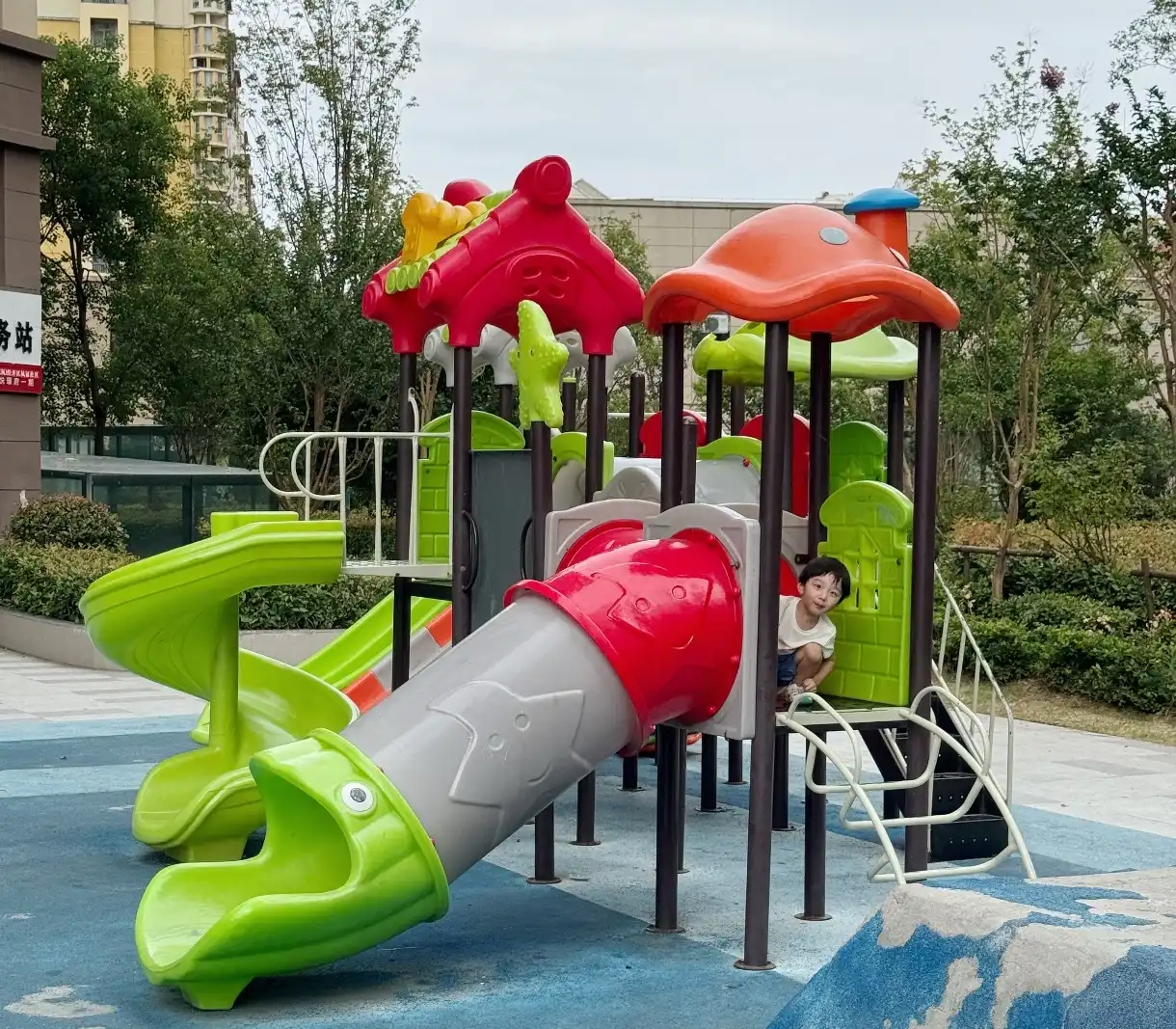
What Playground Equipment Suits Each Age Band in a Daycare?
Two bands govern playground equipment in child care, 6 to 23 months and 2 to 5 years, and each has its own height ceiling and its own list of suitable pieces. One structure cannot serve both, because the height that is safe for a toddler becomes the design limit for the whole yard.
The Consumer Product Safety Commission publishes a table of equipment it considers age appropriate, and the pattern is more specific than most catalogs suggest. In practice it means a center serving infants through pre-K plans two zones separated by a planted buffer, a bench line or a fence, so a five-year-old at speed never crosses a toddler’s path. The table sits in the Public Playground Safety Handbook, which also puts emergency-room-treated playground injuries at almost 200,000 a year.
| Band | Fall height ceiling | Listed as appropriate | Design consequence |
| 6 to 23 months | 32 inches | Climbers, ramps, single-file step ladders, slides, spring rockers, stairways, full-bucket swings | Mostly freestanding pieces, walked between rather than routed through |
| 2 to 5 years | 48 inches | Rung ladders, spiral slides up to 360 degrees, belt and bucket swings, spinners, spring rockers | Connected decks with one ramp and one short slide back to grade |
| 5 to 12 years | 72 inches | Arch climbers, overhead ladders, track rides, tall spiral slides | Out of scope for a daycare yard |
Equipment for Children 6 to 23 Months
At this age the equipment is a set of separate destinations, not a route. A crawler pulls up on a low climber, sits in a bucket seat, pats a panel of gears, then repeats that panel a dozen times before moving on. ASTM F2373 covers this band specifically, and its scope is written for this setting: equipment in early care and education facilities, with indoor classroom areas treated differently from unrestricted public parks. Nothing on the list needs an adult spotting from below, which matters when one caregiver is watching several children.
Equipment for Children 2 to 5 Years
Here the pieces start to connect. A ramp, a crawl tube, a low bridge and a slide back to grade give a preschooler a loop they can run unassisted, and the loop is what holds attention. A multi-function play set with a shallow slide and a bucket swing covers most of this band on a compact footprint. Horizontal ladders up to 60 inches are listed for four and five year olds only, so a piece that suits the oldest children is not automatically suitable for the two year olds beside them.
Which Pieces Earn Their Floor Space?
Eight categories of playground equipment cover almost every daycare yard: low climbers, playhouses, bucket swings, ramps and shallow steps, short slides, spring rockers, spinners and ground-level activity panels. Anything outside that list needs a written reason, not a catalog photograph.
The table below sorts them by what they develop, because a yard full of climbing frames leaves fine motor skills and quiet play without a home. A balanced layout gives every child at least one activity they can choose alone.
| Piece | What it develops | What to check before ordering |
| Low climber | Balance, grip, judgment of height | Deck height and fall height printed on the spec sheet |
| Playhouse | Role play, language, turn taking | Openings outside the 3.5 to 9 inch entrapment range |
| Full-bucket swing | Core stability, vestibular input | Seat size, chain length, use zone in front and behind |
| Ramp and shallow steps | Independent access, confidence | Handrail height scaled to a two-year-old |
| Short slide | Sequencing, waiting, controlled risk | Exit height above grade, heat build-up in sun |
| Spring rocker | Coordination, cause and effect | Footrests, handhold diameter, spring guard |
| Spinner | Vestibular tolerance, group play | Speed limit and clearance to the nearest fixed part |
| Activity panel | Fine motor, cause and effect | Panel height for a seated or standing toddler |
Why Fulcrum Seesaws and Trampolines Stay Off a Daycare List
The commission’s age table lists fulcrum seesaws only for the 5 to 12 band, because a seesaw needs two children of similar weight to cooperate, and a toddler cannot yet do that safely. Trampolines are not recommended for any playground. Several state child care rules go further and prohibit trampolines, ball pits and wading pools outright, whatever the manufacturer’s age label says. The equipment did not disappear from the market; it was reassigned to older users, which is the same story behind the wider question of why seesaws disappeared from public play areas.
Why Daycare Equipment Is Not Just Smaller School Equipment
School playground equipment is built for reach, speed and 5 to 12 year old bodies, with platforms up to 72 inches. Daycare equipment stops at 32 to 48 inches, keeps every route walkable by a two year old, and is specified for two or three sessions a day instead of a single recess.
That difference shows up in four places at once, and buying a school structure for a daycare yard fails on all of them.
| Item | Daycare, 6 months to 5 years | School, 5 to 12 years |
| Platform height | 32 to 48 inches | Up to 72 inches |
| Access | Ramps and shallow steps | Vertical ladders, climbing walls, nets |
| Swing seats | Full bucket, belt seats for ages 2 to 4 | Belt and tire |
| Guarding | Barriers on every elevated surface | Guardrails with larger openings |
Materials follow the same logic. A yard used in rain, frost and direct sun puts more weight on the shell, the fasteners and the coating than on the color scheme. The comparison between outdoor playground materials is worth reading before a quote is signed, because residential-grade product looks identical in a photograph and carries a different standard.
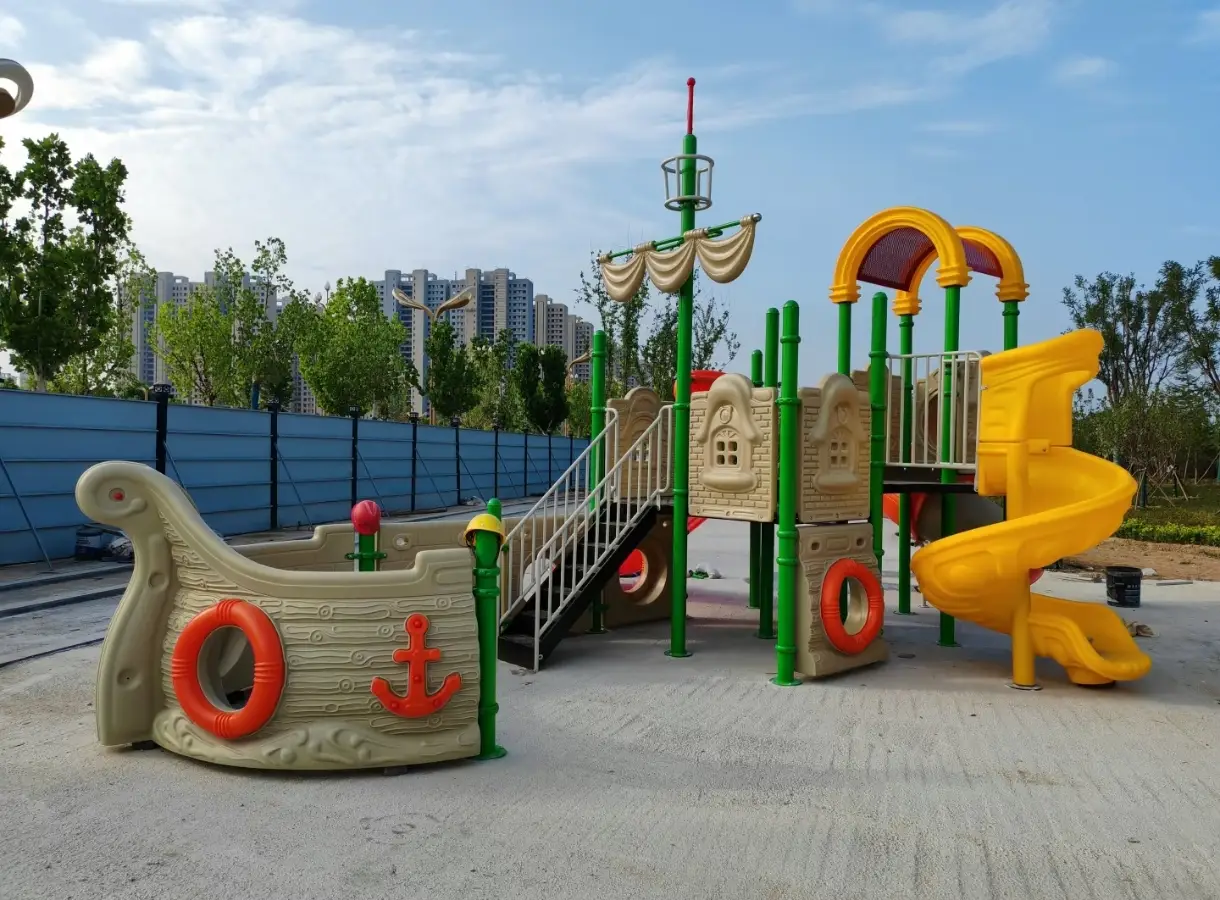
What Does a Licensed Daycare Yard Need Besides Equipment?
Five items decide whether a yard passes an inspection: usable area per child, a continuous enclosure, shade, drainage, and impact surfacing matched to the highest fall height on the site. The equipment is usually the part that already works; the ground under it is where visits fail.
Surfacing is the most common gap. Loose fill has to be deep enough for the fall height and kept at that depth, which means a border that holds the material and a rake that finds it again after rain. Concrete and asphalt are not acceptable under climbers unless they form the base for a tested unitary surface. Every piece also carries a use zone, measured from its perimeter, that stays clear of fences, trees and the path a child runs in on.
| Requirement | Common benchmark | Effect on layout |
| Usable area | 75 square feet per child using the yard | Sets maximum group size, not just yard size |
| Enclosure | Continuous barrier, often 4 feet high with no gap over 4 inches | Decides gate position and sightlines |
| Shade | Shade over part of the yard, natural or built | Moves the sand and water play out of afternoon sun |
| Surfacing | Tested to ASTM F1292, depth set by fall height | Drives the border, drainage and annual top-up |
| Accessible route | At least half of elevated components reachable | Fixes where the ramp goes, early in design |
Do Daycares Need a Playground?
In most US states, yes, once a center provides care for more than roughly three hours a day. Outdoor play space is a licensing condition rather than an amenity, and the shared benchmark is 75 square feet of usable outdoor area for each child using it at one time.
State rules differ in detail but agree on the shape of the requirement. Minnesota, for example, requires at least 1,500 square feet in total, 75 square feet per child, a location within 2,000 feet of the center, and three pieces of durable large-muscle equipment per group, as set out in its updated licensing standards. Louisiana and Wisconsin use the same per-child figure, and Wisconsin adds a permanent enclosure at least four feet high.
Off-site space is allowed in some states, but it is normally approved in writing, treated as a field trip each time, and carries the risk that public equipment does not meet the standard the center is held to. The program case is straightforward too: short, frequent sessions carry gross motor practice, turn taking and the reset that makes the next indoor block work.
How Should a Daycare Specify and Compare Quotes?
Before comparing price on any playground equipment quote, ask for six things in writing: certification and test reports, the age label on each piece, the fall height of every component, a use zone drawing, the installation and anchoring method, and the spare parts and inspection schedule.
- Certification: a current third-party report against ASTM F1487 or F2373, not a logo on a brochure.
- Age label: the band the manufacturer tested for, matched to the zone it will stand in.
- Fall height: the number that sets surfacing depth, stated per component rather than per structure.
- Use zone drawing: scaled, with fences, trees and adjacent pieces marked.
- Installation: who anchors, to what, and whether the anchor sits below grade.
- After-sales: spare parts list, warranty exclusions and the playground inspection frequency expected of staff.
A quote that omits any of the six is not cheaper, it is incomplete, and the missing item reappears later as a change order or a citation.
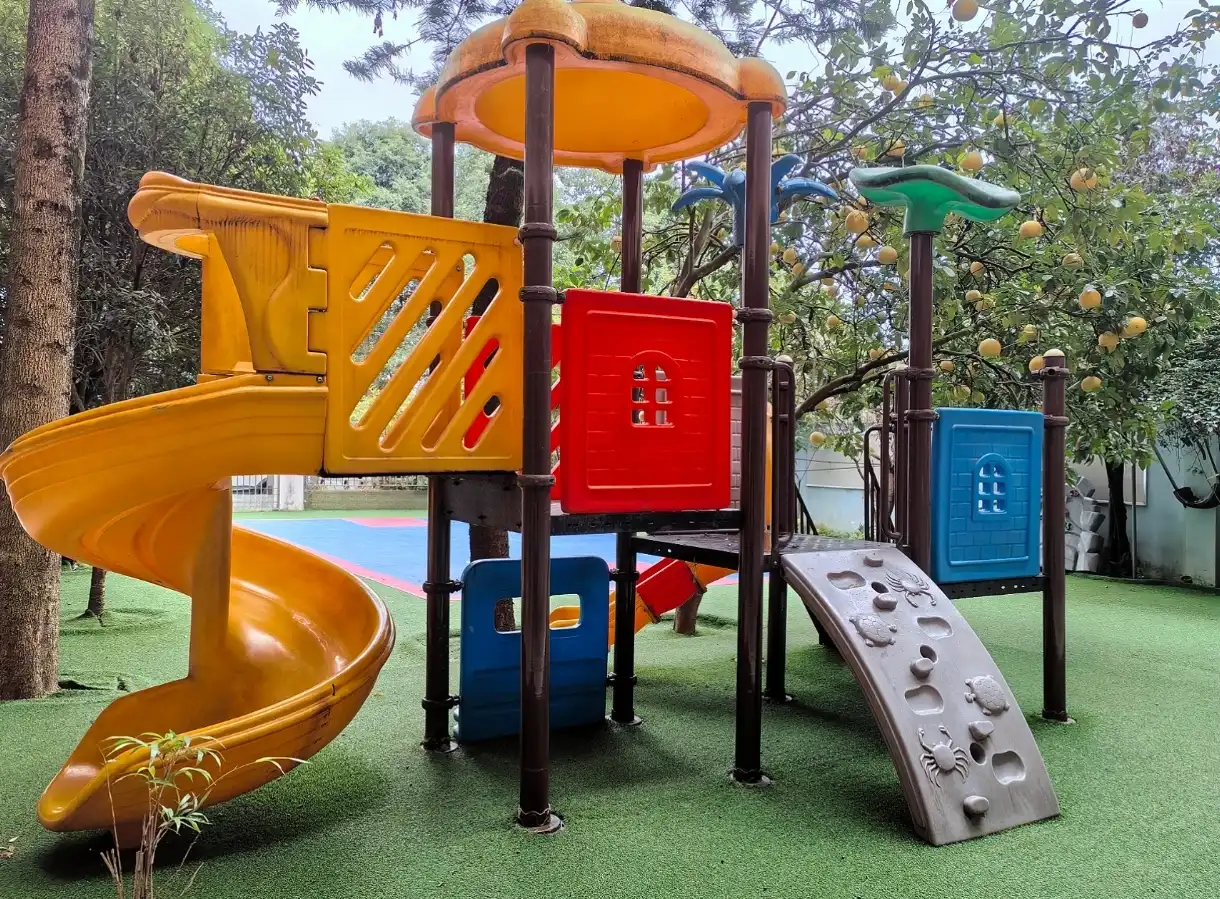
What Is the Best Outdoor Play Equipment for Children Overall?
The best outdoor play equipment for children is whatever a child can start, stop and repeat without an adult lifting them, standing on surfacing rated for the height they can reach, in a yard where one adult can see the whole group. Age mix, yard shape and climate decide the rest.
Three questions settle most of it. Which bands does the center serve, and can the yard be split for them. How does a child move through the space on the busiest morning, and where do two routes cross. What does the site do in July and in January, because shade and drainage decide which pieces stay usable. Answer those first, and the list writes itself around outdoor playground equipment that fits the site rather than the catalog.
FAQ
Three questions come up once the equipment list is settled.
Can a daycare use a public park instead of building a playground?
Some states allow it, but usually with conditions: written approval, transport counted as a field trip with its own ratio and permission requirements, and a check that the public equipment meets the standard the center is licensed against. Public structures are often built for 5 to 12 year olds and may have no toddler zone at all, leaving the youngest group with nothing suitable to use.
How often should daycare playground equipment be inspected?
Staff should run a visual check before each outdoor session, looking at surfacing depth, closed S-hooks, broken parts, exposed hardware and hot surfaces. A detailed inspection belongs on a monthly schedule, and an annual audit by a certified inspector gives the center a written record. Log every check, including the ones that found nothing, because that log is what demonstrates a maintenance regime after an incident.
What if one small yard has to serve toddlers and preschoolers at the same time?
Separate by time or by space, and put it in the daily schedule rather than leaving it to staff judgment. Some state rules accept separate play areas or separate time slots when the two groups share a yard. The minimum is a toddler zone the youngest children can use alone, with the older pieces positioned so that a running five-year-old never enters it.


