
Searches for new federal playground rules spike whenever a standards revision lands or a lead-contamination story breaks, leaving Tennessee operators who maintain outdoor playground equipment with a budget line and a vague sense that something changed. Four authorities touch a play area, only two of them carry the force of law, and the agency with the most recognizable name has the least to do with the climbing frame. Sorting out which document creates an obligation, and which date attaches to it, separates a defensible capital plan from an expensive retrofit.
The EPA has issued no regulations, certifications, or compliance deadlines for playground equipment, and no federal date requires an existing Tennessee playground to be rebuilt. Public playground equipment is governed by CPSC guidance in Publication 325, revised in July 2025, by ASTM F1487-25 published in April 2025, and by the accessibility requirements of the 2010 ADA Standards, which are enforceable law. The EPA’s real jurisdiction over a playground project covers the soil and dust around the equipment, construction stormwater, and demolition waste.
The sections below separate those authorities, attach each to the date it actually carries, and translate the result into a calendar a Tennessee owner can work from.
Does the EPA Regulate Playground Equipment?
No. The EPA does not certify playground equipment, does not approve surfacing for play use, and has never published design requirements or an installation deadline for a play structure. Most claims about new EPA playground regulations describe a CPSC handbook revision, a state licensing rule, or an environmental rule that applies to the ground beneath the equipment.
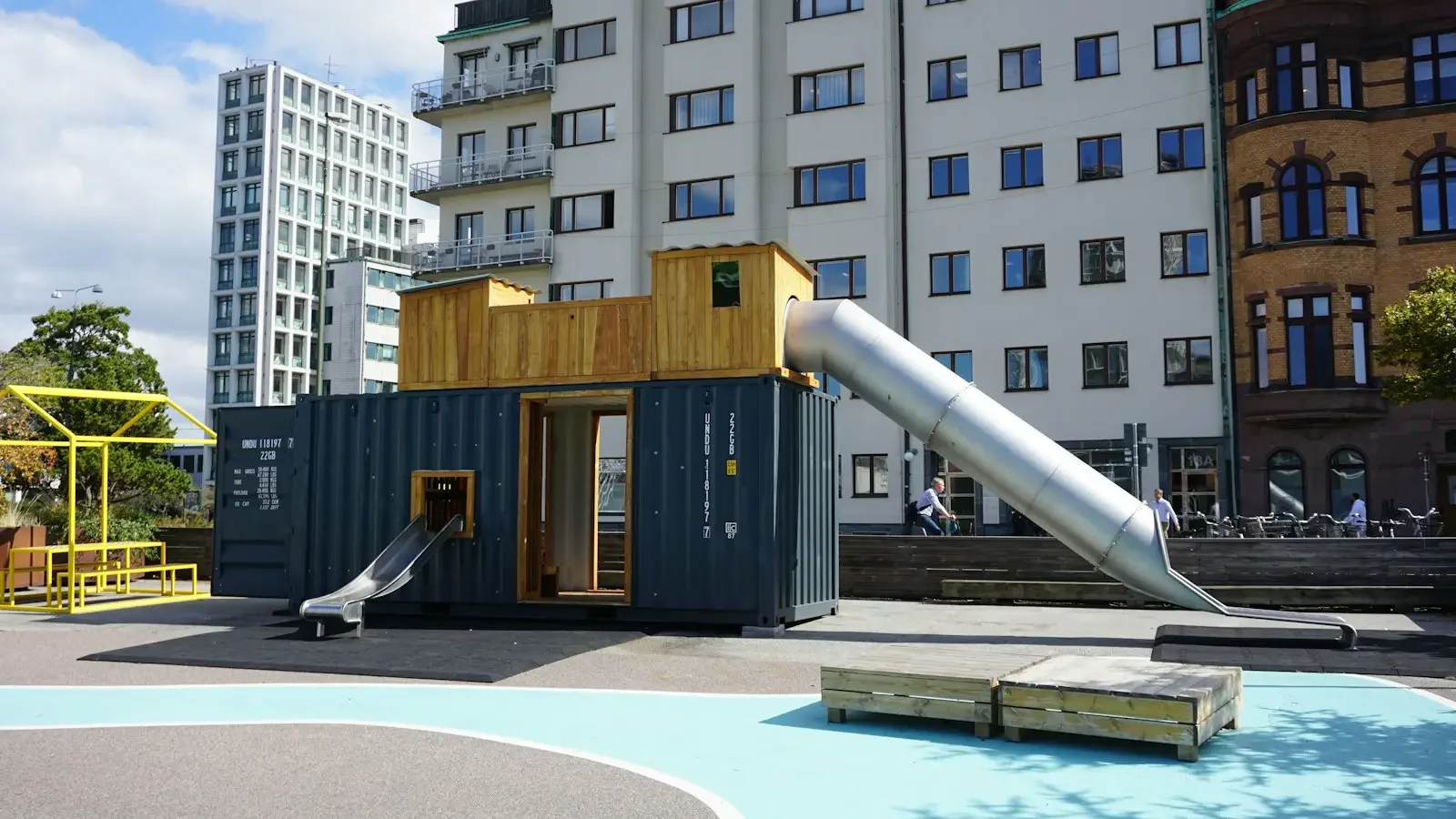
Four bodies publish documents that look authoritative, and skipping the distinction sends money to the wrong fix.
| Body | What it actually controls | Weight for an owner |
| CPSC | Handbook guidance on layout, use zones, surfacing, hazards, inspection and maintenance | Voluntary federally; cited by inspectors, insurers and grant reviewers |
| ASTM International | Technical specifications that equipment and surfacing are built and tested to | Voluntary consensus standards, adopted through contracts, codes and certification |
| U.S. Department of Justice | Accessible routes, ground-level and elevated play components under the ADA | Enforceable federal law on new construction and alterations |
| EPA | Lead in soil and dust, stormwater discharges, waste handling at the site | Enforceable, but media-specific rather than equipment-specific |
For most Tennessee sites the binding document is not federal: it is the child care licensing rule, a contract specification or an insurer’s condition, each importing CPSC and ASTM language.
Which Federal Deadlines Actually Govern Playground Equipment Today
Two documents set the current technical bar: CPSC Publication 325 as revised in July 2025, and ASTM F1487-25, published on April 15, 2025, which supersedes F1487-21. Neither carries a federal enforcement date. The federal deadline that is already law is the 2010 ADA Standards, enforceable for new construction and alterations since March 15, 2012.
The 2025 handbook is the first substantive revision since 2010, and CPSC framed the notice of availability as harmonization with current ASTM editions rather than a new regulatory program. It updated the toddler band to 6 through 23 months, aligned the accessibility discussion with Department of Justice standards, added fencing, gate, shading and drainage recommendations, and put heavier emphasis on inspection and maintenance of aging equipment. ASTM F1487-25 added definitions such as fully enclosed structure and tightened tube slide requirements.
| Document | Edition | What it means operationally |
| CPSC Publication 325 | July 2025 | The baseline an inspector, insurer or grant reviewer will cite |
| ASTM F1487-25 | April 2025 | The specification new public-use equipment must be certified to at purchase |
| ASTM F1292 | Current edition | The fall-height rating that determines whether surfacing is adequate |
| 2010 ADA Standards, Sections 240 and 1008 | Enforceable since March 15, 2012 | A legal obligation on new and altered play areas |
The ADA portion carries numbers that show up on drawings. At least 50 percent of elevated play components must sit on an accessible route. Areas with fewer than 20 elevated components may use a transfer system for at least 50 percent of them; areas with 20 or more must ramp at least 25 percent. Ramps run at a maximum slope of 1:12 with a 12 inch maximum rise and a 36 inch clear width. Because these requirements are law while the equipment standards are not, a site can pass every CPSC check and still fail its only enforceable obligation. The technical split between the two standards families is covered in the comparison of ASTM F1487 and EN 1176.
Where EPA Requirements Do Reach a Playground Project
The EPA’s leverage on a playground is environmental rather than structural. It sets the lead hazard levels applied to soil and dust around play equipment, requires stormwater coverage before ground is broken on larger sites, and regulates demolition waste including asbestos. None of these is an equipment standard, and any of them can stop a project.
These obligations attach to the site and the schedule rather than to the catalog.
Lead in Soil, Dust, and Paint Debris
Under the federal lead hazard standards in 40 CFR 745.65, bare soil on the property of a child-occupied facility is a hazard at 400 parts per million in a play area, or an average of 1,200 parts per million elsewhere in the yard. Dust has moved too: before January 12, 2026 a dust-lead hazard required 10 micrograms per square foot on floors or 100 on interior window sills, and from that date any reportable level counts. Renovation in pre-1978 child-occupied facilities also falls under the lead-safe work practice rules. Practically, that means testing soil before excavation and keeping reports for any play area regraded or re-surfaced.
Stormwater, Demolition Waste, and Recycled Surfacing
Tennessee administers the federal stormwater program through the Department of Environment and Conservation. The state construction general permit, TNR100000, covers any project disturbing one acre or more, including sub-acre projects that are part of a larger common plan. Coverage requires a stormwater pollution prevention plan and a notice of intent filed at least seven days before land disturbance, and work cannot begin until a notice of coverage issues. Demolishing an older structure separately triggers asbestos inspection and notification before it comes down.
Recycled rubber is where the EPA is most often misquoted. The Federal Research Action Plan, launched in February 2016 by the EPA with the Centers for Disease Control and Prevention and the CPSC, found metals and organic chemicals present in tire crumb, but also found that emissions to air were typically below detection limits or chamber background and that metal bioaccessibility averaged about 3 percent in gastric fluid and under 1 percent in saliva and sweat. The reports state they are not risk assessments, and no federal rule bans rubber surfacing. The EPA instead lists playground equipment and playground surfaces among the park and recreation products designated under its Comprehensive Procurement Guideline.
Chattanooga’s Lead Cleanup: What a Real Deadline Looks Like in Tennessee
The EPA deadline that genuinely exists in Tennessee is geographic. The Southside Chattanooga Lead Site, added to the National Priorities List on September 13, 2018, covers eight neighborhoods where parks, schools, playgrounds and child care centers sit on foundry sand and slag used as fill. Cleanup there proceeds property by property under a record of decision, not under any statewide equipment deadline.
The 2019 interim decision set the remedy: excavate contaminated soil to two feet, dispose of it off site, backfill with clean material and restore the surface. As of December 2025 the agency’s site profile reports sampling at 4,110 properties and completed cleanup at 1,171 across eight neighborhoods including Alton Park, East Lake and Highland Park. The site-specific cleanup level of 360 parts per million is being revisited under the agency’s October 2025 lead directive, with an explanation of significant differences and a public comment period planned during 2026.
For an owner inside that boundary the sequence is sampling access, a results letter, then eligibility for cleanup, and no purchase order for new equipment changes it. New surfacing over contaminated soil does not satisfy the remedy, and institutional controls on a cleaned property can restrict later excavation.
What Tennessee Adds: Licensing Rules That Are Already Enforceable
Tennessee’s binding playground requirements sit in child care licensing rather than in an equipment statute. Rule 1240-04-01-.14 requires climbers and swings to sit on surfacing the CPSC recognizes as shock absorbing, requires unitary surfaces to be installed to ASTM F1292, sets a six foot fall zone on all sides of climbing equipment and a swing fall zone of twice the chain length, and prohibits trampolines outright.
The same section also requires manufacturer instructions on site and immediate repair or removal of damaged equipment. Because these are licensing conditions rather than guidance, they apply at licensure and at every inspection, and the department publishes inspection histories. Violations carry tiered civil penalties that escalate for repeat findings and injury-related ones.
| Requirement | Rule reference | Documentation an inspector expects |
| CPSC-recognized resilient surfacing under climbers and swings | 1240-04-01-.14(3)(f) | Depth measurements and product data sheets |
| Unitary surfacing installed to ASTM F1292 | 1240-04-01-.14(3)(h) | Manufacturer certification and installation record |
| Six foot fall zone, twice chain length for swings | 1240-04-01-.14(3)(c) and (d) | Site plan with dimensions marked |
| Anchoring of heavy and portable equipment | 1240-04-01-.14(3)(e) and (g) | Installation report and photo record |
| No trampolines on the premises | 1240-04-01-.14(3)(a) | Current equipment inventory |
Schools, municipal parks and private venues fall outside that rule; they inherit CPSC and ASTM through specifications, insurer conditions and grant agreements. Other states codify the same material differently, as a review of state playground equipment regulations shows, so a compliance file that travels between states rarely survives intact.
Building a Compliance Calendar That Survives an Inspection
Because no federal agency sets a universal date, the workable deadline is the one the project creates: environmental and permit checks before design, certification documents at purchase, a qualified inspection before first use, then daily, monthly and annual inspections with records kept for the life of the equipment. Most failed inspections are maintenance findings, not design findings.
- Before design, pull soil and lead history for the parcel and confirm whether any part lies in a Superfund boundary or former industrial fill.
- Before earthwork, confirm whether disturbance reaches one acre and file the notice of intent inside the seven day window; inspect any structure scheduled for demolition for asbestos.
- At purchase, obtain written third-party certification to ASTM F1487 for equipment and F1292 for surfacing, plus the fall height rating as designed.
- Before first use, have the installed structure inspected against the CPSC handbook and ADA routes, and photograph each component and label.
- During operation, run daily visual checks, monthly checks of surfacing depth, hardware and entrapment openings, and an annual comprehensive inspection, all documented.
- At renewal, reconcile the inspection file, insurance conditions and any new standard edition before the budget is set.
The daily and monthly tiers are maintenance work, and the loop overlaps heavily with any structured playground maintenance guidelines already used on indoor assets. Outdoor equipment simply adds weather, drainage and surfacing displacement.
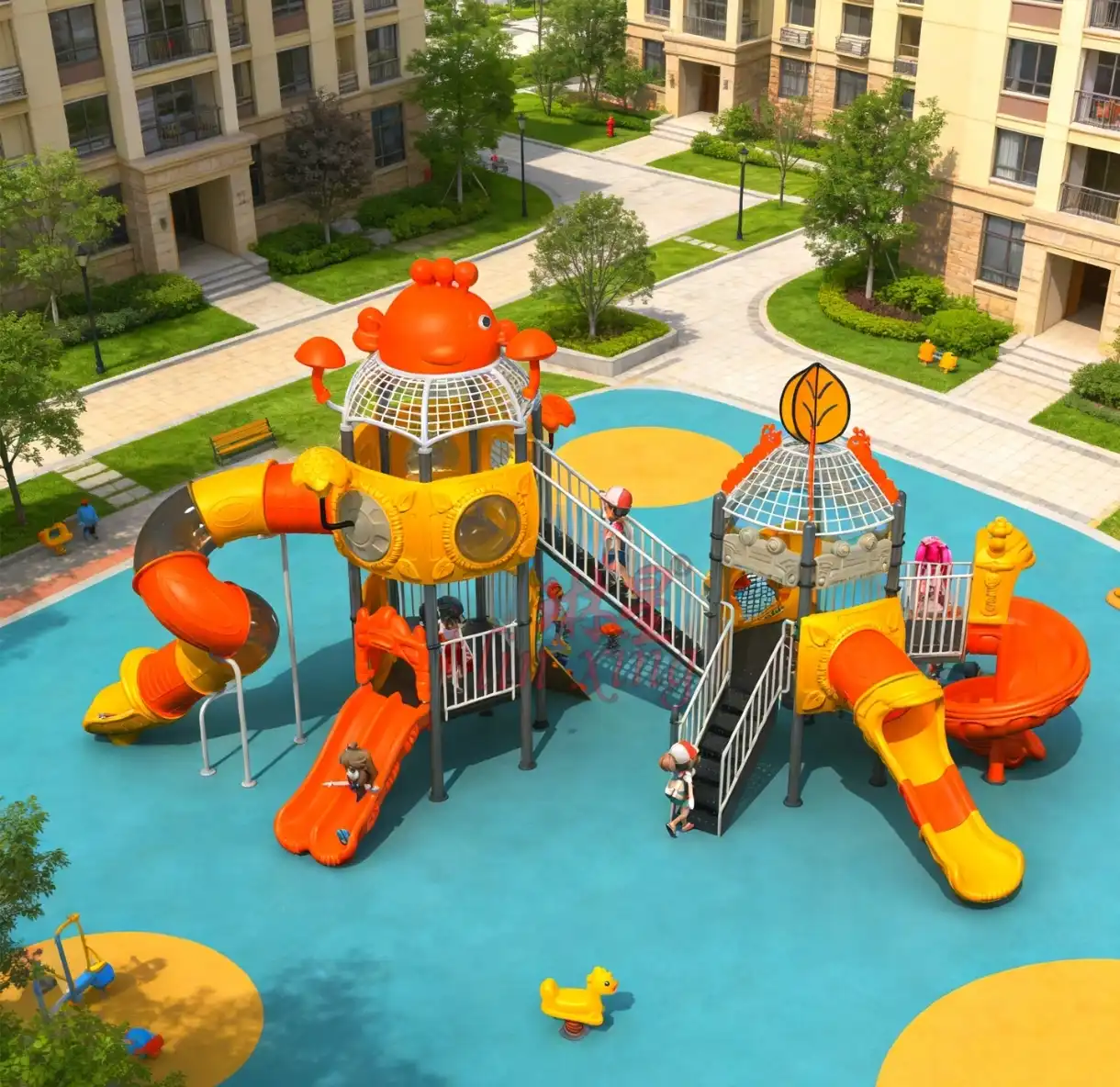
Retrofitting or Replacing Equipment That No Longer Meets Current Standards
No federal rule forces an existing playground to be rebuilt to the 2025 handbook, with one exception: a CPSC recall of a specific product. Pressure comes from inspections, insurance conditions and grant agreements, and it should be applied by fall height and surfacing performance rather than by the age of the structure.
Rank findings before pricing anything. Surfacing that no longer meets its rated fall height, openings between 3.5 and 9 inches that can trap a head, and entanglement points at slide entries cause the injuries that generate claims, so they come first. Deteriorated timber, exposed bolt threads, open S-hooks and cracked panels follow. Cosmetic fading sits last.
Retrofit is often cheaper: a new surfacing system, a guardrail or barrier, a swing seat or a single component can close the highest-risk findings without touching the structure. Replacement wins when the equipment no longer matches the age group served, when parts are unavailable, or when a composite structure cannot comply without being rebuilt. Record the finding, the remedy and the date; that record converts a judgment call into a defensible one. Equipment pulled from service still has to be disposed of properly, and the options for old playground equipment run from resale to scrap to recycling depending on material and condition.
FAQ
Three questions come up once the equipment list is settled, and each has a short factual answer.
Does the EPA ban rubber mulch on playgrounds?
No. No federal rule prohibits recycled rubber surfacing for play areas. The multi-agency research program examined what tire crumb contains and how people contact it, reporting releases to air generally at or below background. The EPA separately designates playground surfaces for recovered content, which points away from a ban. Local specifications and insurer conditions may still restrict a product.
Do playgrounds built before 2025 have to be rebuilt?
Not automatically. The handbook and ASTM standards are voluntary federally and attach at manufacture or installation, not retroactively to every structure standing. An older playground becomes a compliance problem when an inspection, insurer, licensing authority or grant condition requires the current edition, or when a specific hazard is documented.
Who can certify a playground inspection in Tennessee?
There is no state-issued playground inspector license, and the child care rule names no credential. What insurers and grant programs expect is a Certified Playground Safety Inspector, a credential administered by the National Recreation and Park Association and built around the CPSC handbook and ASTM standards. Product certification, an installation report and an inspection report answer different questions and are usually all requested for one project.


