
Playground projects rarely fail because the equipment was wrong. They fail because the buying decision was made before anyone understood the site, the certification file, or who would carry responsibility after handover. Buyers looking for outdoor playground equipment meet a crowded market on day one: home improvement chains, warehouse clubs, online marketplaces, specialty dealers, and factories that sell direct. Each channel has a different price structure and a different set of risks, and the gap between the cheapest quote and the safest purchase is usually a document rather than a discount.
There is no single best place to buy playground equipment. The right channel depends on three variables: who owns the site, who carries liability after handover, and whether the equipment has to be certified to a public use standard. Residential buyers are well served by retail or online channels. Schools, parks, childcare centers, and commercial venues should buy through a dealer or directly from a manufacturer that can supply test reports, a structural warranty, and installation support.
The sections below follow the order a real project unfolds, from measuring the site to the maintenance calendar that starts on opening day.
Where Is the Best Place to Buy Playground Equipment?
The best place to buy is the channel that matches your scale and your compliance burden, not the one with the lowest sticker price. Retail channels win on speed and price transparency for small residential sets. Dealer and factory direct channels win on certification, customization, and accountability for public or commercial installations.
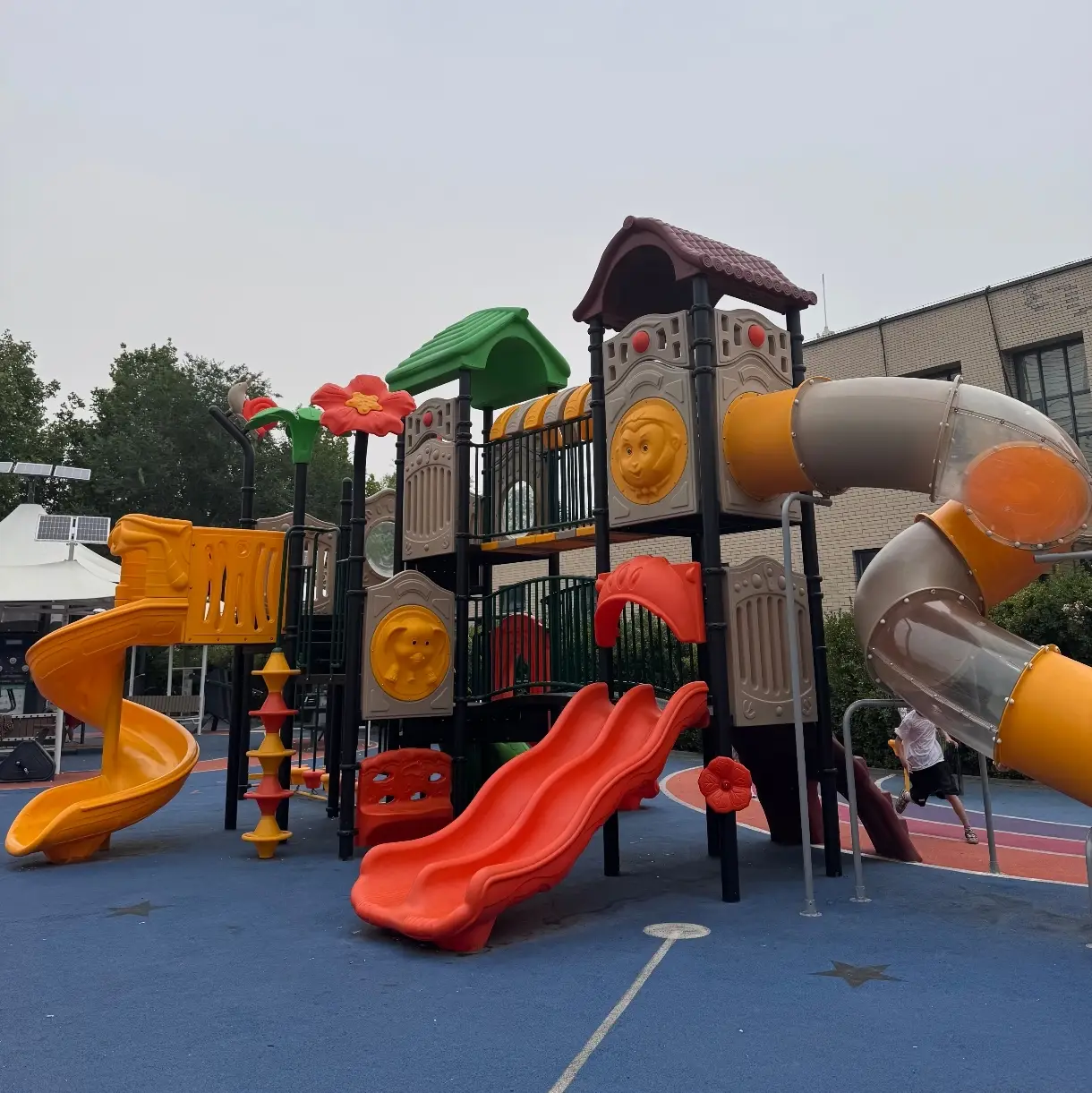
A playset bought from a home improvement chain is a consumer product. A structure installed at a school is a regulated asset that will be inspected, insured, and used by several hundred children a week. The two purchases look similar on a product page and behave nothing alike after delivery. Where you buy determines what paperwork you can produce when an inspector, an insurer, or a grant auditor asks for it.
| Channel | Best suited to | Main risk |
| Home improvement chains | Small residential sets bought in season | Few models, no customization, generalist staff |
| Warehouse clubs | One-off residential purchases at promotional pricing | Single model, curbside delivery, self assembly |
| Online marketplaces | Component parts and budget sets | Unverified sellers, unclear certification, weak after sales |
| Specialty dealers | Schools, parks, HOAs, mid-size projects | Higher price, longer lead time, markup on factory cost |
| Factory direct | Custom themes, container volumes, multi-site rollouts | Buyer manages freight, duty, installation, warranty labor |
| Secondary market | Tight budgets and temporary sites | No warranty, unknown service life, missing parts |
Factory direct pricing typically runs well below dealer pricing, and the difference is not profit alone. Freight, customs clearance, unloading equipment, installation crews, and warranty labor all move to the buyer’s side of the ledger. A dealer charges more because it absorbs those tasks and carries the risk when something arrives damaged or late.
How Do You Match Equipment to the Site Before You Buy?
Measure the use zone, not the footprint. The space a structure occupies is far smaller than the space it needs, because every platform, swing bay, and slide exit requires clear ground around it. Buyers who size a purchase from a product dimension drawing often end up with equipment that no longer fits once surfacing and clearances are added.
Fall height drives everything downstream. A higher deck needs a larger protected area and a surfacing system rated to a greater critical height, and both are defined by the playground safety standards that apply in your market. The Consumer Product Safety Commission publishes the reference guidance most U.S. buyers are measured against, and its current handbook reports an average of more than 190,000 emergency department treated injuries a year between 2021 and 2023, with falls to the surface the leading mechanism. Surfacing is a safety system, not a finishing item.
| Surfacing | Installed depth | Running cost pattern |
| Engineered wood fiber | 300 mm loose fill | Topped up annually, raked and compacted |
| Wood chips | 300 mm loose fill | Settles and migrates, frequent replenishment |
| Rubber mulch | 150 mm loose fill | Low annual loss, high unit cost |
| Poured in place rubber | 30 to 100 mm by fall height | Almost no annual material, highest upfront cost |
| Rubber tiles | 40 to 100 mm | Replace single tiles, seams need watching |
Confirm three site conditions before ordering: drainage, truck access, and a firm accessible route into the play area. A site that cannot take a flatbed and a forklift changes the freight plan, the unloading method, and the total cost.
What Should You Verify in a Supplier Before Ordering?
Ask for three documents before you discuss playground equipment price: a third party product certification that names the specific model, a written structural warranty that states the owner and the exclusions, and a spare parts commitment with a stated number of years. A supplier that cannot produce all three is a reseller, not a manufacturer.
Certification is model specific, which is the detail most buyers miss. IPEMA runs a third party validation program for play equipment in North America and publishes the current product listings, and a valid certificate names the product line rather than the company. ASTM F1487 sets the design, use zone, and performance requirements for public use equipment, and the standard itself is the document an inspector will reference. A supplier quoting a standard without a certificate is quoting an intention.
- Certificate scope: confirm the exact model, not the catalog family
- Standard basis: state whether the project needs the U.S. or the European framework, which differ on fall height and entrapment testing
- Warranty structure: posts, decks, plastics, and moving parts usually carry different terms and different owners
- Spare parts: request the list of high wear components and how many years they stay available
- References: ask for two installed sites of similar size and call both
- Quote breakdown: demand five separate lines, being equipment, freight, installation, surfacing, and commissioning
A quote that arrives as a single number hides where the risk sits. The line that is missing is usually the line that grows.
Where Can You Find Affordable Playground Equipment?
Affordable does not mean cheap. It means the lowest total cost across the service life, and the largest savings come from specification decisions rather than from negotiating discounts. Buyers who cut decorative elements, standardize module sizes, phase installation, and choose surfacing that suits the local climate routinely remove 20 to 30 percent from a project without touching a safety margin.
Published playground equipment cost ranges vary widely by market, and the spread inside a single category is wider than the spread between categories. The table below is a planning reference for equipment alone against a typical installed total.
| Project type | Equipment only | Typical installed total |
| Residential set, small | USD 300 to 1,500 | USD 1,000 to 5,000 |
| Residential set, multi feature | USD 1,500 to 6,000 | USD 6,000 to 12,000 |
| Compact commercial structure | USD 5,000 to 25,000 | USD 18,000 to 45,000 |
| Multi feature community build | USD 50,000 and above | USD 100,000 to 150,000 |
Six levers move a playground equipment budget without reducing play value. Buy modular and add phases in later fiscal years. Standardize on one platform system so accessories fit existing uprights. Choose a theme by color and panel graphic instead of custom molds. Use local loose fill where the climate allows and reserve unitary surfacing for high traffic zones and accessible routes. Consolidate a multi-site order into one shipment. Keep structural frames and replace worn decks and slides rather than the whole structure.
Is It Cheaper to Build or Buy a Playset?
For a single backyard set, building from scratch is rarely cheaper once labor is priced honestly. For commercial sites, building is almost never cheaper, because the structure has to satisfy a design standard and carry traceable certification that a self-built frame cannot obtain.
The do it yourself calculation usually omits the parts that decide the outcome: hardware, fixings, timber treatment, earthworks, waste removal, and the inspection that follows. A complex wooden set runs 20 to 40 skilled hours, and a tired crew at hour thirty is where misaligned joints and loose bolts appear. Manufactured sets arrive cut, drilled, and bundled, which is why assembly time is measured in a single day rather than several weekends.
| Factor | Build from scratch | Buy a manufactured set |
| Material | Lower board cost, higher waste | Bundled and cut to size |
| Labor | 20 to 40 hours for complex timber | 8 to 16 hours, or a crew |
| Compliance | No certification path | Test reports and standards basis |
| Warranty | None | Structural terms with a named owner |
| Reuse | Scrap value | Relocatable and resellable |
Building has legitimate uses: natural play landscapes, sites with in house maintenance staff, and school projects where construction is part of the curriculum. Outside those cases, purchase wins on time, compliance, and resale.
What Do Delivery, Installation, and Handover Involve?
Playground equipment lead time is one segment of a longer chain. Site preparation, footings, surfacing, permitting, and inspection usually take longer than production, and they run on other people’s schedules. Coordinating delivery against a ready site is the most effective way to protect an opening date.
Freight, Access, and Site Readiness
A full container is efficient only when the site can receive it. Less than container loads cost more per unit but reduce storage exposure, which matters when a lease or a school calendar sets the deadline. Structures that arrive before the ground is ready get stored outdoors, and the damage claim that follows is difficult to win. Confirm the drop point, the surface it sits on, and who signs for the delivery before the ship date is fixed.
Self Install Versus Certified Crews
Assembly hours depend on structure size, not on the label on the carton. Anchoring method, footing depth, and hardware torque decide whether the structure stays square after a season of use. Self installation also voids many warranties, which turns a small labor saving into a large future cost. A certified crew finishes with a commissioning walk that checks entrapment openings, protrusions, swing clearance, and surfacing depth before children arrive.
How Do You Protect the Purchase After Opening Day?
The contract decides the ten year cost. Three clauses matter more than the discount: the spare parts availability period, the warranty labor terms, and whether the supplier will hand over an inspection schedule. Buyers who skip them pay for the gap later, in expedited freight and improvised repairs.
Inspection runs on three rhythms. A daily visual walk finds vandalism, debris, and broken parts. A monthly functional check catches loose hardware, worn swing seats, and surfacing compression. An annual audit against the applicable standard covers what daily staff cannot judge, and the playground maintenance guidelines most operators follow set out the records that insurers ask for. Stock 3 to 5 percent of the equipment budget in spares, prioritising swing seats, chains, S-hooks, slide panels, and fasteners. Those parts fail on a schedule, and holding them turns a closure into a same day repair.
FAQ
Three questions surface once the commercial terms are settled and before the first purchase order is raised.
Do You Need a Permit to Install Playground Equipment?
It depends on the site and the jurisdiction. A residential set in a private yard rarely needs one, but homeowner association rules and zoning setbacks can still restrict height, footprint, and distance from a property line. Public and commercial installations usually require a permit, an accessibility review, and a safety inspection before opening. Confirm the requirement before ordering, because permitting runs on a separate clock from production.
Can Playground Equipment Be Funded Through Grants or Cooperative Contracts?
Yes, and both routes change the buying process rather than the equipment. Grant programs typically require written quotes, a certification file, and a site plan before award, so document requests belong at the start of the cycle. Cooperative purchasing contracts are already competitively bid, which can shorten procurement, but the awarded catalog limits which models qualify. Match the specification to the funding route early.
How Long Does Playground Equipment Usually Last?
Service life is set by material, traffic, and the parts policy rather than by the purchase price. Structural steel and aluminum posts commonly serve 20 to 30 years, powder coated finishes 8 to 12, molded plastic panels 10 to 15, and moving parts 5 to 10 depending on use. Loose fill surfacing is a recurring cost rather than a one time purchase. Equipment that stays in service longest is the equipment with available spares and a maintained inspection record.


